

Prime Minister Benjamin Netanyahu said Monday that the IDF has “full freedom of action” in southern Lebanon and will remain in Israel’s security zone there for as long as needed, seeking to clarify government policy amid criticism over alleged restrictions on Israeli fire and reports of a possible limited pullback under U.S. supervision.
“My directive and the defense minister’s directive to the IDF is clear and has not changed: our fighters in southern Lebanon have full freedom of action to thwart any direct or emerging threat to them or to the residents of the north,” Netanyahu said. “The IDF has no restriction in this matter.”
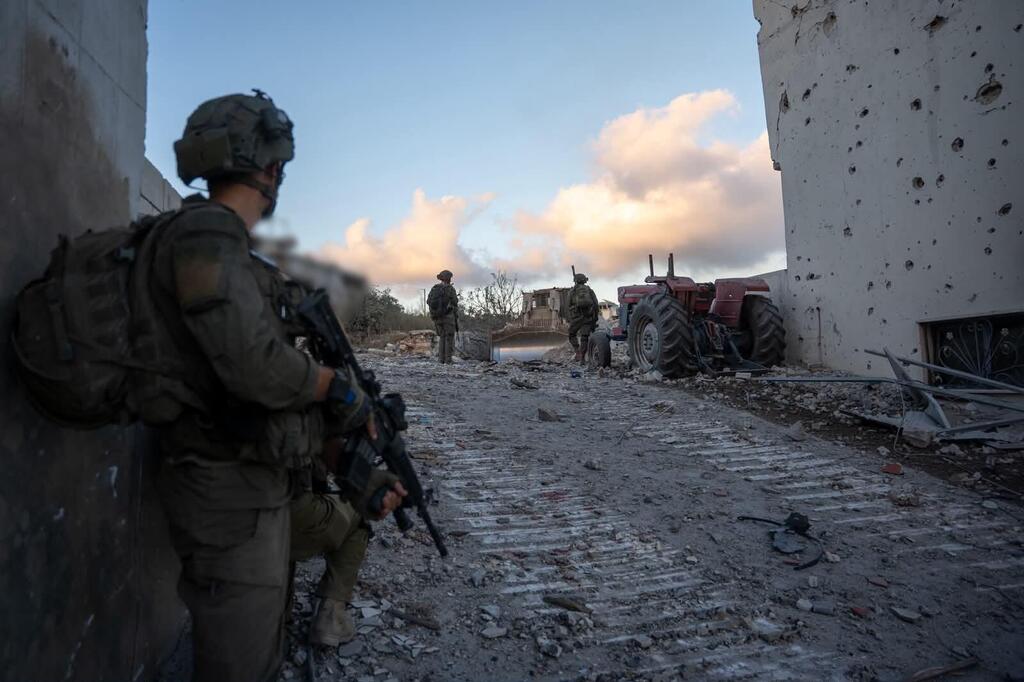
“I stand behind them, and the entire nation stands behind them,” he added. “I firmly insist that we remain in the security zone in southern Lebanon as long as necessary to protect the residents of the north and all citizens of the state.”
Netanyahu’s statement did not define the borders of the security zone. It came against the backdrop of reports that Israel and the United States are discussing “pilot” areas in southern Lebanon where territory currently held by the IDF could be transferred to the Lebanese army, under American supervision, if Beirut can prove it is able to keep Hezbollah out.
The clarification also followed reports that Pakistan and Qatar announced the establishment of a new “deconfliction cell” connected to Lebanon, whose precise role remains unclear. Public statements suggested the new mechanism would include Iran, the United States and Lebanon, but not Israel directly.
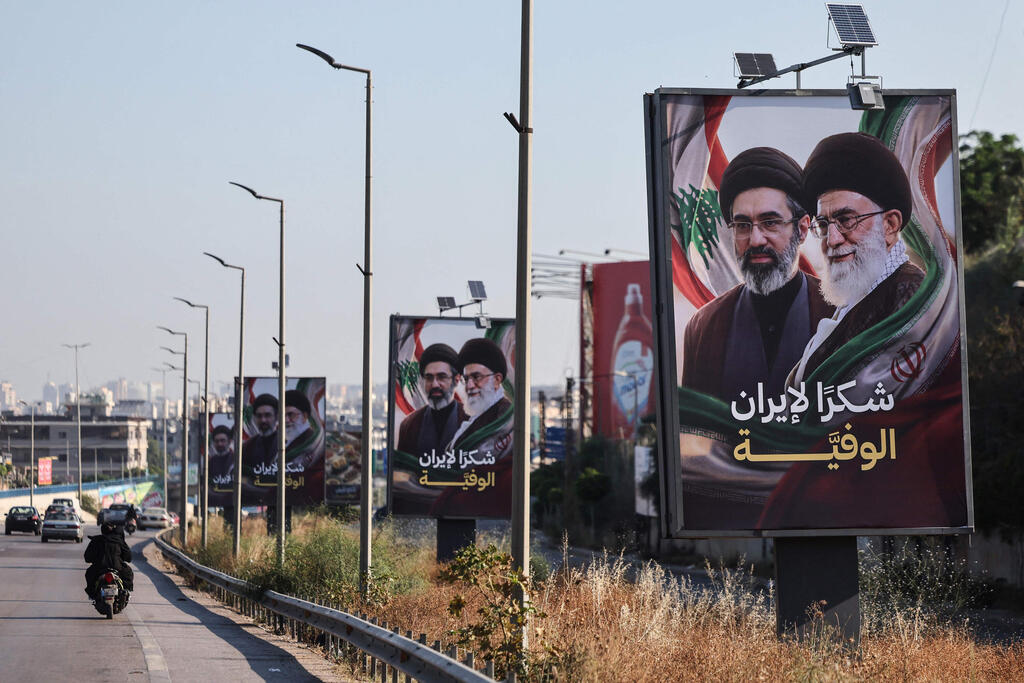
That point was quickly celebrated by Iranian media. Tasnim, a news agency affiliated with the Iranian regime, said Monday that Iran had become “part of the security story in Lebanon,” and repeated that a “dispute resolution unit” would be established with Iranian, American and Lebanese participation to monitor implementation of the first clause of the memorandum of understanding in Lebanon.
Israel already participates in a separate ceasefire monitoring mechanism created in November 2024, together with the United States, Lebanon, France and UNIFIL. That committee was meant to oversee and verify implementation of the ceasefire between Israel and Lebanon, coordinate Lebanese army deployment and help maintain stability along the border. It also passed to the Lebanese army coordinates of sites where Israel said Hezbollah weapons or military facilities were located, so Lebanese forces could inspect them.
But that mechanism has largely failed to enforce the ceasefire since fighting resumed. It held 16 meetings in Naqoura, in southern Lebanon, with the last session taking place on February 25. Planned meetings in March, April and May were canceled after the start of Operation Roaring Lion.
In practice, the mechanism has operated in recent months mainly as an operations room coordinating movement in southern Lebanon, a role that has drawn repeated criticism from Hezbollah-affiliated figures, who accuse it of cooperating with Israel. Lebanese officials have also complained that even civilian movements, including medical evacuations and emergency responses, require coordination to avoid Israeli fire.
The uncertainty over the old mechanism’s future grew after the Qatari-Pakistani announcement. Lebanese President Joseph Aoun was briefed on the new cell and spoke Monday with U.S. Vice President JD Vance, Jared Kushner and Qatari Prime Minister Mohammed al-Thani. Aoun’s office said the call dealt with “consolidating the ceasefire in Lebanon, stopping the Israeli military escalation and the steps that must be taken in this context, including the establishment of a cell for this purpose.”
Netanyahu at the JNS International Policy Summit
(Video: JNS TV)


For Israel, the central issue remains whether any international or regional mechanism could limit the IDF’s ability to act against Hezbollah in southern Lebanon. Netanyahu’s answer Monday was an explicit no.
The prime minister had already told the JNS International Policy Summit over the weekend that Israel would keep its security zone in Lebanon “as long as is necessary to protect our people.” He argued that Israel was doing what any country would do if a heavily armed terrorist army sat across its border and fired rockets, missiles and drones at its towns.
“We established a security zone in Lebanon. And we shall keep it as long as is necessary to protect our people,” Netanyahu said then. “We target the terrorists, but there are some civilian casualties in every such war.”
He added that Israel was not at war with Lebanon itself. “We don’t have a war with Lebanon,” Netanyahu said. “We have a war with Hezbollah, who terrorizes Lebanon and seeks our destruction. And when that proxy of Iran is no longer a threat, whether it’s dismantled or disarmed, yes, we’ll have peace with Lebanon and I look forward to signing it.”
Defense Minister Israel Katz also said Israel had no intention of withdrawing from Beaufort, calling the area an inseparable part of the security zone and vital to the defense of Galilee communities and IDF forces.
Still, Israeli officials have acknowledged that discussions are underway over possible adjustments to the IDF’s deployment in southern Lebanon. Officials say those changes would not be a concession to American pressure, but a way to reduce risk to soldiers while testing whether the Lebanese army can control specific areas and prevent Hezbollah from returning.
(Photo: Anwar AMRO / AFP)
One Israeli source said there was “no American demand for a small or large withdrawal,” but confirmed that since the previous round of talks, the sides have discussed “pilot” areas where the Lebanese army would be expected to prove it can keep the area free of Hezbollah. The source said maps and implementation details were expected to be discussed in negotiations beginning Tuesday, with the United States accompanying the pilot to ensure the Lebanese army succeeds.
Lebanon’s LBCI network reported that Beirut had been informed by the American side that Israel would carry out limited withdrawals from southern Lebanon as a goodwill gesture ahead of the next round of talks.
The debate has intensified as Lebanon becomes entangled in broader U.S.-Iran diplomacy. Talks opened in Switzerland between U.S. and Iranian representatives, with Qatar and Pakistan acting as mediators. Iranian media reported that Tehran’s delegation weighed whether to continue after U.S. President Donald Trump threatened Iran and demanded that it stop its “highly paid proxies in Lebanon” from causing trouble.
A member of the Iranian negotiating team said that if the war in Lebanon does not end, negotiations on other issues would not take place. Vance, meanwhile, said significant progress had been made in recent days on steps aimed at ensuring a ceasefire between the sides in Lebanon.
But in Jerusalem, officials continue to stress that ceasefire arrangements, coordination rooms or pilot zones will not replace Israel’s right to act militarily against Hezbollah threats. Netanyahu’s latest statement was aimed at making that point clear to Israeli critics and foreign actors alike: Israel may discuss mechanisms and maps, but it says the IDF’s fire policy in southern Lebanon remains unrestricted.