

On Sunday, Israel will mark 25 years since the Ramallah lynching, in which reservists Vadim Nurzhitz and Yossi Avrahami were murdered by a Palestinian mob. Under the government’s approval of the hostage deal, which includes the release of 250 “heavy” Palestinian security prisoners, several of those involved in the lynching that horrified the country a quarter century ago are expected to be freed. “The terrorist who murdered my brother will be released. Everything comes back with pain and tears,” said Michael Nurzhitz, brother of Vadim.
Following the directive from the political echelon, families of victims are being personally notified that the terrorists responsible for their loved ones’ deaths are among those slated for release. National Insurance officials are delivering the notices to families of civilian victims, while representatives from the IDF, police and security agencies are informing families of fallen soldiers. The Defense Ministry is coordinating the process.
Gallery
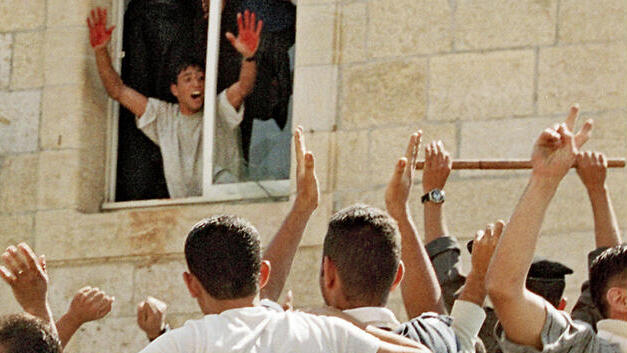
A Palestinian stands in the window of a Ramallah police station in October 2000, displaying the blood of two slain Israeli soldiers on his hands
(Photo: AFP)
Michael Nurzhitz said he has not yet received official notice regarding the release of those who participated in the lynching. “It’s inconceivable that 25 years to the day after my brother’s murder, which was seen all over the world, his killer will walk free,” he said. “My brother, a 33-year-old reservist, left behind his pregnant wife Irina and their son David, who never got to meet his father, only see his pictures.” “If they release the murderer,” Michael continued, “it’s clear that, alongside my family’s deep pain, the terrorist will return to terror, just like those released in the Shalit deal. They will go back to killing Jews. That’s their true goal.” Still, he added that he is happy for the hostages who will return home. “It’s important and very moving,” he said. “We never imagined this would happen, but it’s clear the terrorist will go back to killing and acting against us.”
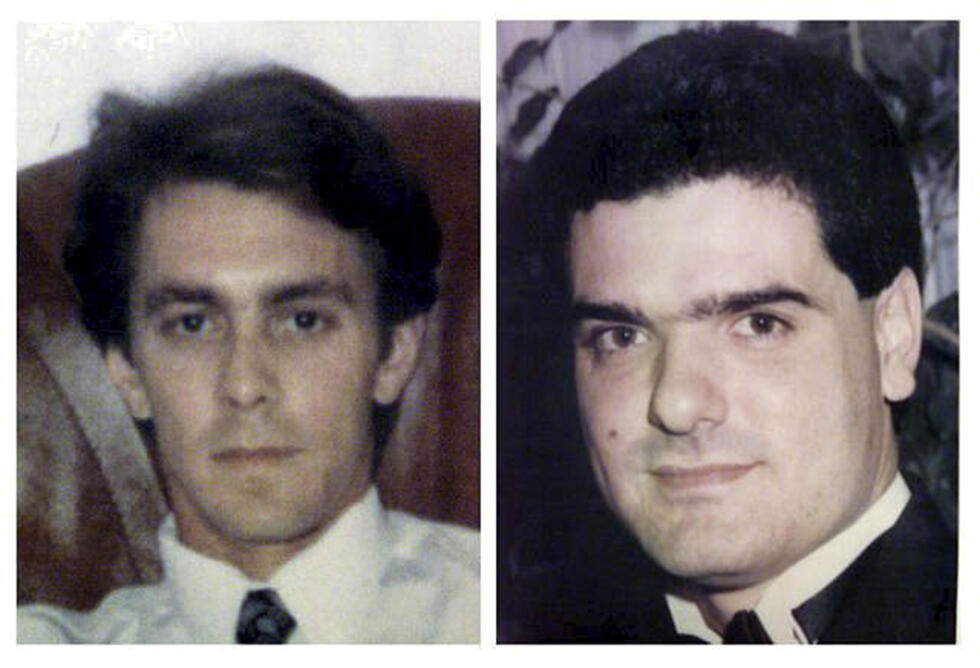
Vadim Nurzhitz and Yossi Avrahami
(Photo: Reuters)
One of those expected to be freed is Raed Sheikh, a Palestinian police officer convicted in 2003 by a military court in the West Bank for the murder of the two reservists. Two of the three judges on the panel demanded the death penalty, but since Israeli military law requires a unanimous decision for such a sentence, he received two life terms instead. Shikh was captured several months after the lynching by Israel’s Duvdevan special forces unit. On the day of the murder, October 12, 2000, he was stationed at the Ramallah police station with several other armed officers. Around 10 a.m., the Palestinian officers saw a vehicle with Israeli license plates approaching the station. Inside were the two reservists, who had mistakenly entered Ramallah while on their way to their base nearby.
Recognizing one of the men in uniform, the officers stopped the car, ordered the soldiers out, and led them inside the station at gunpoint. A mob soon stormed the building. Witnesses later testified that Shikh took part in beating the soldiers, striking Vadim Nurzhitz in the head with an iron pipe until he collapsed, bleeding and gasping for air. Both soldiers were killed and their bodies mutilated by the mob as the world watched in horror. Several of the lynching participants have already been freed in previous prisoner exchanges; one was later killed in Gaza.

Dalia Lemkus was murdered in a terror attack in November 2014
Brenda Lemkus, whose daughter Dalia was murdered in a 2014 stabbing in Gush Etzion, condemned the planned release of her daughter’s killer, Maher al-Hashlamoun. “I condemn the Israeli government for freeing my daughter’s murderer, and every terrorist who took part in attacks against Jews,” she said. “Such releases immediately invite the next murder. The blood of victims is on the hands of the ministers who voted in favor.” She added that she learned of the release from the media rather than through an official notification, calling it “a disgrace.” Lamkus urged lawmakers to advance the death penalty for terrorists, accusing Prime Minister Netanyahu of repeatedly blocking it. “I hope that once the hostages return home, his excuses will end,” she said.
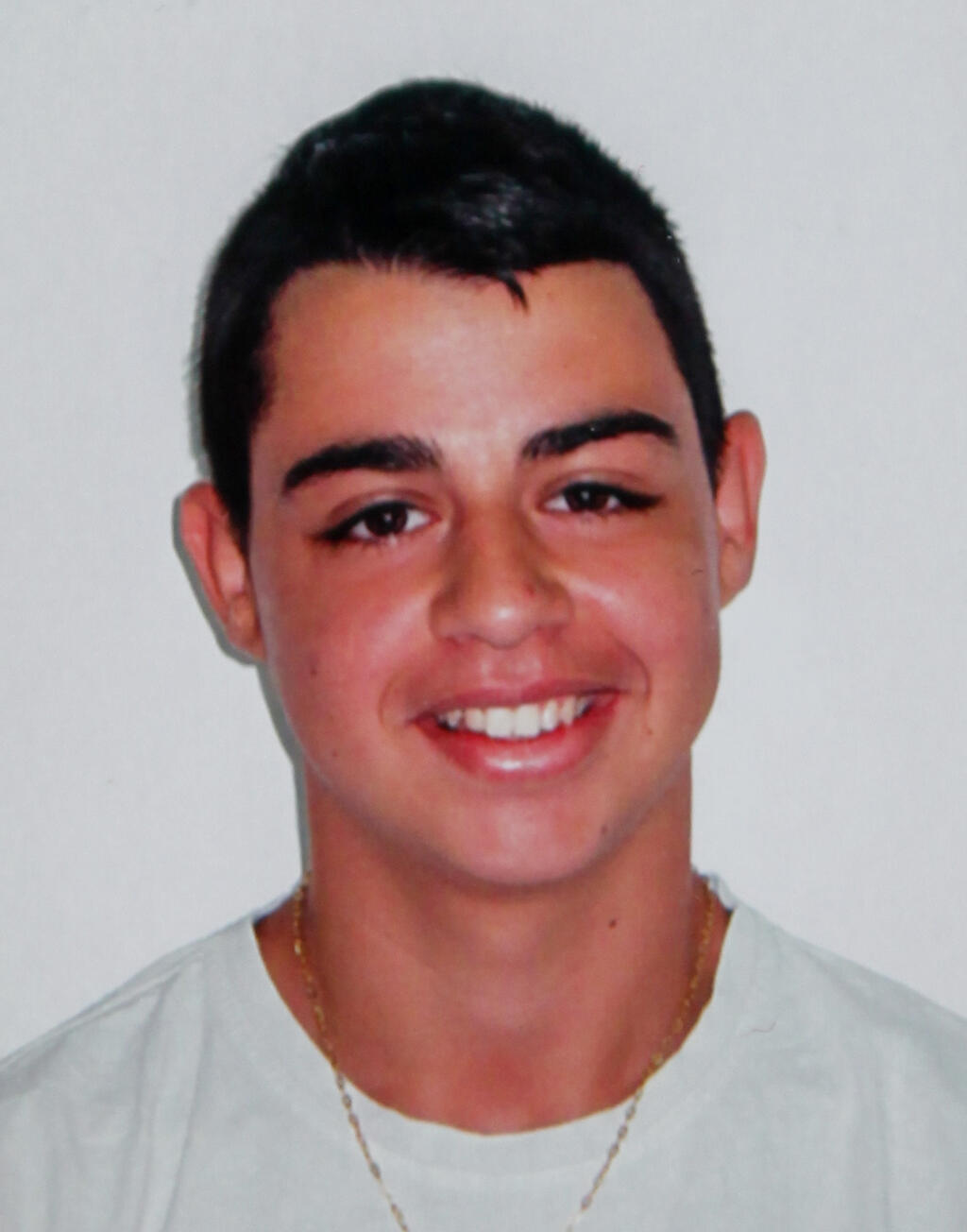
Eden Atias stabbed to death in Afula in 2013
(Photo: Avishag Shaar-Yashuv)
Eliya Atias, mother of IDF Pvt. Eden Atias — who was stabbed to death by a Palestinian terrorist on a bus in Afula in 2013 — said she had not yet been formally informed. “I assumed this was coming,” she said. “I find comfort in knowing that thanks to this murderer’s release, my brothers and sisters will be freed from Gaza. Their freedom comes first. I believe God will judge him as he deserves.”
Daniel Lerner, whose son Baruch (“Buri”) was killed in the 2002 Café Moment bombing, said: “When Gilad Shalit was released, I warned that we’d pay a heavy price — and I couldn’t imagine how heavy. I have no problem with releasing my son’s killer if Israel acts like it did with the Munich terrorists. Sadly, I don’t believe this government will do that. But we must end this and bring the hostages home. That’s our duty as a nation, and it may help heal our internal divisions.”
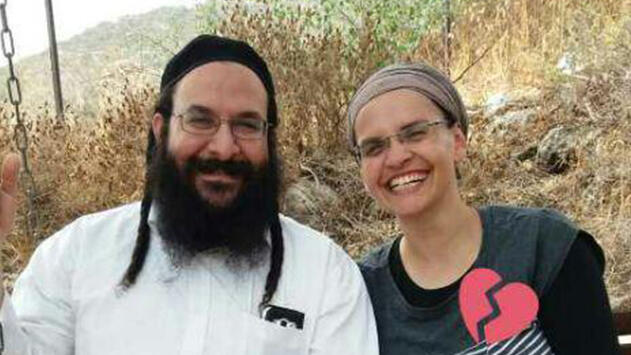
Yael Shevach with husband Raziel, killed in Havat Gilad shooting in 2018
Yael Shevach, widow of Rabbi Raziel Shevach, murdered in a 2018 shooting attack near Havat Gilad, wrote on X following the expected release of one of the attackers: “A prison official told me recently that the terrorist is in such a broken mental state that it’s better for him to be someone else’s burden, not ours. If he’s the price for the hostages’ freedom — so be it.”

Abie Moses and wife Ofra killed in a 1987 firebombing
(Photo: Courtesy of the family)
Abie Moses, whose wife Ofra and son Tal were killed in a 1987 firebombing, said their killer is also set to be released. “It’s a difficult decision for our family, but I’ve said before — I have no problem as long as the hostages return home,” he told Ynet. “I have no one left to hug, but the hostage families do. We are paying a heavy price, but the most important thing is that our people come home.”
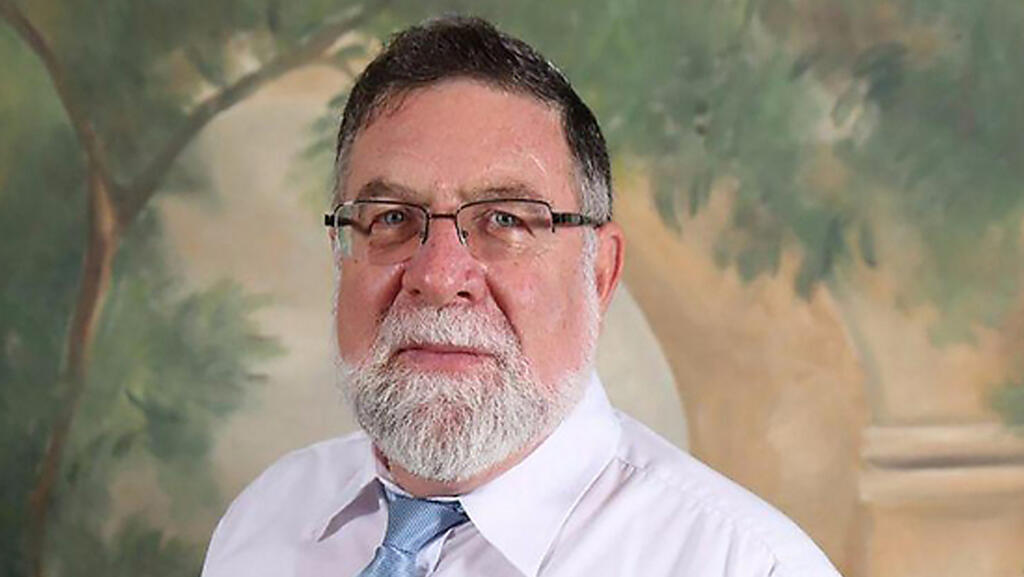
Reuven Shmerling murdered in Kafr Qasim in 2017
Shai Shmerling, whose father Reuven was murdered in Kafr Qasim in 2017, said: “Exactly eight years ago on Sukkot, my father was ambushed and murdered. Both killers received life sentences — one was already freed in January, and now they’re releasing the second, even though he hasn’t served half his term. We are overjoyed for the hostages’ release. All we ask is this: don’t send the murderer to a resort in Qatar. Deport him to Gaza, where he belongs — among the ruins.”
First published: 16:30, 10.11.25