


Sanctions pressure is growing, relations with key Western governments are deteriorating and Israel’s international standing is emerging as one of the biggest challenges awaiting the next government.
After years of war, repeated confrontations with European governments and mounting criticism of Israeli policy in the West Bank, ties with several countries have fallen to some of their lowest points in decades. In a growing number of capitals, officials are no longer limiting themselves to condemnations and are considering concrete measures against Israel.
Gallery
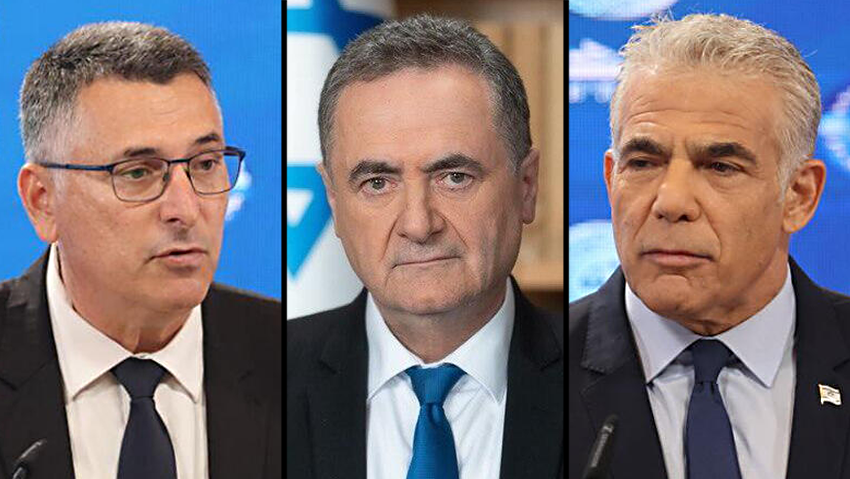
Gideon Sa’ar, Israel Katz and Yair Lapid
(Photo: Moti Kimchi, Yoav Dudkevitch, Elad Malka/Defense Ministry)
European governments have in recent months discussed a range of possible steps, including in response to plans to advance construction in the E1 area. Diplomatic officials say one of the main questions is timing: some European capitals fear sanctions imposed shortly before Israel’s election could strengthen Prime Minister Benjamin Netanyahu and right-wing parties by allowing them to portray the measures as foreign interference. Britain, however, is moving toward restrictions on trade in goods, and in some cases services, originating in Israeli settlements, while considering additional measures as part of a broader shift in policy toward Israel.
The deterioration is increasingly visible beyond official diplomacy as well. Israelis have reported cases across Europe in which they were refused accommodation or services because of their nationality or origin. In Germany, authorities opened an investigation after an Israeli family seeking to book a room at a Bavarian hotel received a message saying Jews were not welcome.
Against that backdrop, the identity of Israel’s next foreign minister could become far more consequential than an ordinary coalition bargaining question. Whoever takes the job will have to manage relations with Washington and Israel’s regional partners while trying to prevent further sanctions, repair strained alliances and reverse a broader trend of diplomatic isolation.
Right-wing government: Sa’ar wants to stay, Katz could return
If Netanyahu forms another government, the natural candidate to remain foreign minister is Gideon Sa’ar. He wants to stay in the post and continue a strategy centered on expanding Israel’s circle of friendly governments, with particular emphasis on Latin America. Sa’ar designated 2026 the Foreign Ministry’s “Year of Latin America,” seeking to capitalize on political shifts across the region.

E1
(Photo: AHMAD GHARABLI / AFP)
During his tenure, Israel restored diplomatic relations with Bolivia after years of rupture, while a change of government in Colombia led to the full restoration of ties and a decision to move its embassy to Jerusalem. Israel and the United States also established a joint strategic dialogue focused on Latin America. Jerusalem has meanwhile begun a cautious rapprochement with Venezuela, where consular services were restored in August, 17 years after relations were severed. The next major target is Brazil, where Israeli officials hope future political change could create an opening to repair badly strained relations.
Even if Sa’ar wants to stay, however, the Foreign Ministry could become a focus of internal coalition bargaining. Defense Minister Israel Katz has already served twice as foreign minister. His preference would likely be to remain at the Defense Ministry, but if that portfolio goes elsewhere during coalition negotiations, Katz could seek a return to the Foreign Ministry, forcing Netanyahu to choose between Sa’ar and one of Likud’s most senior figures.
Centrist government: Lapid leads, Bennett and Lieberman in the picture
If parties opposed to Netanyahu form the next government, Yair Lapid would begin as the leading candidate for foreign minister. Lapid held the post from 2021 to 2022 and built direct relationships with governments in Europe and the United States. Within B’Yachad, he would also be a natural candidate for a senior portfolio if Naftali Bennett becomes prime minister.
A Lapid-led Foreign Ministry would likely put repairing relations with Europe near the top of its agenda. While the current government has relied partly on friendly states to block measures against Israel inside European institutions, a centrist government could try to rebuild direct dialogue with Brussels, Paris, Berlin and London and prevent punitive measures from gaining momentum in the first place.
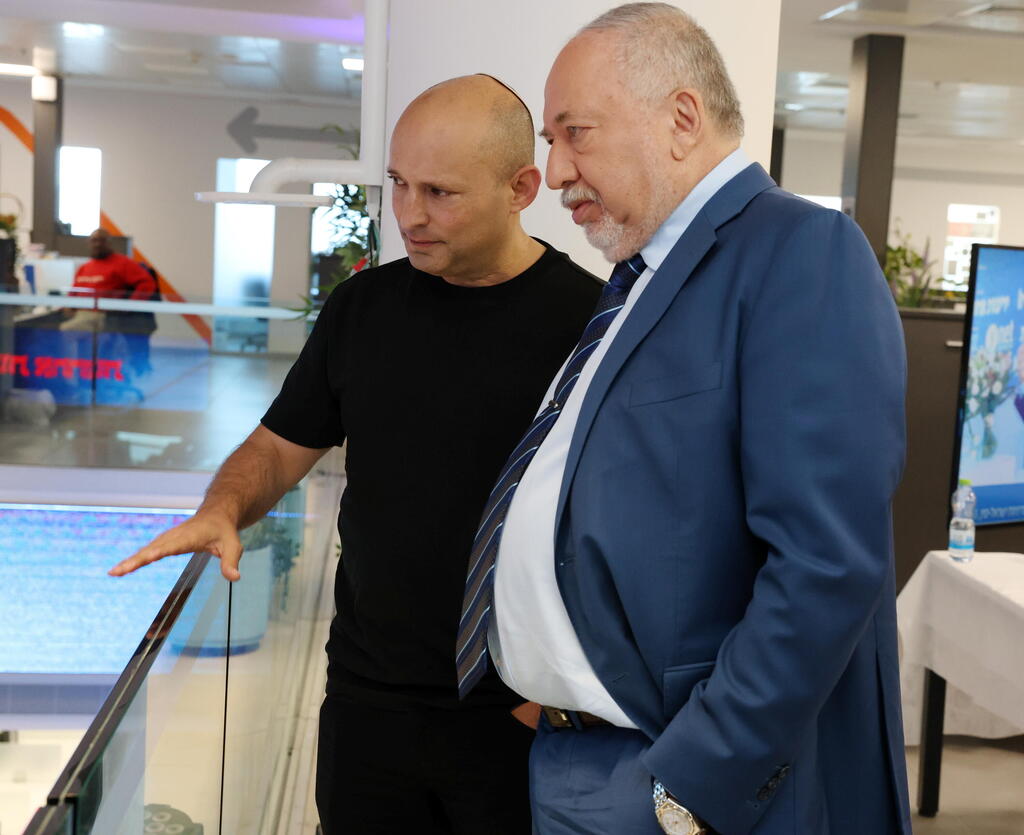
Naftali Bennett and Avigdor Lieberman
(Photo: Shaul Golan)
Lapid would not necessarily be the only option. Bennett himself could seek the Foreign Ministry if he does not receive the defense portfolio, or if a rotation agreement leaves him outside the Prime Minister’s Office for part of the government’s term. Avigdor Lieberman could also enter the picture. The Yisrael Beytenu leader served twice as foreign minister, from 2009 to 2012 and again from 2013 to 2015, and his candidacy would depend largely on which portfolio he prioritizes in coalition negotiations.
The first mission: stop the snowball
Whoever gets the job will inherit a diplomatic crisis that is already moving. The European Union has imposed additional sanctions this year on settlers and Israeli organizations while continuing to debate broader measures, including restrictions involving trade with settlements. More sweeping steps have so far encountered opposition from individual EU governments, including Czechia and Slovenia, preventing the formation of the majority required for some measures.
The challenge for the next foreign minister will therefore be twofold: preserve the governments still willing to help Israel block punitive action, while expanding that group before it shrinks further. As criticism of Israel spreads, relying on a small number of friendly capitals becomes increasingly precarious.
Whether the job goes to Sa’ar, Katz, Lapid, Bennett, Lieberman or another candidate, the task will be the same: stop the diplomatic snowball before sanctions, isolation and strained alliances become much harder to reverse.