


Shas party leader Aryeh Deri on Thursday accused IDF Chief of Staff Lt. Gen. Eyal Zamir of political interference ahead of the upcoming elections, escalating the dispute over military conscription for ultra-Orthodox men that has become one of the country's most divisive political issues.
In an interview with the ultra-Orthodox news outlet Kikar HaShabbat, Deri sharply criticized Zamir over a letter he sent to the Knesset's Foreign Affairs and Defense Committee opposing the passing of legislation that temporarily halts arrests of some ultra-Orthodox draft evaders recognized as yeshiva students.
Gallery
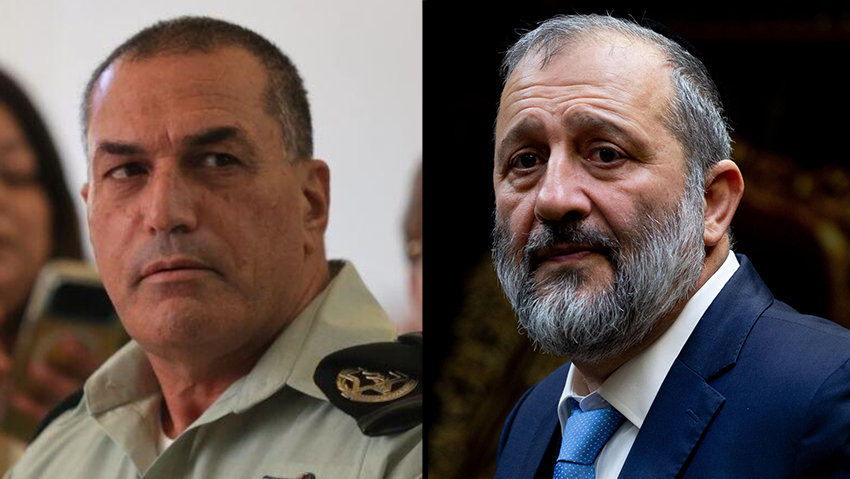
IDF Chief of Staff Lt. Gen. Eyal Zamir, Shas party leader Aryeh Deri
(Photo: Ohad Zwigenberg, Alex Kolomoisky)
"What the chief of staff did during an election period was try to help the left-wing bloc, unequivocally," Deri said. "He must not engage in politics. This is a very dangerous precedent. He caused great damage to the army."
Deri, whose Shas party championed the legislation, said he continued to respect Zamir personally but claimed the military chief had crossed a line.
"He is a friend of mine. I respect him and have defended him many times when he was attacked," Deri said. "But unfortunately, for quite some time I have felt he has lost his way."
The comments came after months of political turmoil surrounding legislation aimed at easing enforcement against ultra-Orthodox men who fail to report for mandatory military service while broader negotiations continue over a permanent conscription framework.
The measure, approved by the Knesset this week, would temporarily suspend arrests, criminal investigations and some enforcement actions against eligible yeshiva students until the end of November. The High Court of Justice has since frozen the law's implementation pending legal challenges, leaving existing enforcement measures in place while it considers petitions arguing the law violates constitutional principles of equality.
The legislation was part of a broader package demanded by ultra-Orthodox coalition parties in exchange for supporting Prime Minister Benjamin Netanyahu's government before parliament recessed ahead of elections. The broader effort to pass legislation regulating military exemptions for the ultra-Orthodox has repeatedly fractured Netanyahu's coalition, prompting resignations, public defections and growing criticism from within his own Likud party.

Ultra-Orthodox crowd outside a military prison protests arrests of yeshiva students
(Photo: Mickey Schmidt)
The debate has intensified as the IDF remains heavily burdened after nearly three years of fighting on multiple fronts following Hamas' Oct. 7, 2023, attack, with reserve forces repeatedly mobilized and military leaders warning of persistent manpower shortages.
In his letter to lawmakers before the vote, Zamir warned that suspending arrests would further undermine the military's ability to enforce conscription at a time when the army urgently needs additional personnel.
The IDF has increasingly stressed that expanding military service is now an operational necessity rather than solely a political or social issue. Zamir has repeatedly warned that ongoing security demands require thousands of additional soldiers, telling lawmakers in recent weeks that the army faces one of its most serious manpower shortages in decades.
Deri dismissed those concerns, arguing the legislation would not reduce enlistment. "It cannot be that the chief of staff knows these arrests will not bring him a single recruit," he said. "For a month, while the defense minister and the prime minister were asking the committee to advance this law and avoid arrests, he did not say a word."
He accused Zamir of speaking out only after the issue became politically contentious.
Other coalition lawmakers have also attacked the military chief.
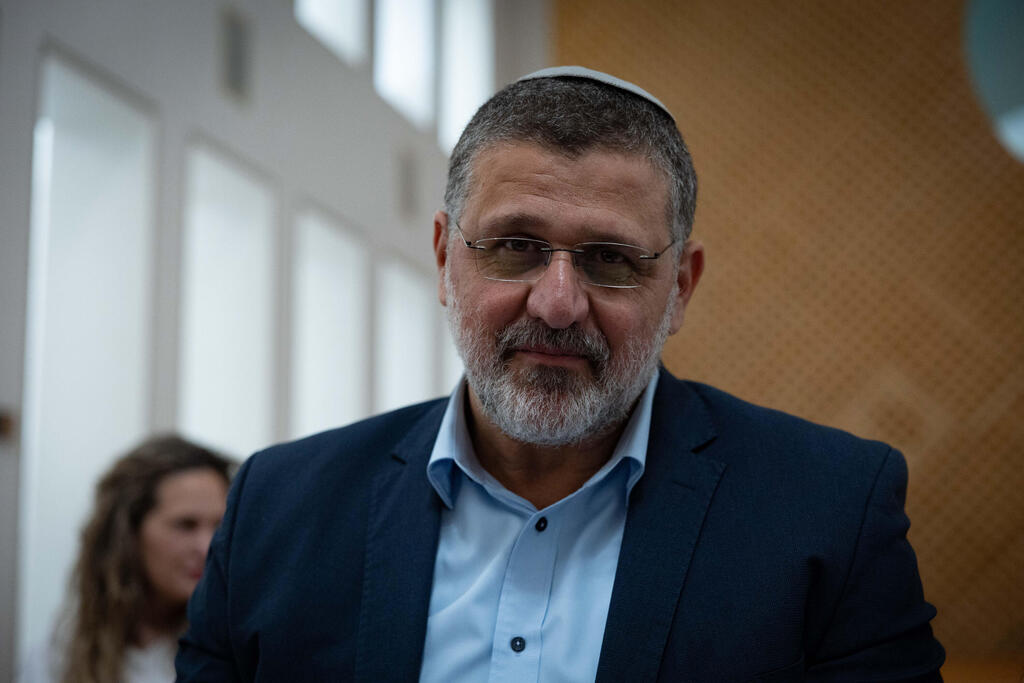
Avichay Buaron
(Photo: Yonatan Sindel/Flash90)
Likud lawmaker Avichay Buaron told ynet this week that Zamir had improperly entered the political arena by publicly opposing the legislation.
"The chief of staff's conduct is, to put it mildly, inappropriate," Boaron said. "He crossed a line and entered an issue that is not his."
Buaron argued Zamir should have expressed his objections privately to Defense Minister Israel Katz rather than communicating them to lawmakers and the public. "For that reason, the defense minister should dismiss the chief of staff," he said.