

The High Court of Justice on Wednesday temporarily blocked a newly approved law that would have suspended arrests and other enforcement measures against ultra-Orthodox Jewish men accused of evading mandatory military service, less than a day after the legislation passed parliament.
The court issued a temporary injunction freezing the law's implementation while it considers petitions challenging its constitutionality, extending the latest chapter in Israel's long-running dispute over military conscription for the ultra-Orthodox community as the country's armed forces remain stretched by nearly three years of war.
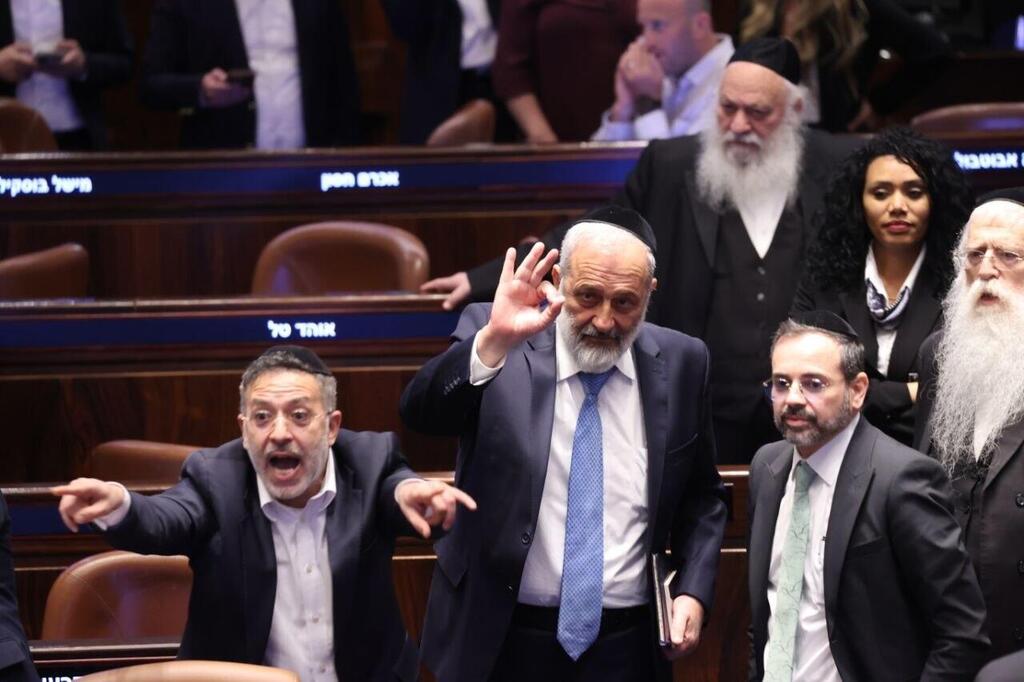
In its decision, the court cited its longstanding rulings on the enlistment of yeshiva students, as well as the implications of suspending arrests, investigations and enforcement measures for only one segment of the population.
The court ordered the government to explain why the amendment to the Security Service Law should not be struck down. Justice Ofer Grosskopf said the petitions would be heard as soon as possible by an expanded panel of justices appointed by Chief Justice Yitzhak Amit.
The petitions were filed by opposition parties Yesh Atid and Yisrael Beitenu, along with the Movement for Quality Government in Israel and the advocacy group Israel Hofsheet, or Be Free Israel.
The law, approved Tuesday by the Knesset in its second and third readings, was intended to suspend arrests, criminal investigations and other enforcement measures against ultra-Orthodox draft evaders recognized as full-time yeshiva students until Nov. 30. An earlier version would have lasted only 90 days.
Under the parliamentary calendar and with elections expected, the law's practical effect could have extended into the term of the next Knesset.
The legislation established a declaration and verification mechanism and authorized the defense minister to determine which yeshivas would qualify, taking into account recommendations from a committee representing religious seminaries and oversight mechanisms within the Education Ministry. Several sanctions originally proposed against institutions found violating the rules were removed from the final version.
The legal adviser to the Knesset Foreign Affairs and Defense Committee had sharply criticized the proposal before its passage, describing it as a sector-specific exemption that lacked meaningful mechanisms to reduce inequality. In a legal opinion, she warned that exempting one group from the obligations of military service without effective oversight or balancing sanctions raised serious constitutional concerns.
The High Court's decision means existing enforcement measures against draft evaders remain in force while the case proceeds.
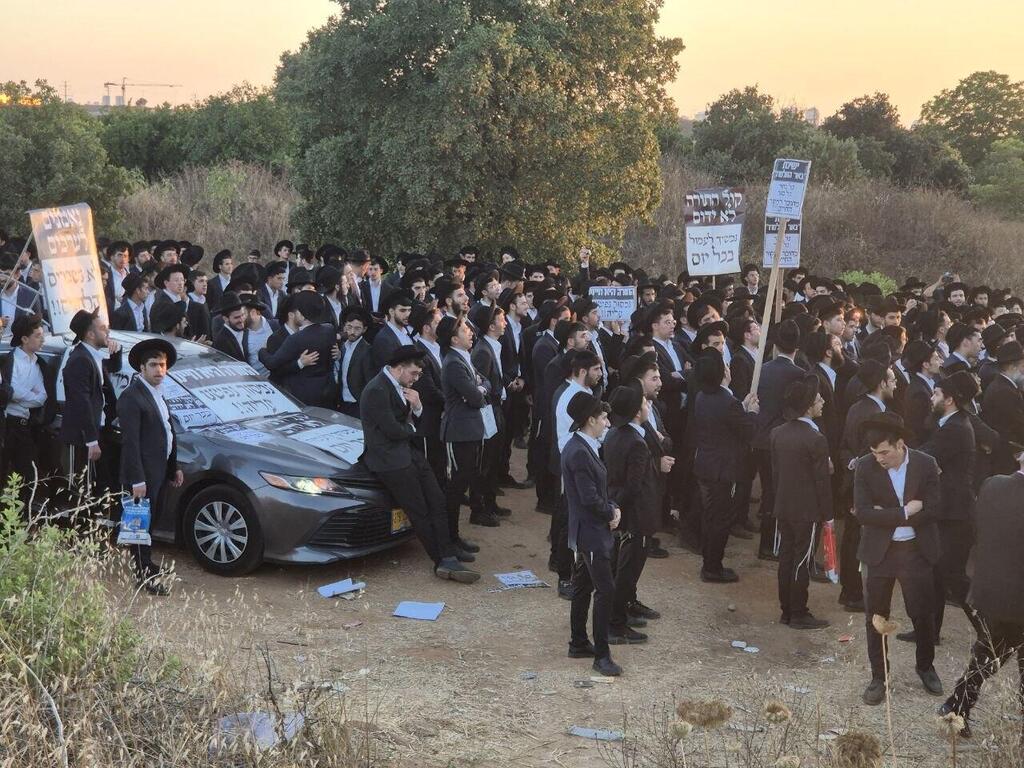
Ultra-Orthodox crowd gathers outside a military prison to protest the arrest of yeshiva students
(Photo: Mickey Schmidt)
The dispute over ultra-Orthodox military service has become one of Israel's most contentious political issues since the start of the war following Hamas' Oct. 7, 2023, attack. The IDF has faced growing manpower shortages as reservists have been repeatedly called up for extended deployments in Gaza, along Israel's northern border and in other operations.
For decades, ultra-Orthodox men studying full time in religious seminaries received broad exemptions from compulsory military service, a policy originally intended for a small number of scholars but which expanded dramatically as the community grew. In June 2024, the High Court ruled that, absent specific legislation, the government must begin drafting eligible ultra-Orthodox men and could no longer continue blanket exemptions.
Since that ruling, the IDF has begun issuing draft notices to thousands of eligible ultra-Orthodox men and, in some cases, arrest warrants for those who ignore repeated summonses. The move has triggered mass protests by parts of the ultra-Orthodox community and intensified tensions within Prime Minister Benjamin Netanyahu's governing coalition, which depends heavily on ultra-Orthodox parties.
The law approved Tuesday formed part of a broader package of legislation negotiated between Netanyahu's coalition and its ultra-Orthodox partners before parliament begins its summer recess.
Netanyahu did not participate in Tuesday's vote, marking the third consecutive time he was absent for a politically divisive coalition bill. He also skipped votes on a Basic Law enshrining Torah study and legislation establishing a political commission of inquiry into the Oct. 7 attack.
The measure passed by a narrow 58-54 margin despite defections from within the governing coalition.
Likud lawmakers Yuli Edelstein and Dan Illouz voted against the bill, as did Deputy Foreign Minister Sharren Haskel and coalition lawmaker Moshe Solomon. Religious Zionist Party lawmakers Michal Waldiger and Ofir Sofer were absent.
Hours after the legislation passed, Haskel announced her resignation from the government.
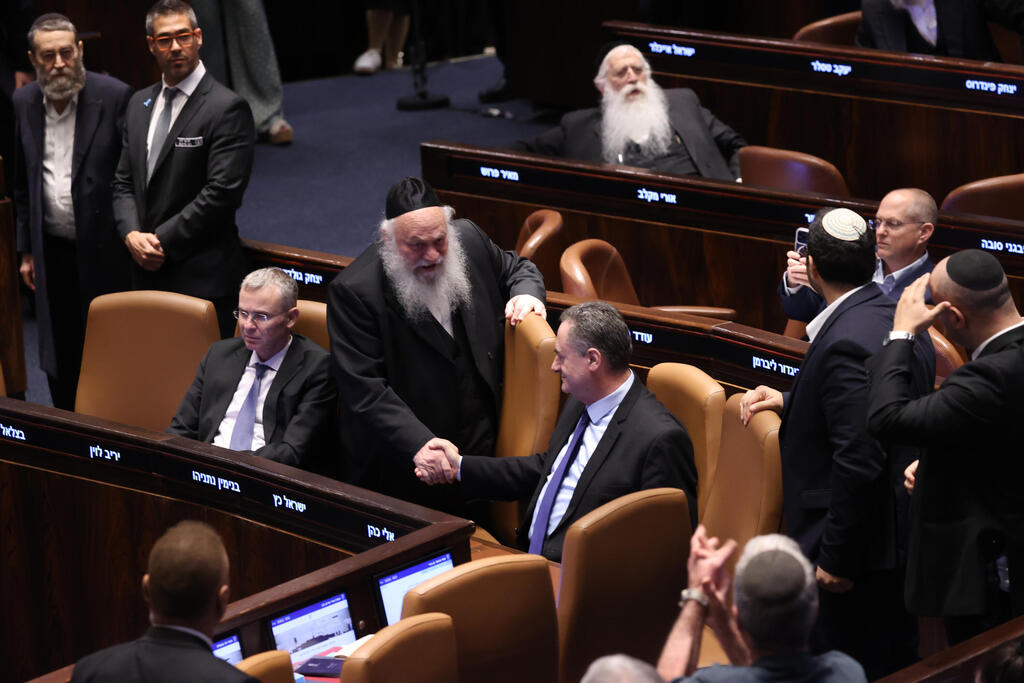
(Photo: Alex Kolomoisky)
"I stand before you with a heavy heart because the law exempting draft evaders passed the Knesset," Haskel told reporters. "It harms those who serve and Israel's security. It harms the young men and women who serve the state for three years and have paid a heavy price. I can no longer stand by."
The court's decision drew sharply divided reactions.
Shas party leader Aryeh Deri accused the court of judicial overreach.
"The speed with which the High Court issued a temporary injunction against a law passed by a Knesset majority, without any authority, is yet another expression of judicial activism run amok," Deri said. He argued the legislation was intended to prevent further social divisions while allowing time for broader political agreements and accused the court of "deepening the chaos."
Lawmaker Meir Porush of the Ultra-Orthodox United Torah Judaism (UTJ) party said the decision was unlawful, claiming that "any police officer or soldier who arrests Torah students is violating the law."
Agudat Yisrael, the Hasidic faction of UTJ, blamed Deri for advancing legislation that it said was destined to be struck down by the court.
Petitioners welcomed the ruling.
The Movement for Quality Government called it "a significant and important achievement," saying the court had prevented the coalition from granting "immunity to draft evaders based solely on declarations." The group said it would continue seeking the complete repeal of both the draft law and the recently approved Basic Law on Torah study, arguing that "one law must apply equally to everyone."
Israel Hofsheet CEO Uri Keidar also praised the decision, saying Israeli law should apply equally to ultra-Orthodox citizens.
The legislation also sparked controversy during parliamentary debate after the Knesset's legal adviser instructed ultra-Orthodox lawmakers to disclose whether family members could personally benefit from the measure.
Opposition lawmaker Elazar Stern alleged that Deri had grandchildren who were draft evaders, prompting Deputy Knesset Speaker Limor Son Har-Melech to order his microphone cut off.
Lawmakers from Shas and UTJ later submitted a joint disclosure stating that, among the tens of thousands of Torah students, they also had children and grandchildren over age 18 who "may be affected" by the legislation. Opposition lawmakers argued the statement fell short of full disclosure.
Opposition lawmaker Chili Tropper responded with a disclosure of his own, listing numerous family members serving in combat units, including daughters, sons-in-law, brothers and more than 20 nephews and cousins.
"All of these people will serve longer and face greater risks because of the exemption this government is granting to draft evaders," Tropper said.