


Israel will go to elections on October 27, according to actions taken in the Knesset on Sunday.
The Knesset will be dissolved on July 17, meaning Israel’s next election will be held on October 27, the Knesset House Committee officially decided Sunday during deliberations on the Party Financing Law.
After a turbulent term marked by protests against the government over its judicial overhaul push, the October 7 massacre, the campaign for the release of the hostages and a war that has lasted nearly three years, the election will be held on its original date — the first time that has happened since 1988.
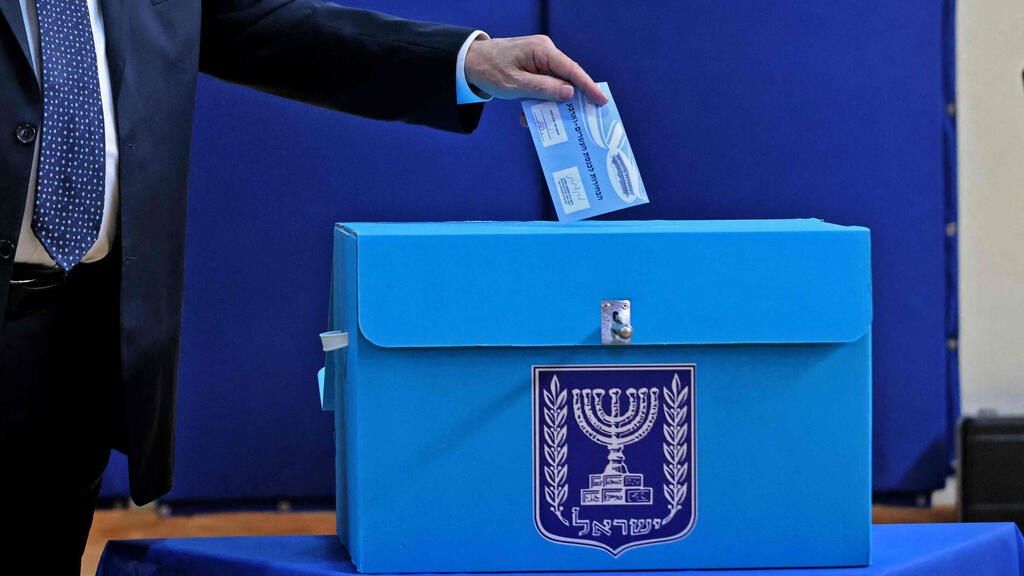
The election will be overseen by the Central Elections Committee, which is made up of representatives of the factions represented in the Knesset according to their relative size. The committee is headed by Supreme Court Justice Noam Sohlberg. Following the retirement of Orly Ades in April, Dean Livne is serving as acting director general of the committee. It has not yet been decided whether party lists must be submitted 45 or 50 days before the election; Livne is seeking 50 days.
On Friday, July 17, the election period for the 26th Knesset will officially begin. The Knesset will go into recess, the government will become a caretaker government and, during that period, it will not be possible to advance issues except for legislation by consensus on regulations or necessary security needs.
In the coming days, Prime Minister Benjamin Netanyahu is expected to complete the deal with the ultra-Orthodox parties revealed by ynet and pay a significant political price up front in the hope that the Haredi parties will repay him later at the ballot box.
Netanyahu decided to push forward the Haredi parties’ legislative demands just before the end of the term for one reason: to preserve the coalition bloc so the parties enter the coming election united. Given the current polling situation, Netanyahu and his aides believe the price he will pay for advancing the Haredi legislation is lower than the cost of entering the election without a united bloc, which could at least prevent the opposing camp from forming a government.
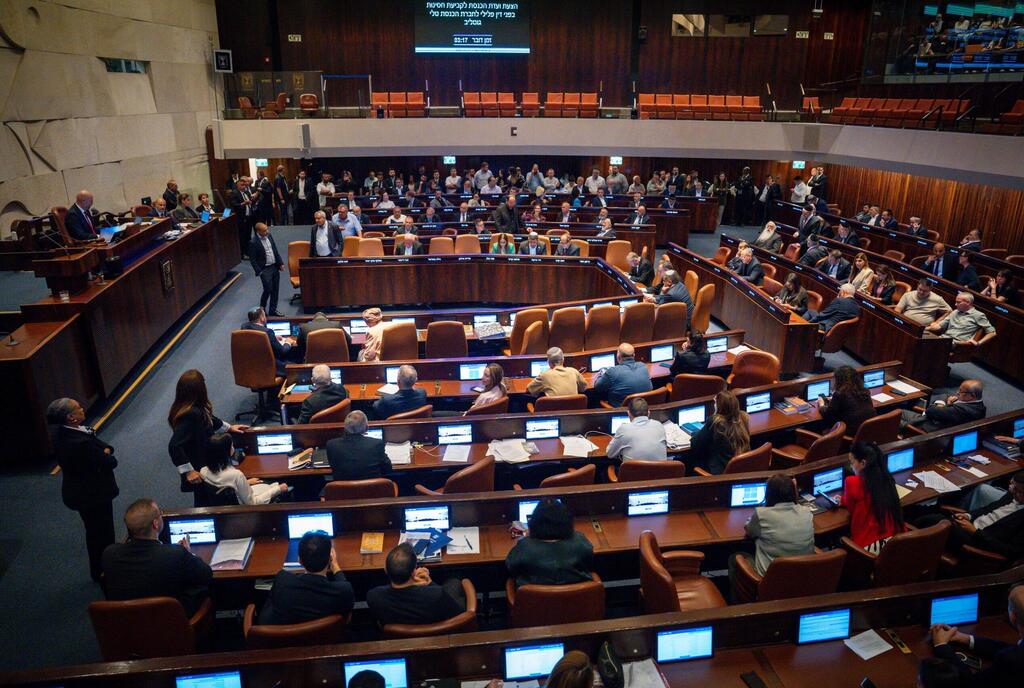
The Knesset will be dissolved on July 17
(Photo: Shilo Shalom)
Yisrael Beytenu chairman Avigdor Lieberman responded to the official election date, saying: “On October 27, we will win. We will replace the government of the October 7 massacre, establish a Zionist and statesmanlike government and rehabilitate the country.”
Bills to be advanced in the final week
The softened version of the Basic Law on Torah Study removed a clause that would have granted draft dodgers benefits equivalent to those of combat soldiers. But even the revised version could still help the ultra-Orthodox in their fight against IDF enlistment, since it anchors Torah study as a “basic value.” When the draft issue reaches the High Court of Justice, the Haredi parties will be able to argue that the value of Torah study is equal to the value of equality.
The bill freezing arrests of Haredi draft dodgers also underwent significant changes. In addition to extending the time limit to five months, until November 30, a clause was canceled that would have barred a yeshiva from declaring exemption immunity for additional students if five of its students had been fined. Another clause concerns a yeshiva found to have students who are not actually studying Torah. Under the updated provision, if a yeshiva fails an inspection and it turns out its students are not actually studying Torah, they can simply register at another yeshiva.
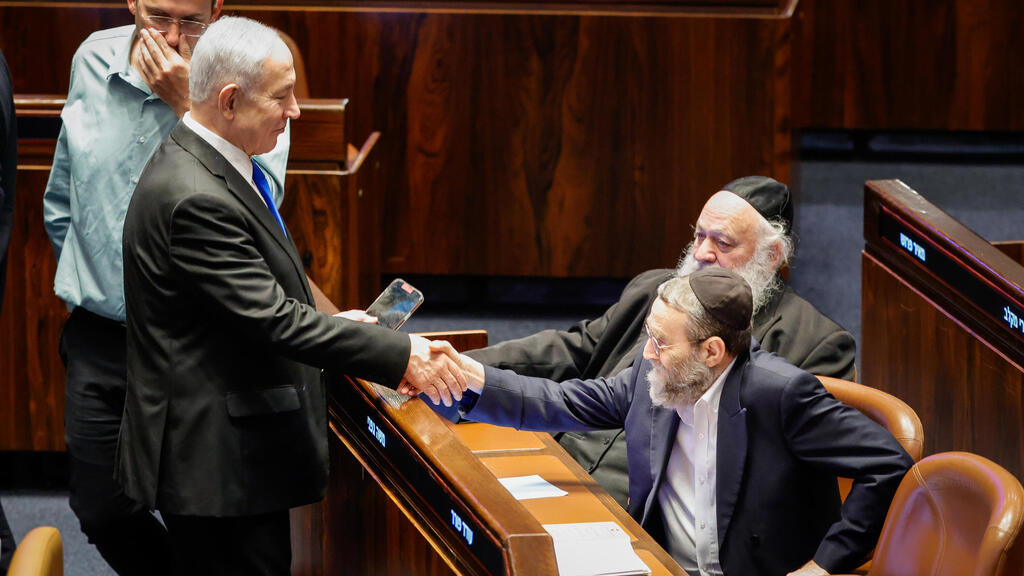
Prime Minister Benjamin Netanyahu advanced several bills as part of his deal with the Haredi parties
( Photo: Noam Moskowitz, Knesset Spokesperson)
The bill splitting the attorney general’s role would divide the position’s powers into two separate jobs: an attorney general, responsible for legal advice to the government, representing the state in noncriminal matters and leading the state legal advisory system; and a general prosecutor, exclusively responsible for criminal law, including indictments and managing the public prosecution. In disputes over the division of authority between the two roles, the issue would be referred to the justice minister for a decision. The bill also states that the attorney general would be appointed by the government based on the recommendation of the prime minister and justice minister.
The kashrut reform law was already approved by the previous government, but in practice the Chief Rabbinate never implemented it. Its purpose was singular: to turn the Chief Rabbinate into a supervisory body and open the kashrut industry to competition. The High Court has also pressed members of the current coalition to implement the law, and they are now trying to cancel the kashrut reform in order to “correct the situation.”
An amendment to the Student Rights Law would allow advanced academic degree programs, including master’s and doctoral studies, to be held with gender segregation. The bill states that segregation would be permitted only in classrooms, not in the public spaces of academic institutions. It also states that opening such tracks would not be automatic, participation would be voluntary and students would not be required to study separately. Any academic institution seeking to open such programs would have to request and receive specific approval from the Council for Higher Education. However, academic officials fear the move could lead to exclusion, harm equality for women and damage the quality of teaching and research.
The Communications Law is Communications Minister Shlomo Karhi’s flagship plan to reshape the television market. The bill would allow the establishment of new news channels with almost no regulation, abolish the structural separation between channel owners and news companies and create a government app through which all news channels could be accessed for free. Content providers such as Hot, Yes and Partner would be required to place the news channels alongside the other channels.
First published: 17:13, 07.12.26