


A rise in extremism in the West Bank has raised alarm within Israel’s security establishment, highlighted by remarks made at the funeral of Yehuda Sherman, who was killed in an attack last week near the settlement of Homesh. At the funeral, Finance Minister Bezalel Smotrich said, among other things: “We will erase the lines, the definitions and the letters, and settle our land in all its parts.”
The intention of Smotrich, who also serves as a minister in the Defense Ministry, along with other senior figures in the settlement movement, is to blur the distinctions between Areas A, B and C in the West Bank.
Until now, talk of erasing these boundaries and expanding settlement across all parts of the West Bank was largely confined to fringe groups such as the “hilltop youth,” rather than senior leaders of the religious Zionist camp. Now, following Sherman’s death, the idea of blurring the lines is being framed as part of the slain man’s legacy.
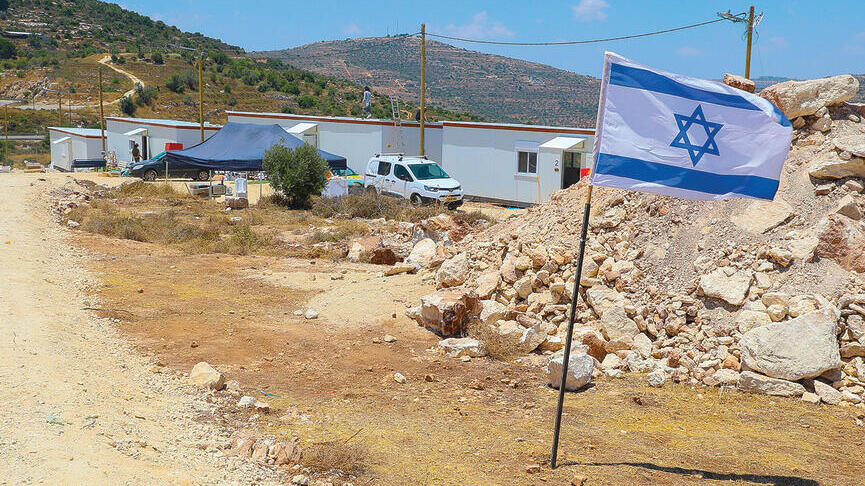
The remarks have sparked serious concern within the security establishment, where officials are already worried about a loss of control in the West Bank and the erosion of stability following a series of violent incidents involving Jewish extremists.
“The genie is already out of the bottle,” a senior security official said, adding: “The recent events are more severe than what we’ve known. The police and the IDF are trying to act, but to put the genie back will require a broad effort — from local council heads and rabbis to senior political leadership. There is a need here for a strategic move.”
Security officials warn that blurring the boundaries could create unprecedented chaos. “There is a profound change taking place in the West Bank,” another senior official said. “There is no problem with the growth of settlements, but it requires a different, broader strategic approach. Right now, nationalist crime incidents are crossing beyond Area C and reaching deep into Areas B and even A, which could lead to escalation — all while Israel is fighting a multi-front war. These are not just words: within hours of statements at the funeral that there are no longer Areas A, B and C, we already saw outposts being established deep inside those areas. Those outposts were evacuated, of course, but the event itself is already in motion.”

Finance Minister Bezalel Smotrich called to blur the lines in the West Bank between Areas A, B and C
(Photo: Alex Kolomoisky)
There is close cooperation between Smotrich, Defense Minister Israel Katz and Central Command chief Maj. Gen. Avi Bluth. The military is now trying to present a unified front among these actors against extremist rioters, but such a front does not yet fully exist. While some in the police argue that the IDF is not doing enough — and vice versa — both organizations agree on the need for stronger condemnations of the violence from settlement leaders and rabbis, alongside a coordinated effort to address it.
Officials also pointed to the IDF chief of staff’s warning to the cabinet about a severe shortage of combat troops, issued after the approval of some 34 new settlements — some entirely new and others retroactively legalized. According to security sources, this expansion further increases the already heavy operational burden in the West Bank.
“Soldiers are forced to deal with nationalist crime involving Jews and are drawn into friction and provocations, all while needing to remain vigilant against Palestinian terrorism,” one official said.
At the same time, Smotrich is aware that the recent wave of incidents is raising concerns in the U.S. administration. Settlement leaders are marking 2026 as a particularly significant year, during which dozens of new communities are expected to be populated and agricultural outposts established.
The goal of Smotrich, Settlement Minister Orit Struck and others is to create facts on the ground ahead of any future government. “But they understand that nationalist crime incidents could lead Netanyahu to halt initiatives under U.S. pressure,” a political source said.
The security establishment is now hoping the government will formulate a long-term strategic plan for settlement that could help calm tensions. “We understand this is an election year, but people need to realize that what they say has consequences. If they don’t sit down together and try to lower the flames, this won’t be resolved. We’ve already missed the train, but we have to catch it at the next station.”