


Prime Minister Benjamin Netanyahu said Wednesday morning that he had instructed his lawyers to file a libel suit against the daily newspaper Haaretz, journalist Shlomi Eldar and others who, he claimed, “fabricated a false story about the prime minister that never happened.”
According to Netanyahu, UAE President Mohammed bin Zayed did not give him any warning about then-Hamas Gaza leader Yahya Sinwar’s plans before October 7. Haaretz said it stands by its report.
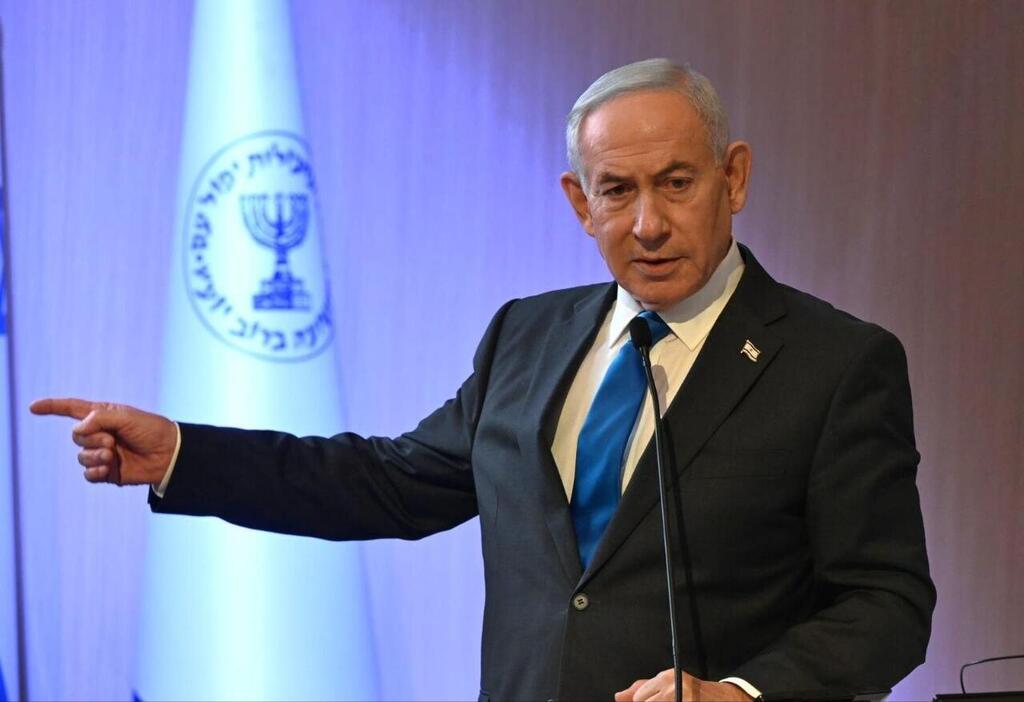
'Obvious political timing.' Prime Minister Benjamin Netanyahu
(Photo: Chaim Tzach/GPO)
Netanyahu is demanding in a warning letter that Haaretz remove the article, publish a public apology and retraction and pay him 1 million shekels as a settlement. If the newspaper does not do so, the letter says, a lawsuit seeking more than 2.5 million shekels will be filed against it.
According to Netanyahu, “Contrary to what was claimed, no conversation took place between the prime minister and the president of the UAE from the beginning of September until October 7. The Prime Minister’s Office, the National Security Council and the military secretary’s office carefully checked the prime minister’s call logs from those days and found no record of such a call.”
“As a rule, diplomatic calls between the prime minister and the UAE president take place exclusively at the Prime Minister’s Office through the UAE representative, who comes to the office with a special encrypted device,” he said. “All of these calls are documented. Eldar himself said in an interview Wednesday evening that the call he claims took place, during which he says a warning was given to the prime minister, was conducted this way.
“But a thorough examination was conducted not only of the prime minister’s call log but also of records of entries into the Prime Minister’s Office during this period, and there is no record of any UAE representative entering the Prime Minister’s Office. There is no possibility of entering the Prime Minister’s Office without the security personnel at the facility documenting and recording the entry.”
ynet reporter Ronen Bergman explained Wednesday morning that Military Secretary Avi Gil was not present at the office that day and was the only person who could and should have been present for such a call. The channel between Netanyahu and bin Zayed was handled with the utmost discretion and not through Israeli communications systems. Whenever a call was scheduled, F., the head of the UAE intelligence branch in Israel, would bring a new phone to the Prime Minister’s Office with a special app installed. He would hand the phone to Netanyahu and leave the room, after which MBZ would call. This method, along with destroying the phone immediately afterward, ensured the highest level of discretion — provided, of course, that neither party to the call told anyone about it.
A senior Middle Eastern intelligence official said the UAE had indeed issued a warning but did not comment on how it was conveyed or whether bin Zayed discussed it directly with Netanyahu. The UAE declined Tuesday to deny or comment on the report, saying only that “when necessary, all intelligence was conveyed.”
Netanyahu also denied reports that Egypt had issued a similar warning, saying that “all of this proves that this is a malicious fabrication with an obvious political timing.”
According to Netanyahu, “Ronen Bar and Herzi Halevi saw all the warning signs many hours before the attack began. If, instead of fearing a miscalculation, they had instructed the IDF, Shin Bet and alert squads to take preventive action, and if they had updated Prime Minister Netanyahu in time, the horrific massacre could have been prevented.”