

The IDF’s Central Command is currently deployed with reinforced forces totaling at least 24 battalions across the West Bank. The immediate priority is to stabilize the territory, halt the chain of attacks and other incidents and restore calm.
In recent days, the security establishment has identified a sharp rise in incitement to carry out attacks across territories controlled by the Palestinian Authority, particularly on social media. Field commanders are most concerned about copycat attacks and assaults by lone perpetrators exposed to the growing incitement and seeking to exploit the tense atmosphere.
Gallery
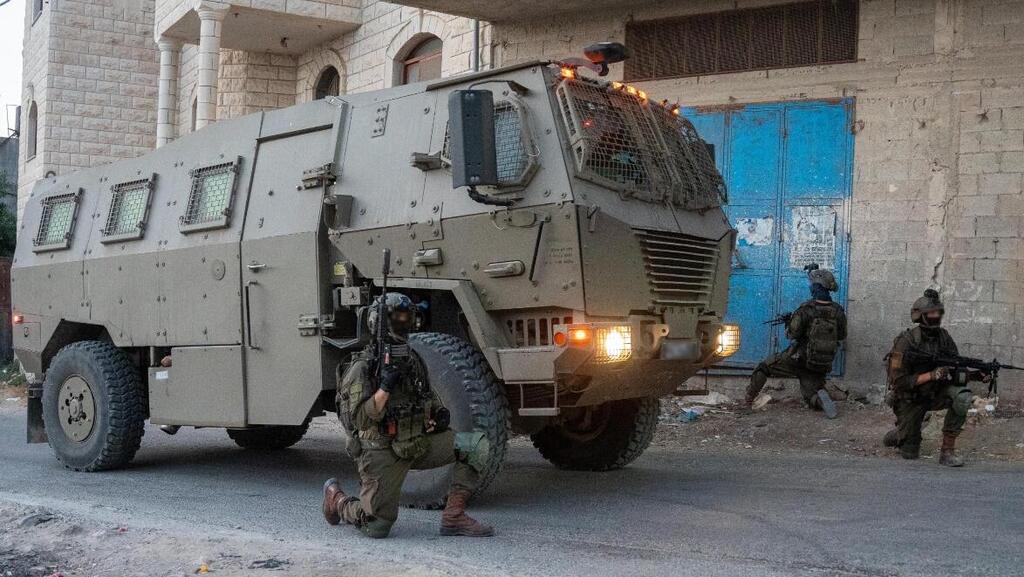
Security forces conduct counterterrorism operations in the West Bank
(Photo: IDF Spokesperson’s Unit)
Footage from the attack in Samaria that left two Israeli service members dead


The IDF believes the only way to restore calm and prevent a broader escalation is through initiative, offensive action and aggressive operations against terrorist elements seeking to inflame the situation, while also preventing Jewish nationalist violence of the kind reported at several locations, including overnight, since the attack near the village of Tell in the Nablus area on Friday that killed Benayahu Mellet and Maj. Yuval Ezra.
Alongside offensive operations on the ground, IDF and Shin Bet investigators are continuing to deepen their investigation into the attack in an effort to identify everyone involved.
Since the attack, security forces led by the IDF, Shin Bet and Border Police have carried out an especially intensive day of counterterrorism operations.
More than 70 wanted Palestinians were arrested across the West Bank overnight and Saturday morning, while hundreds of additional suspects were questioned in the field.
In the Samaria Brigade sector, troops completed a focused brigade-level operation in the village of Tell, where the terrorist, who snatched a rifle from one of the Israelis and carried out the shooting attack, had originated. Nahal Reconnaissance Unit troops raided the village, arrested 11 wanted suspects and questioned about 80 others.
The operations extended across the areas of responsibility of all IDF brigades in the West Bank. In the Menashe Brigade sector, forces searched more than 300 locations and arrested Hamas-affiliated operatives, as well as terrorists involved in advancing bomb attacks.
In the Binyamin Brigade sector, about 20 wanted suspects involved in popular terrorism, firebomb attacks and weapons trafficking were arrested. In the Ephraim Brigade sector, Duvdevan troops arrested a terrorist in the Tulkarm area who was on his way to carry out an attack.
Israeli settlers carry out arson attacks in Palestinian towns overnight in retaliation for deadly weekend shooting that left two service members dead
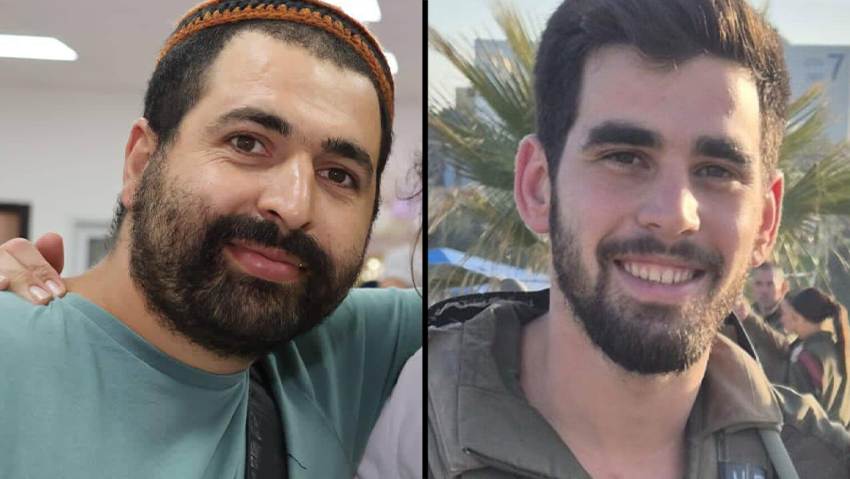
Benayahu Mellet and Maj. Yuval Ezra
(Photo: TPS, IDF)
Masked settlers riot in the village of Sira following deadly weekend shooting that left two service members dead
West Bank commanders are cautiously optimistic about what the IDF calls the “point of entry” into the current sequence of events.
Unlike in the past, security forces now maintain continuous and significant operational control over refugee camps in the northern West Bank, which once served as safe havens for hundreds of terrorists.
The IDF now enjoys broad, daily freedom of action in the heart of Palestinian cities, including complex strongholds such as Nablus and Jenin. In the past, entering those areas required the mobilization of entire brigades and special forces units, along with extensive aerial support. Today, the reality is entirely different.
A clear example came only hours after the attack, when Duvdevan troops, accompanied by Border Police and Shin Bet personnel, raided a hospital in central Nablus in broad daylight. Within minutes and without casualties, the forces captured two terrorists who had participated in Friday's attack and fled the scene.
That freedom of action is reflected in the decline in terrorist incidents in recent years: from 850 in 2023 to 260 in 2024 and about 60 in 2025. According to IDF figures, more than 2,000 wanted suspects have been arrested since the beginning of 2026 alone.
Farm outposts create an operational gap
Meanwhile, the security establishment understands that the West Bank of 2026 presents entirely new challenges.
Over the past three years, there has been a dramatic and profound change in government policy beyond the Green Line, directly affecting the military’s security doctrine.
Beyond legislative changes and the transfer of authorities, the central development on the ground has been the farm outpost project and the seizure of land, which until now had remained on the margins of settlement activity.
More than 126 farm outposts are currently spread across the area, and the number is rising rapidly. Four new outposts were established around Havat Gilad in the past day alone in response to the attack.
The agricultural farm project, considered a strategic milestone for the settlement movement, requires the IDF to adopt an entirely new defensive deployment.
The military’s security doctrine has shifted from a localized method focused on perimeter defense around settlements and major roads to territorial defense across the broad open areas where the farms are located.
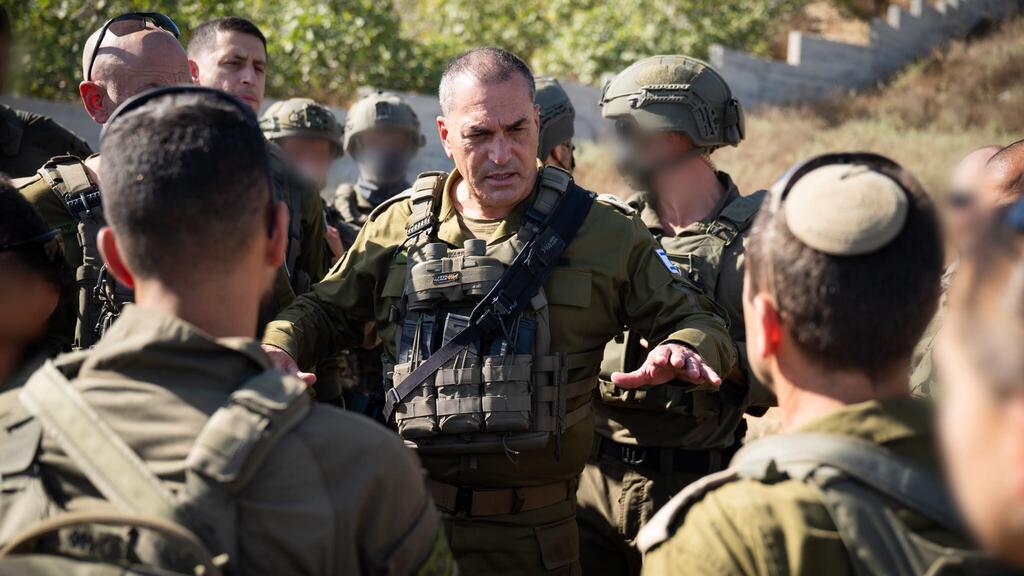
IDF Chief of Staff Lt. Gen. Eyal Zamir at the scene of the attack
(Photo: IDF Spokesperson’s Unit)
Footage: Two terrorists involved in the Samaria attack arrested at a Nablus hospital during a Duvdevan raid
The IDF is deploying numerous security and technological measures, most of them classified, to provide an appropriate defensive envelope.
However, the political leadership’s rapid push and the expansion of settlements toward Areas A and B, which are under varying degrees of Palestinian civil and security control, with the army responding only after the fact, are creating a built-in operational gap, compounded by the IDF’s severe shortage of combat troops.
The state is pressing forward, while the military is required to provide a defensive response retroactively, without a prearranged strategic defense plan.
The current year, described by the settlement movement as a “year of putting down roots,” with numerous new settlement points physically established on the ground, has intensified that lack of coordination.
Palestinian response to nationalist violence: 'Resistance committees'
The security gap is compounded by civilian and disciplinary challenges on the ground.
Institutional support for settlers also empowers extremists on the fringes who exploit the situation to provoke clashes, carry out nationalist-motivated violence and undermine stability.
Those rioters have grown bolder. They act more violently than in the past, sometimes in broad daylight and with their faces exposed, though at other times they wear masks.
They also document their actions and circulate the footage on social media without apparent concern.
The West Bank District Police has made a significant shift in its handling of such offenders, as has the IDF, but the effort to stop the phenomenon remains far from complete.
The group's actions have an outsized effect on the overall atmosphere across the territory.
The young extremists also do not hesitate to attack Central Command chief Maj. Gen. Avi Bluth, brigade commanders and local council heads, accusing them of “harming the settlement movement.”
In response to the recent series of nationalist-motivated attacks, unarmed “resistance committees” have been established in Palestinian villages in recent months, ostensibly to protect them from the rioters.
However, those committees are stirring deep concern among IDF commanders.
The security establishment’s main fear is that, amid the escalation, the currently unarmed committees could develop into fully fledged armed militias, a dramatic security development the IDF says it will not allow to happen.
Recent incidents have also revealed a pattern of attempts to grab weapons during confrontations and clashes on the ground.
The phenomenon was especially evident in Friday's clash near the village of Tell, as well as in another incident Saturday at a farm near Susiya.
The current escalation is unfolding during a sensitive period in which the Civil Administration has no full-time head. The serving officer, Brig. Gen. Hisham Ibrahim, is also serving as the military secretary to Defense Minister Israel Katz.
Meanwhile, the West Bank theater remains volatile and unpredictable.
Last Saturday, a major fire at Havat Gilad, initially suspected of being a terrorist attack, was ultimately found to have been caused by a discarded cigarette.
The fire was extinguished, but celebrations heard from nearby Palestinian villages underscored the depth of the tension.
The latest sequence of events and its consequences have brought the area to a point of extreme sensitivity.
As one very senior West Bank officer put it: “In the end, this sector is like coffee sitting over a flame. You always have to know the exact moment when the heat beneath it will make it boil over, and stop it one second beforehand.”