


“Until Operation Rising Lion, we were unable to do this fully. This capability really broke through that very day, when aircraft took off from Palmachim Airbase for the third circle,” Col. K., the outgoing head of the Israeli Air Force’s remotely piloted aircraft branch, said of the first time remotely piloted aircraft took part in strikes in Iran. “It’s an incredible source of pride to see the aircraft at the forefront heading toward Iran.”
It is difficult to overstate the importance of remotely piloted aircraft during nearly three years of war. From intelligence gathering to strikes and targeted killings, the force has become an integral part of the Israel Defense Forces’ operations on every front. In the past week alone, the force carried out about 30 strikes in the Gaza Strip, the West Bank and Lebanon. Last month, it took part in the killing of terrorist Qais Bitoun in Jenin and about a week ago it accompanied the arrest of Moin al-Arabid in the Gaza Strip.
Documentation of a ballistic missile strike in Iran during Operation Roaring Lion
(Video: IDF Spokesperson)


Col. K., the first woman to command the remotely piloted aircraft force, retired from the IDF last month after 30 years of service. She now looks back on the transformation the force underwent during the war: expanding its operational range as far as Iran, increasing its weapons-carrying capacity and upgrading its intelligence-gathering capabilities, as well as establishing a direct link between operators in control stations and commanders and troops on the ground.
“The remotely piloted aircraft force was in the shadows, and its breakthrough only came in recent years,” she said.
The force dates back to 1971, when the 200th Squadron was established at Palmachim Airbase, with its primary mission being visual intelligence gathering. In 1993, the Hermes 450, the first armed remotely piloted aircraft, joined the force. It was first used operationally in 2006.
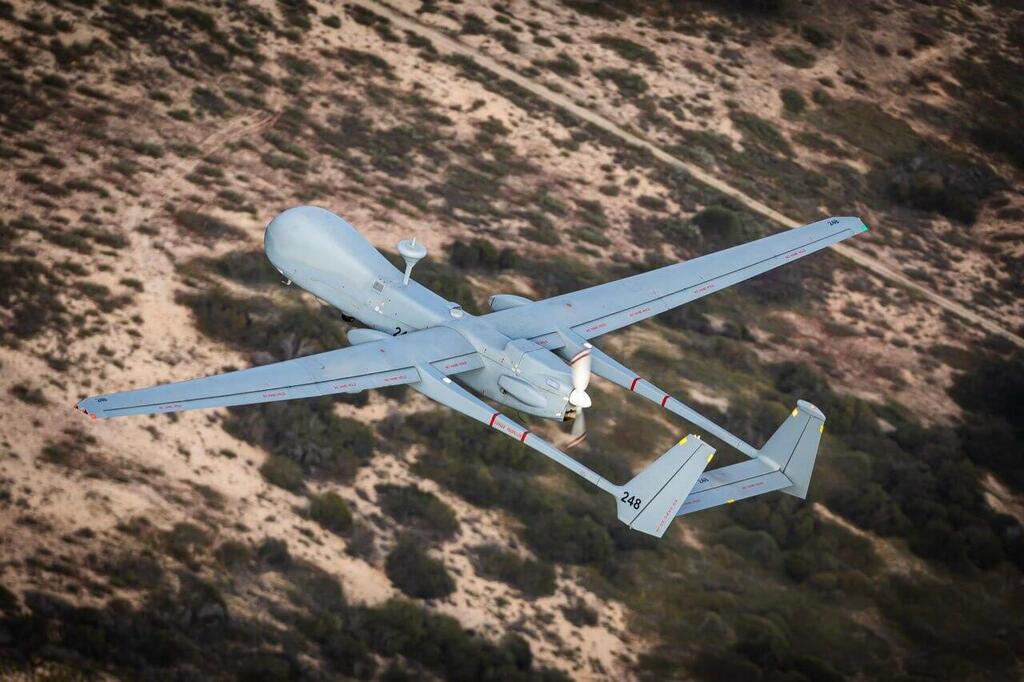
Forces identify terrorist, operator in control station strikes
On October 7, 2023, Col. K. said, the force was “at an interesting point on the timeline.” Despite the number of aircraft and squadrons already operated by the air force, its operational range was still largely limited to Israel’s borders and nearby theaters. The major change came during the war, culminating in the deployment of remotely piloted aircraft for strikes in Iran.
“Right up until the evening of Operation Rising Lion, we did not have this capability. We built it within just a few months,” she said. “It’s an incredible source of pride to see the aircraft at the forefront heading toward Iran. After that moment, they never stopped carrying out missions there.”
According to Col. K., remotely piloted aircraft have since taken part in waves of strikes while carrying weapons and have targeted missile launchers preparing to fire at Israel.
“They strike the missiles that are about to be launched at Israel moments later and clear the way for the air force’s manned aircraft,” she said. The activity continued, she said, as part of Operation Roaring Lion as well.
The expansion was not limited to the force’s operational range. During the war, the aircraft’s weapons-carrying capacity also increased significantly.

“An incredible source of pride.” Col. K. in an interview with Gal Ganot
“On October 7, when a remotely piloted aircraft went out to attack terrorists in the south, it had to make a great many sorties to achieve any kind of effect,” Col. K. said, describing one of the challenges that drove the development of the new capabilities.
There was also a significant change in intelligence gathering.
“In the past, we called it ‘looking through a straw’ — looking at a very limited area,” she explained. “Today, we are talking about maintaining surveillance over areas spanning dozens of kilometers.”
One of the major changes to emerge during the first months of the war was the establishment of a direct link between drone operators and maneuvering forces on the ground.
“In December 2023, Nahal troops in Gaza identified a terrorist with an RPG who posed a threat to them,” Col. K. said. “They contacted the operator in the control station and directed the remotely piloted aircraft toward him. It reached the location, struck and confirmed that the terrorist had been killed.”
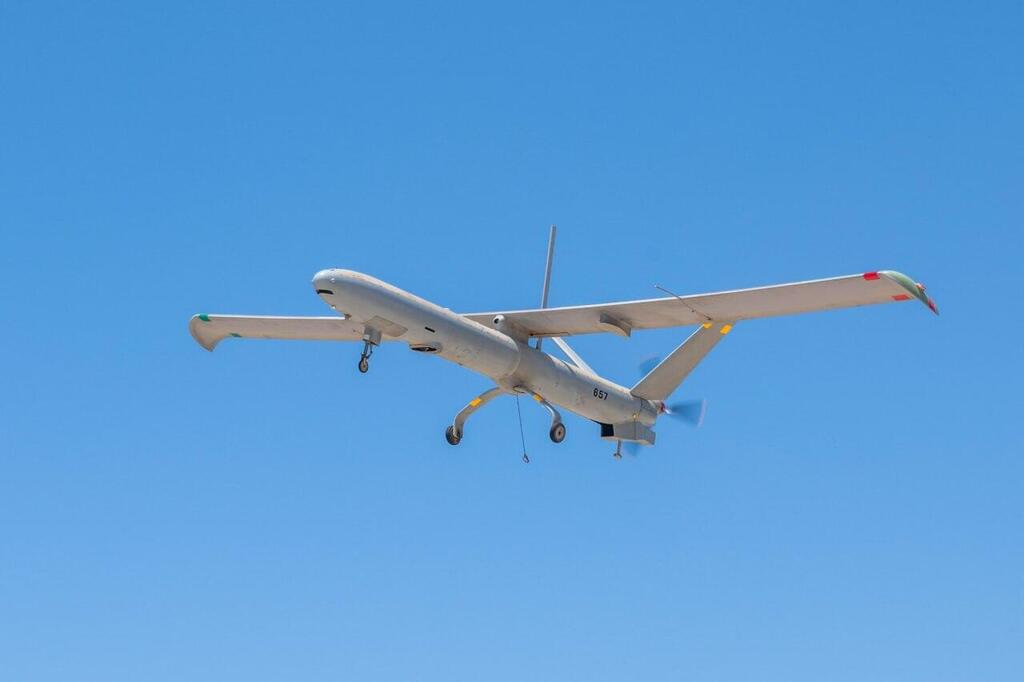
Hermes 450 remotely piloted aircraft
Around the same time, she said, another incident occurred.
“A Givati team identified a terrorist cell preparing drones to attack them. They directed a remotely piloted aircraft team, which killed the terrorists. It then continued accompanying them and enabled them to safely enter the area.”
The transformation of the force has not been solely technological. Over the years, increasing emphasis has been placed on the person operating the aircraft — from changing the Hebrew terminology from “unmanned aerial vehicle” to “remotely piloted aircraft” to recognizing operators in control stations as combat soldiers.
“We have highly sophisticated tools and machines, but at the end of the day there is an operator at the other end who has to make a decision,” Col. K. said.
More squadrons, more aircraft
According to Col. K., one of the factors that enabled the force’s leap forward was cooperation among numerous branches and organizations.
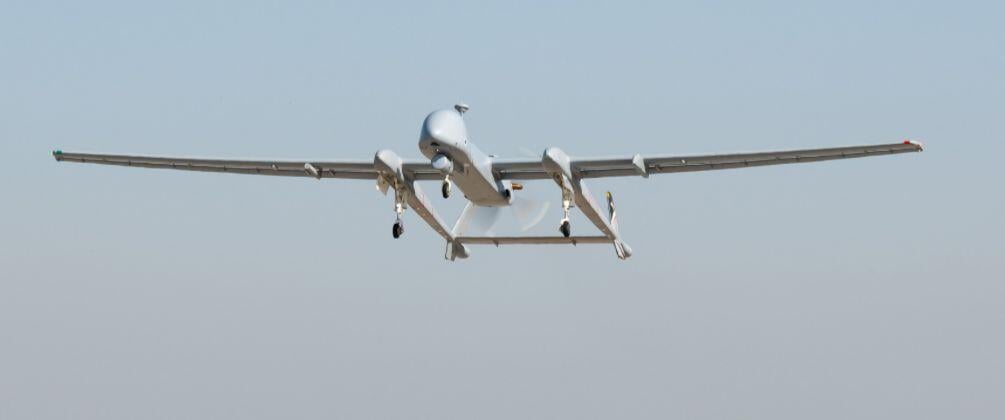
Eitan remotely piloted aircraft
“We built an ecosystem made up of all the organizations and branches — the UAV & Unmanned Systems Branches, the defense industries, the air force’s operational headquarters and the technical personnel of the force, who enabled us to generate sorties at these unimaginable levels of flight hours.”
The trend is expected to continue in the coming years. Last month, the “Hamapetz” Squadron was established at Hatzor Air Base. It will receive the next version of the Shoval, the Mark 2, manufactured by Israel Aerospace Industries. In 2028, the air force is also expected to receive Elbit Systems’ Hermes 650.
“The number of flight hours the remotely piloted aircraft force logs today is unimaginable,” Col. K. said in summary. “In the past, it was a small group of aircraft carrying out missions close to home. Today, there is almost no air force activity that is not accompanied or carried out by a remotely piloted aircraft. In the future, we will take in more aircraft and open more squadrons, and I expect the remotely piloted aircraft force to account for an increasingly significant share of operations.”
Col. K. began her military service as a technician at Ramon Air Base and completed three decades in the IDF last month.
“I am happy and proud of the period I had,” she said.