

The highly anticipated laser-based air defense system, Iron Beam, has been delivered to the IDF, but the system is still not operational, a senior defense official revealed.
According to the official, only one Iron Beam system has so far been handed over to the military. The system was delivered last December, but the process required before it can be used operationally has not yet been completed.
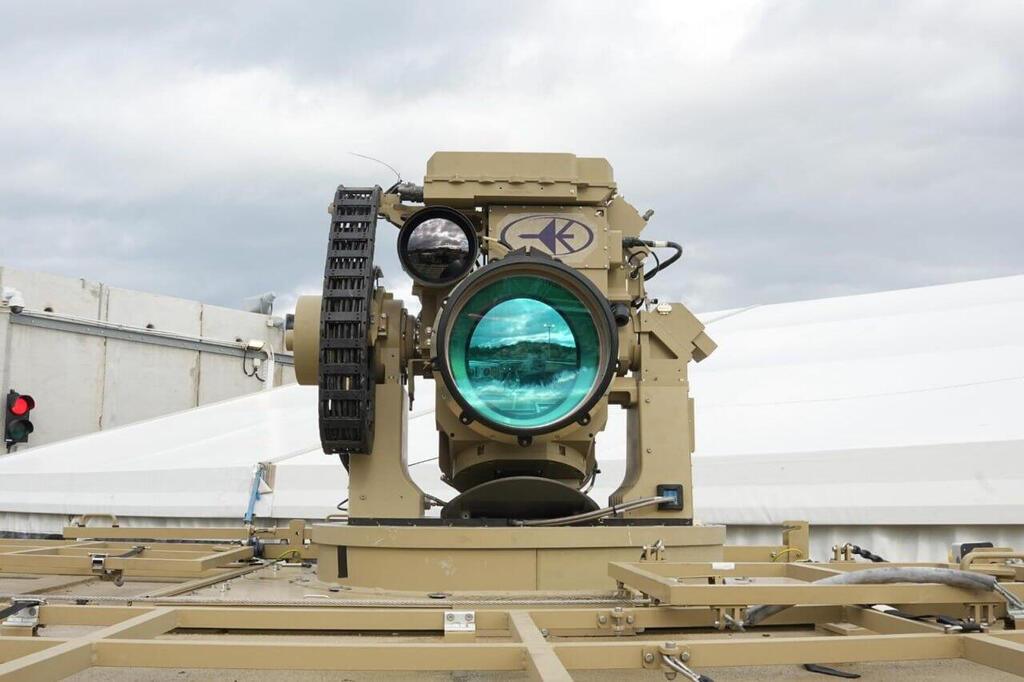
The Iron Beam
(Photo: Defense Ministry)
Iron Beam has generated significant expectations within the defense establishment because of its planned ability to intercept non-ballistic missiles, drones, mortars and unmanned aerial vehicles at ranges of up to around 10 kilometers, with each interception expected to cost only a few shekels.
The system, developed by Rafael Advanced Defense Systems, is intended to become an additional layer in Israel’s aerial defense array alongside well-established systems such as Iron Dome.
Billions of shekels have been invested in its development, but despite the delivery of the first system, the Defense Ministry has not yet ordered additional units. The main reason for the delay in full integration has not been disclosed.
Senior Rafael officials said the system still requires adjustments before it can become operational. This comes despite comments made earlier this year by Rafael chairman Yuval Steinitz, who estimated that the process would take only several days.
Rafael has described Iron Beam as a breakthrough in optical technology, and the disappointment surrounding the delay stems partly from the gap between expectations that the system could become a “game-changing solution” and the slower-than-expected pace of deployment.
One possible factor behind the delay is budget pressure currently facing the Defense Ministry. While each laser interception is expected to cost only a few shekels, the system itself is expensive, and a large number of units would be required to provide broad coverage across Israel.
Despite the delays, Rafael continues to develop and manufacture Iron Beam systems for the IDF and is continuing its broader investment in laser weapons, which are considered one of the key directions for future defense technologies.
Meanwhile, the Defense Ministry is investing heavily in developing additional solutions against drones, with defense officials estimating that Iron Beam will be only one of several systems used for that mission.
Rafael, whose missiles and defense systems are in demand worldwide, reported that exports accounted for 63% of its sales this year. The company’s sales reached 21.7 billion shekels in 2025, a 10% increase.
The company is also developing a next-generation interceptor designed to counter hypersonic missiles, amid concerns that Iran could deploy such weapons in future conflicts. Hypersonic missiles are considered difficult to intercept because of their speed, which can exceed 5,000 kilometers per hour, as well as their ability to evade detection.
Rafael is also developing new naval defense systems, including a concept described as a “torpedo against torpedo” capability amid future battles over maritime routes. A senior company official said Rafael has effectively developed a “naval Iron Dome.”
In the space sector, the company is focusing on the development of micro-satellites and nano-satellites.