

Iran retains a vast weapons arsenal even after a month of war — possibly due in part to the underground missile cities and bases it has built, according to updated U.S. intelligence assessments. One of these bases, the Yazd base, is buried about 500 meters (1,640 feet) deep inside a mountain in central Iran, and is less a bunker than a subterranean fortress.
A detailed report in the Daily Mail examined the difficulty of striking these missile cities. It noted that the site is carved into one of the hardest types of rock on Earth, Shirkuh granite, which can withstand immense pressure far beyond that of conventional building materials. This material presents one of the toughest barriers even for the United States’ most powerful bunker-busting bomb, the GBU-57.
Inside one of Iran's underground drone cities


Inside the mountain, the interior space resembles more a hidden city than a military base. According to assessments, the secret facility includes an automated rail system operating through tunnels connecting assembly areas, storage depots, and concealed exits. In similar underground missile cities shown in Iranian propaganda videos, missile launchers are rapidly transported by trucks, brought out for launch, and then quickly returned underground.
According to the Institute for the Study of War (ISW), the Yazd missile base alone has likely been targeted at least six times since the start of the war, including on the second day and again last week, a month after the conflict began. Iran has spent years building these massive bunkers to protect its large missile stockpile from destruction — and intelligence assessments suggest it has had notable success.
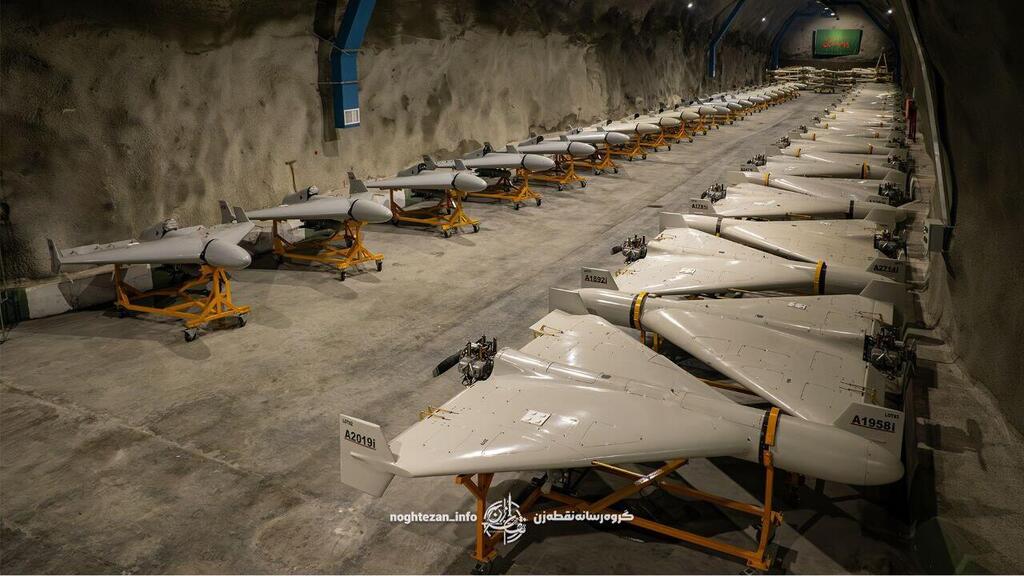
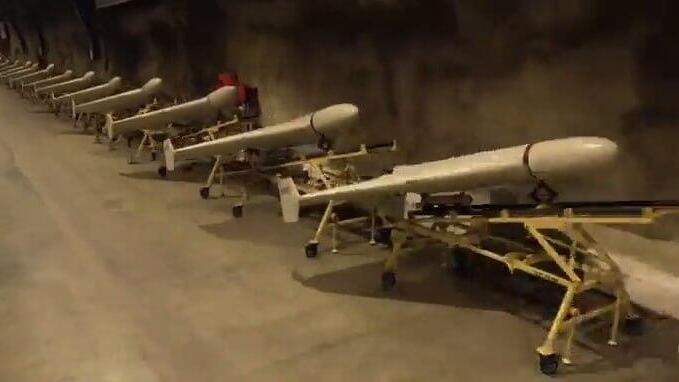
Footage from the Revolutionary Guards' drone tunnel from which attacks against American bases originate
Israel estimated that at the start of the war Iran had about 470 ballistic missile launchers, and last month said it had destroyed or disabled roughly 60% of them. But according to U.S. intelligence estimates reported by CNN over the weekend, despite thousands of strikes by Israel and the United States, about half of the launchers remain intact. The report added that Iran still possesses thousands of loitering munitions, along with a significant share of its cruise missiles — a key capability for threatening and disrupting shipping in the Strait of Hormuz.
Since the war began, Israel and the United States have devoted extensive resources to targeting Iran’s missile infrastructure. Across the country, these strikes have collapsed entrances, created craters in ventilation shafts and damaged surface facilities. However, assessments indicate the underground structures remain largely intact. CNN reported that although 77% of visible tunnel entrances were hit, operations at the sites resumed quickly. Construction equipment arrived within days, debris was cleared, and access routes to the mountains were reopened.
These missile cities are packed with ballistic missiles, drones and launch systems, connected by transport corridors that enable rapid movement. In a propaganda video released early in the war, Iran showcased a vast underground tunnel network lined with rows of drones and rockets. Footage from the Fars News Agency showed rows of missiles and Shahed drones, with launcher trucks positioned deep within the tunnels.
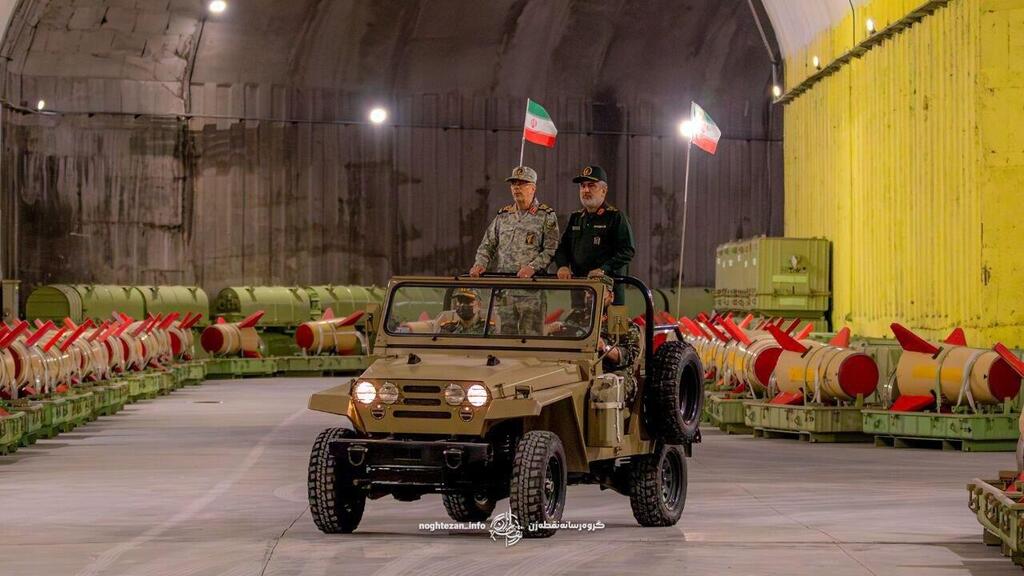
More footage from the iranian underground missile city
Experts say the real challenge lies in penetrating the structures where the weapons are stored. The facilities feature compartmentalized tunnels and blast-resistant doors that limit damage. Multiple entrances and exits allow operations to continue even if one or more access points are hit. Some openings are decoys, while others are concealed within the natural terrain, making them difficult to detect and strike.
Penetration depth depends on whether the target is covered by soil, concrete, or rock. Granite in particular absorbs and disperses explosive energy, reducing the effectiveness of munitions. According to the UK-based RUSI research institute, penetrating underground facilities requires repeated strikes on the same point, precise intelligence on the structure, and follow-up attacks to prevent rapid repairs.
"The mountain does not care how many sorties are flown above it. The railway does not care how many portals are sealed. The geology is the defense, and the geology has been there for 300 million years," analyst Shanaka Anslem Perera told the Daily Mail.
"The persistence of Iranian missile fire despite three weeks of intensive strikes is not resilience. It is infrastructure. IRGC did not prepare for this war by building rockets. It prepared by building railways inside mountains. The rockets are replaceable. The railways are permanent. And the granite that protects them was formed before mammals existed," Perera concluded.