


Luxembourg, a tiny grand duchy nestled between France, Germany and Belgium with a population of approximately 700,000, is preparing to ban imports of goods from Israeli settlements in the West Bank, even without European Union agreement on the issue. The move comes despite estimates that direct trade totals just 10,000 to 15,000 euros ($11,500 to $17,300), or 35,000 to 52,000 shekels.
About two weeks ago, Luxembourg's government approved a proposed amendment to its 2018 foreign trade control law that would allow national import restrictions in exceptional circumstances, subject to EU law. A day earlier, a separate bill was introduced in parliament seeking to explicitly ban the import and sale of goods from Israeli settlements. Neither legislative process has been completed and as of late October, the ban had not taken effect.

The negligible trade figures make clear that Luxembourg's move is not economically motivated but is primarily symbolic and intended as a protest. According to Israelis following the issue, Luxembourg's foreign minister has explained that this is the rationale behind the new legislation.
Luxembourg is moving ahead with its own measures on trade with Israel and the settlements amid divisions among EU member states. A European Commission proposal in September 2025 to suspend some of the trade benefits granted to Israel failed to secure the required majority in the Council of the European Union.
In October 2025, however, Luxembourg's parliament unanimously endorsed the proposal, with all 60 members voting in favor. The vote was an expression of political support rather than a binding decision. Two weeks earlier, parliament had rejected a proposal by the déi Lénk (The Left) party to impose bilateral sanctions, with 42 members voting against, 14 in favor and three abstaining.
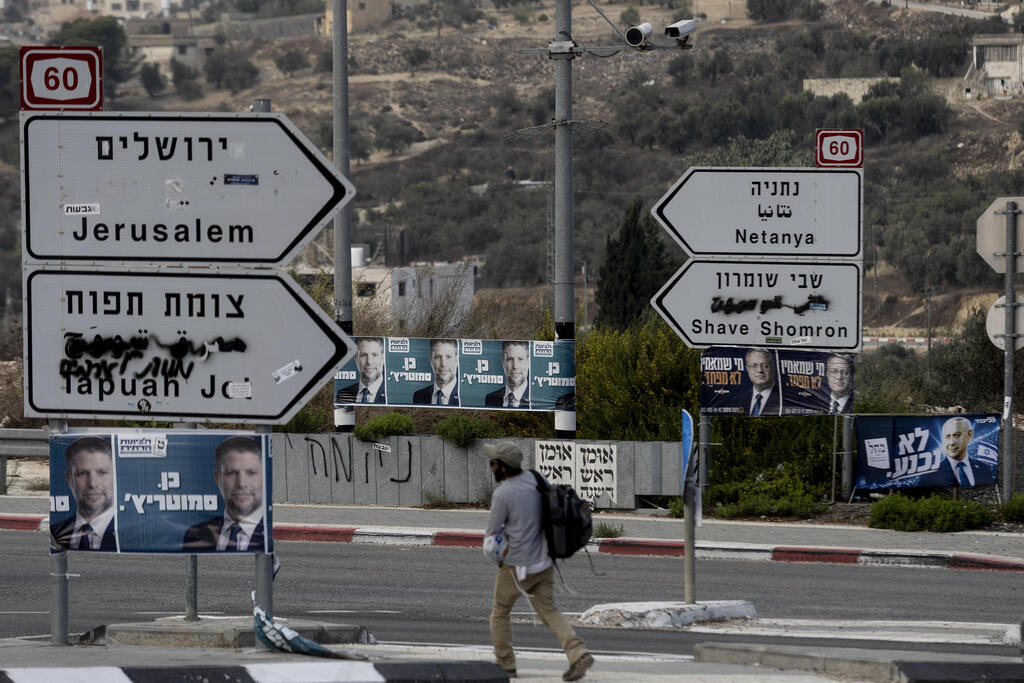
Near the settlement of Yitzhar. The Netherlands has already banned trade in goods from Israeli settlements
(Photo: Amir Levy/Getty Images)
The Netherlands already banned trade in products from Israeli settlements in September 2026. Such products are not eligible for preferential tariffs under the EU-Israel Association Agreement. However, denying tariff benefits is not the same as banning imports, and the national measures are intended to prevent the trade itself.
Luxembourg voted in favor of the United Nations partition plan for Palestine in 1947 and hosted the signing of the reparations agreement between Israel and West Germany in 1952. Its longtime foreign minister, Jean Asselborn, described himself as a "critical friend" of Israel as early as 2011. Nevertheless, he was regarded as the most hostile foreign minister toward Israel in the European Union and even opposed the Abraham Accords, the normalization agreements between Israel and several Arab countries.
His successor, Xavier Bettel, is considered more friendly toward Israel in Jerusalem. According to Israeli officials, he visited Israel several times after the October 7, 2023, Hamas-led attacks and even challenged Palestinian positions. However, after three years of war, he too began adopting a more critical stance toward Israel.
In September 2025, Luxembourg formally recognized a Palestinian state. In its announcement, the government also emphasized Israel's right to security and condemned the Hamas-led massacre of October 7, 2023.