


The memorandum of understanding between Iran and the United States has also dramatically changed the IDF’s activity in southern Lebanon. IDF Chief of Staff Lt. Gen. Eyal Zamir said Sunday during a tour of the area that “the ceasefire is fragile, and we are at high readiness for renewed fighting.” But overnight, Pakistan and Qatar announced a new body imposed on Israel from the outside: a “deconfliction cell” for Lebanon.
So what does the IDF’s activity currently look like in southern Lebanon, where are the forces deployed, and what will happen to Hezbollah’s fortified compound on the Ali Taher ridge? ynet explains.
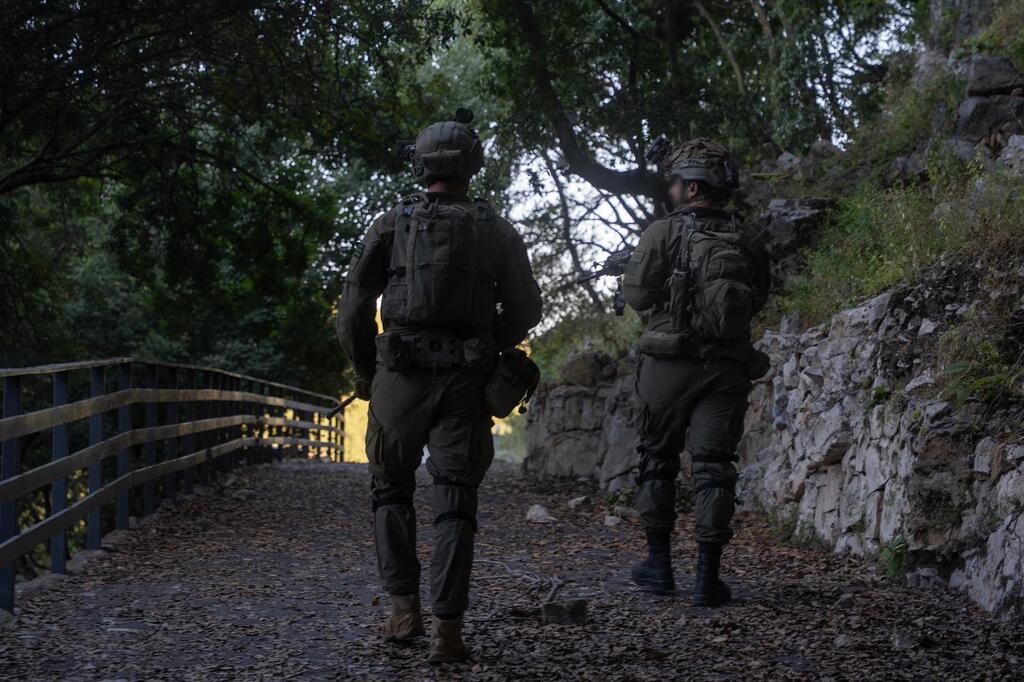
Was the IDF updated on the new Iran-US mechanism?
In general, instructions flow downward, and the IDF operates according to the directives of the political echelon. Military officials say forces will remain in southern Lebanon until the area is demilitarized and Hezbollah is disarmed in the south.
The military has presented maps to the political echelon and proposed what it sees as the most effective deployment of forces. Zamir has made clear on several occasions that since October 7, the IDF must defend Israel’s borders from inside enemy territory, not from the border line itself.
How is the IDF deployed in Lebanon?
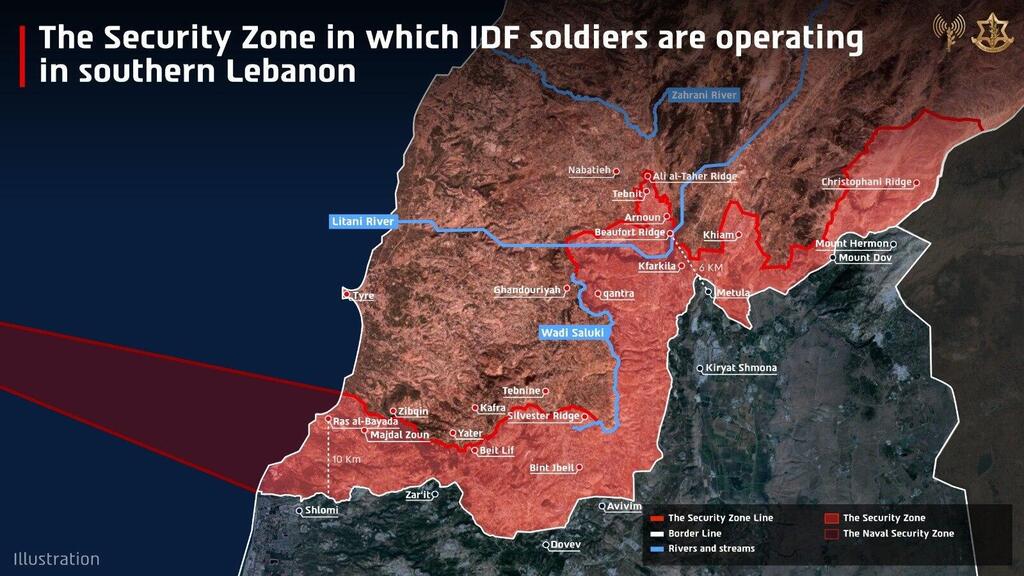
Several days ago, the IDF published its deployment in southern Lebanon. The depth of the forces’ penetration into Lebanon varies from one area to another, but at its deepest point reaches about 10 kilometers from the Israeli border.
Beyond the Litani River, in the eastern sector, forces from the 36th Division are positioned on the Ali Taher ridge, overlooking the city of Nabatieh, a major Hezbollah center of gravity. In the western sector, forces from the 91st Division and the 551st Brigade are deployed near the village of Majdal Zoun, about 10 kilometers from Israeli territory, in an area that controls the Tyre basin.
The IDF moved into these areas for several reasons: to remove direct threats to northern residents, such as ground raids or anti-tank fire; to control observation and fire over areas where Hezbollah operates; and to destroy tunnels and underground compounds the organization used in fighting against the IDF.
(Photo: IDF)
What is the IDF doing now?
Since the ceasefire, the IDF has not been carrying out initiated attacks. Its forces have effectively halted their advance and are now stabilizing in the areas they captured.
From the border to the yellow line, along the first and second lines of Lebanese villages, the IDF is continuing to dismantle what Hezbollah built over the years, while opening routes and creating a defensive environment.
What are the rules of engagement in Lebanon?
With no initiated attacks, there are almost no strikes on parts of southern Lebanon where the IDF is not present. The use of fire is now based on threats to the forces.
Soldiers can fire at anyone approaching them in a threatening manner, especially if the person is armed. The IDF says such a threat can be eliminated even if it is beyond the yellow line.
But many questions still surround these rules of engagement. The situation is changing from hour to hour, and some of those questions still have no answers. One key issue is what qualifies as a real threat. If the IDF identifies an armed Hezbollah terrorist riding a motorcycle between villages near a point where Israeli troops are stationed, is it permitted to fire or not?
What are the dangers?
The combination of two facts creates a dangerous situation for the IDF: forces are positioned deep inside southern Lebanon, but are not authorized to keep advancing. That makes them static, and therefore a more convenient target for Hezbollah terrorists.
Hezbollah operatives are studying the IDF’s deployment, building attack plans accordingly and exploiting the restrictions that limit Israel’s ability to strike.
Lebanese border
(Photo: Jalaa MAREY / AFP)
Why did the IDF advance so deep, including to places that do not overlook Israeli communities?
From some of the points the IDF reached, such as the Ali Taher ridge opposite Nabatieh, it is not possible to fire directly at northern Israeli communities.
Zamir said Sunday that “our goal is clear, and remains the defense of the northern communities and the citizens of Israel. The activity in the Ali Taher and Beaufort areas is also meant to serve that purpose.”
The IDF says Hezbollah has strategic infrastructure in those areas that it used for combat and for firing at northern communities. The military believes those sites must be destroyed to protect Israel and the north.
Will the large compound on the Ali Taher ridge be destroyed?
The Ali Taher ridge compound is a fortified underground site built with Iranian assistance and considered one of Hezbollah’s nerve centers in southern Lebanon.
Because of its depth and fortifications, it is very difficult to damage through airstrikes alone. But given the understandings and the demand that the IDF hold its fire, there is no clear answer yet as to whether Israel will destroy it or transfer the issue to the Lebanese army.
Hezbollah is trying to stop the IDF from destroying the compound, and what happens on the ground will depend, of course, on decisions by the political echelon.
Will the IDF withdraw, and what happens to residents of border villages?
Both the IDF and the government have repeatedly made clear in recent days that Israel does not intend to withdraw to the border line, or “to the last centimeter,” as Hezbollah demands.
It is possible that the IDF will eventually return to dominant points around the initially defined yellow-line area, the anti-tank line, and operate there from defensive positions or permanent posts.
Beyond that, the IDF is currently insisting that Lebanese residents not be allowed to return to the destroyed village areas. Similar opposition has been voiced by the political echelon. Iran and Hezbollah, however, are insisting on the opposite.