


The ceasefire agreements Israel signed with Hamas over the decade leading up to the October 7 massacre gradually shrank the perimeter along the Gaza border where Palestinian presence had been prohibited.
An IDF investigation into the battle at Kibbutz Nirim during the Hamas attack released Friday underscores how this shift contributed to the deadly outcome of that morning.

The Palestinian bulldozer that tore through the border fence at report line 164—opposite the "Horseshoe" cluster of Israeli communities including Nirim, Kissufim, Ein HaShlosha, Magen and Nir Oz—was not unfamiliar to the 153 soldiers of the Golani Brigade’s 51st Battalion and the 7th Armored Brigade stationed in the sector that weekend.
It had previously plowed farmland near Khan Younis and had approached within 100 to 300 meters of the border. IDF surveillance personnel knew the vehicle well, as they did the Hamas pickup trucks used by the so-called “border defenders”—operatives who had patrolled the Gaza side of the perimeter for years under the guise of maintaining order, right up to the edge of the no-go zone.
At 6:30 a.m. on October 7, under cover of a barrage of 700 rockets and mortars fired at Israeli positions near Kissufim, the tractor crossed the 300-meter distance to the fence in just 90 seconds. Following behind were dozens of Nukhba commandos from Hamas’ lead breach force, advancing toward Kibbutz Nirim. This marked the first successful breach of the Gaza border fence during the attack.
Moments later, the newly created gap was flooded with motorcycles and pickup trucks carrying heavily armed terrorists, who fanned out across the western Negev and eastward toward the towns of Ofakim and Netivot.
The officer who investigated the battle at Kibbutz Nirim is Col. Elad Shoshan, a native of the Gaza border region who has spent much of the past decade serving in the area.
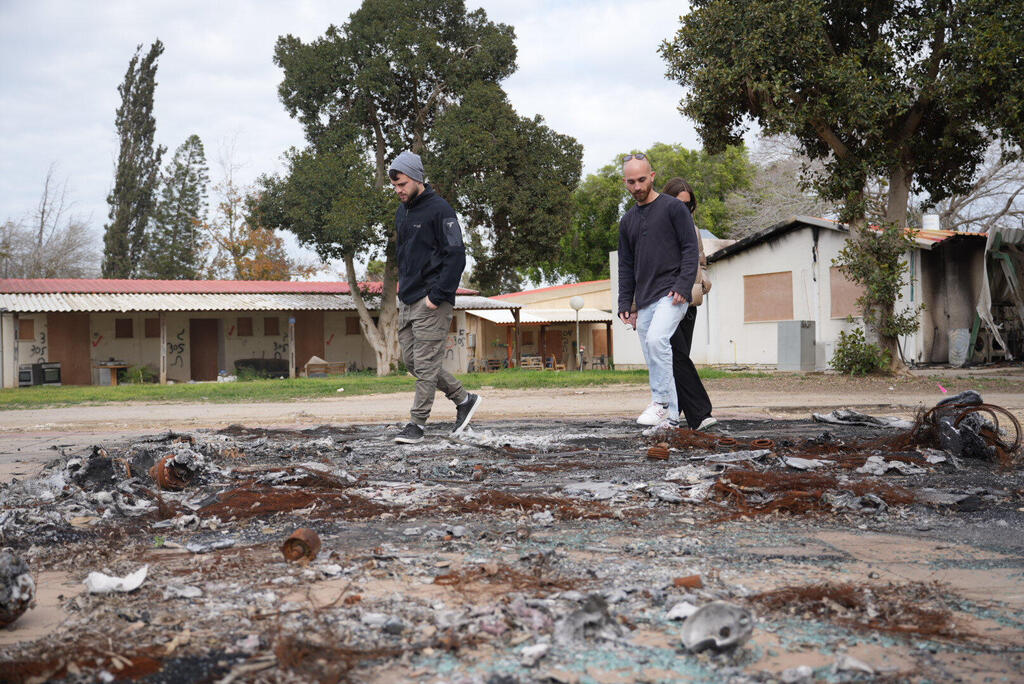
Destruction in Kibbutz Nirim following the October 7 terror attack
(Photo: Tomer Shunem Halevi)
He previously commanded the Kissufim sector and served as deputy commander of the elite Maglan unit during Operation Protective Edge. His familiarity with the territory deepened further while commanding a reservist paratroopers brigade during ground operations in Gaza in the current war, and in his current role as deputy commander of the regular 162nd Division, which is actively operating inside the enclave.
Shoshan was deeply disturbed by the perspective he gained while conducting the investigation. In his earlier roles in the previous decade, the security buffer zone along the Gaza border extended roughly one kilometer into the Strip, and no Palestinian presence was permitted within it.
However, following successive rounds of escalation and ceasefire agreements, Israel’s political leadership under Prime Minister Benjamin Netanyahu gradually conceded to Hamas' demands: the buffer was reduced first to 800 meters, then to 600, and finally to just 300 meters. In some areas, it was narrowed to a mere 100 meters to allow for what were described as “agricultural zones” for Gazans.
While the battle at Nirim was not among the deadliest that Saturday, the IDF now acknowledges what has become a clear conclusion in hindsight: a 100-meter security buffer is virtually meaningless.
“The final recommendation is unequivocal,” said military officials. “Beyond the fact that we cannot in any way tolerate the presence of terror organizations at our borders, the buffer zone with Gaza must be at least one kilometer wide, with military outposts established within it.”
Terrorists stalled 20 minutes near brigade commander’s body
Five civilians were murdered and five others kidnapped to Gaza—later returned to Israel—during the attack on Kibbutz Nirim. Ten soldiers were killed in the fighting for the kibbutz, along with eight others who were abducted to Gaza. Of those captured, five remain in Hamas captivity, while three have been declared killed in action with their bodies held in enemy territory.
Among the fallen was the most senior IDF officer from the Gaza Division killed that day: Col. Asaf Hamami, commander of the division’s Southern Brigade. Hamami and his team—Staff Sgt. Tomer Yaakov Ahimas and Sgt. Kiril Brodski—raced in a command jeep from division headquarters near Kibbutz Re’im to one of the first breach points in the border fence near Nirim.
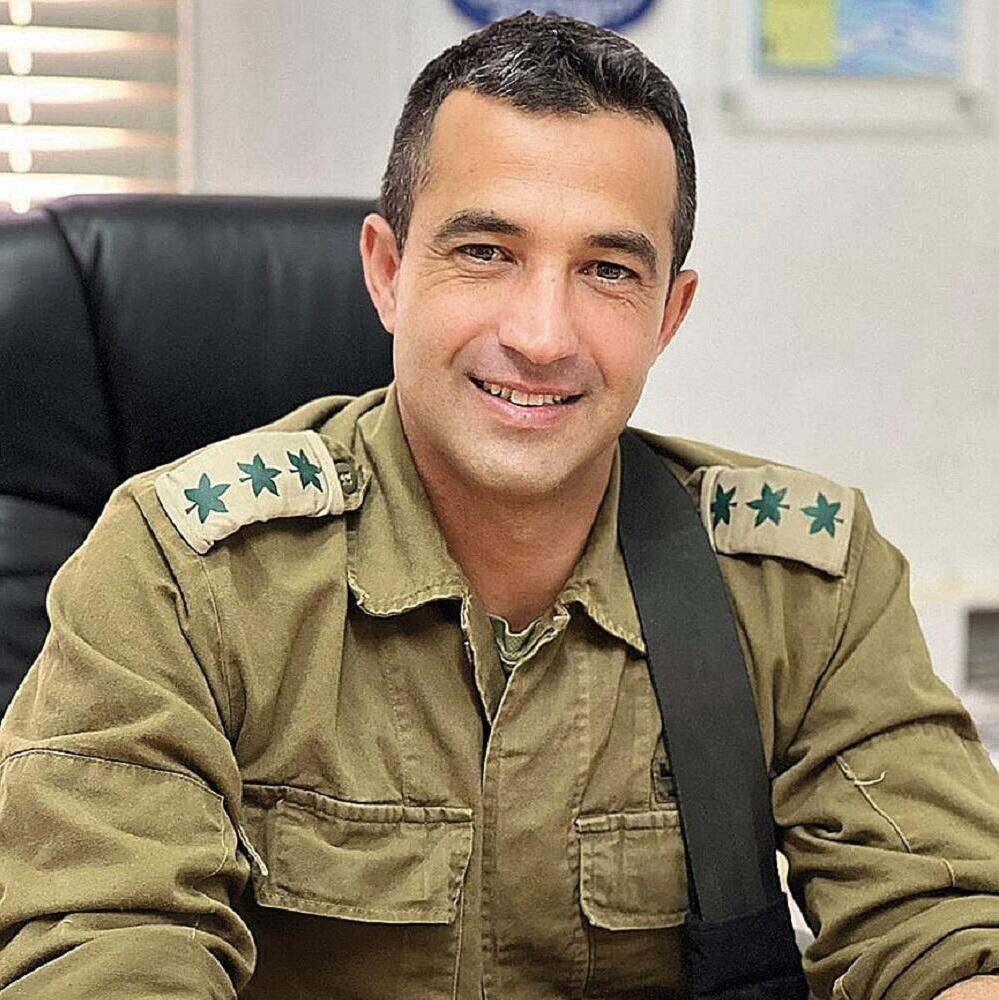
Col. Asaf Hamami
(Photo: Courtesy of the family)
The initial ground incursion by Hamas Nukhba commandos into Israeli territory began at around 6:30 a.m., following the breach of the border gate at Hoover’s Crossing by a bulldozer. According to the IDF investigation, Hamami activated local security forces and command posts during the drive and at 6:44 a.m. declared over the radio: “This is commander—declaring war.”
“Col. Hamami saw Hamas terrorists barreling toward Kibbutz Nirim and fulfilled his duty,” the investigation stated. “He engaged them as a team to protect civilians and was dragged to a shelter inside the kibbutz by his two soldiers after being shot in the thigh and losing much blood.”
Ahimas managed to radio, “The brigade commander is hit! The brigade commander is hit!” However, due to chaos on the communication channels, the message was not heard in the command centers, and for hours the IDF and division leadership did not know Hamami’s whereabouts. Ahimas and Brodski killed three terrorists before falling in battle, heavily outnumbered.
Hamami’s death, the IDF now believes, may have prevented an even greater tragedy. Testimonies from captured Hamas operatives, evidence at the scene and intelligence gathered later in Gaza indicate that the cell that killed him chose to linger at the site rather than immediately advance into the kibbutz.
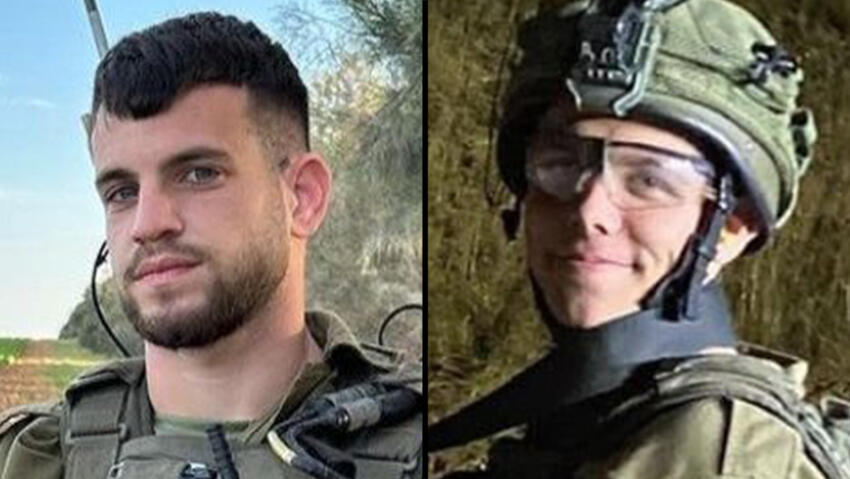
Staff Sgt. Tomer Yaakov Ahimas and Sgt. Kiril Brodski
(Photo: IDF)
The attackers noticed the armored jeep and its equipment, recognized the significance of the officer and focused on seizing his body and the vehicle.
According to the report, the delay in coordinating with Hamas command in Gaza—needed to ensure that the IDF jeep would not be fired upon as it crossed into the Strip—lasted approximately 20 minutes. During that time, dozens of terrorists gathered around the scene rather than pushing forward into the kibbutz, potentially sparing further loss of life.
Alert squad told: It’s up to you
Additional forces from the 7th Armored Brigade and Golani Brigade showed courage and made critical decisions in the opening minutes of the October 7 attack. One such decision came from Capt. Omer Wolf, who was later killed that day. Contrary to pre-issued orders, he chose to head toward the nearby communities rather than proceed directly to the border fence.
A Golani company, supported by a small number of tanks, was tasked with defending against 14 breaches across the “Horseshoe” cluster of Israeli communities. The investigation found that their eventual defeat by Hamas was the result of “a systemic failure years in the making,” not a reflection of how the troops performed on the ground.
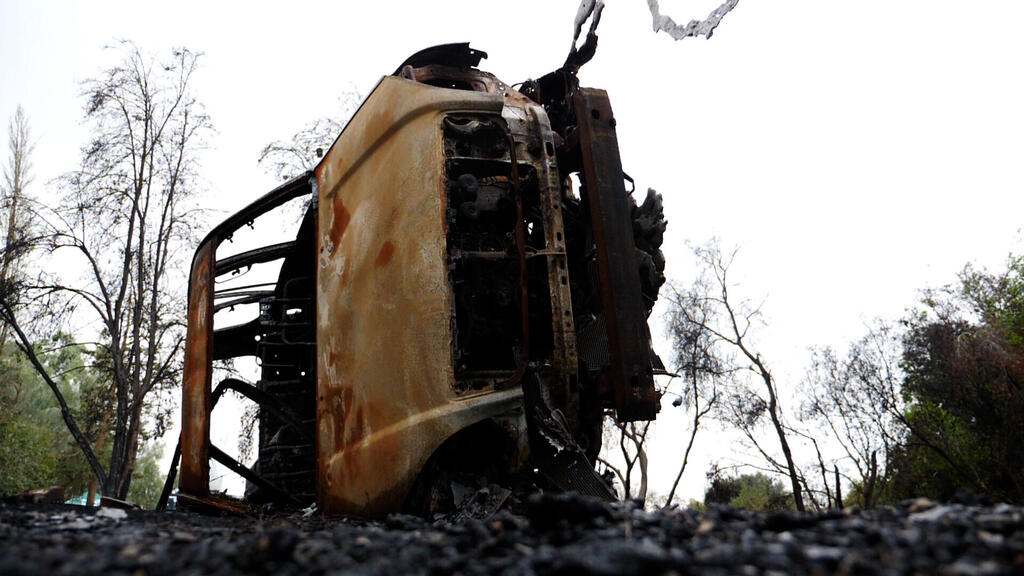
Destruction in Kibbutz Nirim following the October 7 terror attack
(Photo: Yaron Sharon)
The soldiers responded immediately and fought until around 7:30 a.m., at which point the entire chain of command in the local battalion—from platoon leaders to senior officers—had been lost.
These forces managed to hold back the initial wave of attackers from entering Kibbutz Nirim until around 8:00 a.m. but were ultimately overwhelmed by a 3-to-1 numerical disadvantage, compounded by the fact that Hamas had set up ambushes that blocked reinforcements from reaching the area.
As a result, the few remaining fighters near Nirim were redirected by the regional brigade to other flashpoints, such as nearby Kissufim. This left Nirim exposed to a second wave of terrorists, who began entering the kibbutz at approximately 8:20 a.m.
The main killing spree at Nirim lasted about an hour, from 8:20 to 9:20 a.m., and the last Hamas terrorist was eliminated in the kibbutz at 2:00 p.m. by the first reinforcement unit to arrive—commandos from a training base who reached the scene 30 minutes earlier.
Most of the Hamas Nukhba force had already withdrawn from Nirim by order around 9:30 a.m. From that point, a third wave entered, consisting of a few Palestinian Islamic Jihad (PIJ) terrorists and primarily unarmed Gazans who looted, torched homes and committed acts of sexual violence.

Members of Kibbutz Nirim's civilian alert squad
For hours, Nirim’s defense relied solely on its seven-member civilian alert squad, which was forced to operate alone without IDF support. The probe highlighted a critical error by the local security coordinator, who, for nearly two hours, ordered the squad not to engage the attackers directly but to fire from fixed positions, such as rooftops.
It was only around 8:00 a.m. that he was informed no military reinforcement would be arriving and that the responsibility for protecting the residents was theirs alone. The squad’s first mission was to rescue a besieged family with a newborn just one week old.
The investigation further determined that the alert squad’s readiness was moderate to low—not due to negligence, but circumstances. Half its members were not in the community that day, and the IDF had only trained them minimally, offering just a few hours of instruction annually.
The physical security infrastructure provided by the state to Nirim and the surrounding area was also found to be severely lacking, especially considering the scale of the terrorist threat growing just over a mile from residents' homes.
The plan: Reach Be’er Sheva
The investigation reveals that only a few dozen Hamas Nukhba commandos were originally meant to operate in the area around Kibbutz Nirim. Most of the other infiltrators who crossed into Israel were assigned to penetrate deeper, including toward Be’er Sheva and strategic Air Force bases in the south.
“The swift response of frontline IDF forces in the area delayed many of the terrorists from pushing further into Israel, leading them instead to join their comrades in the surrounding communities, such as Nirim,” the report stated.
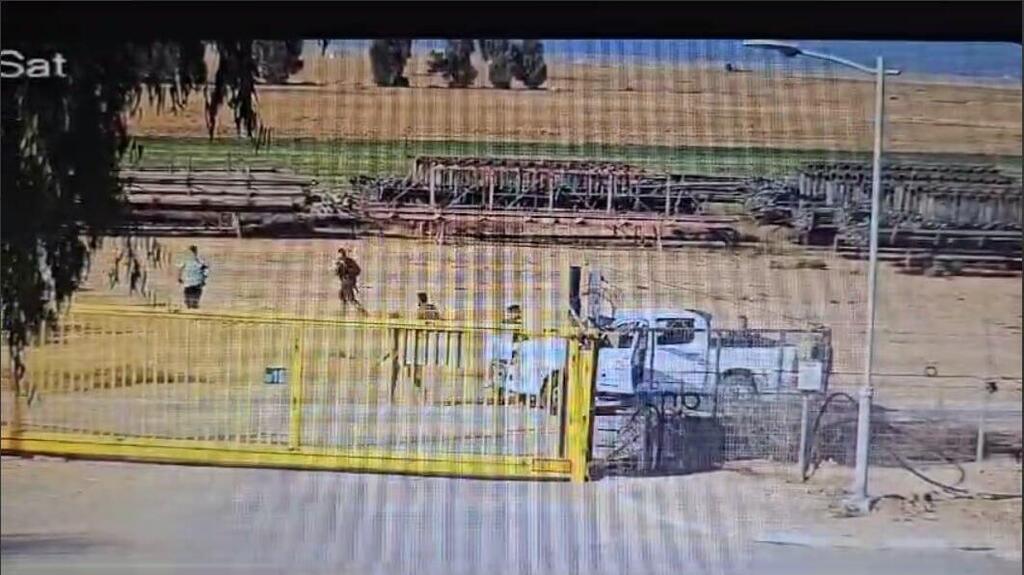
Hamas terrorists breach Kibbutz Nirim' main gate during the October 7 attack
The probe also offers a partial explanation as to why no warning—of even 10 or 30 minutes—was given to IDF troops stationed along the Gaza border. Given the scale of the assault, with thousands of terrorists preparing for a mass invasion, intelligence signals should have been picked up.
However, the first group to breach the fence was relatively small and covert. The broader, more violent push came only after Hamas headquarters issued a general attack order at 6:29 a.m.
Like nearby Nir Oz, which was left defenseless, Kibbutz Nirim was also unreachable for hours. IDF reinforcements were concentrated in the northwestern part of the Gaza border—Sderot, Be’eri and Kfar Aza—while southern forces were engaged in the Kerem Shalom area and southern Eshkol region.
The “Horseshoe” communities, located in the central Gaza border region and surrounded by key intersections like Gama and Ma’on—both seized early by Hamas—received no reinforcements until midday. This allowed Hamas terrorists to hurt three IDF soldiers at the nearby Ma’aras outpost and kidnap Edan Alexander, who remains in Hamas captivity.
The investigation praised the lookout soldiers from the Kissufim sector for their extraordinary conduct even as terrorists surrounded their command posts and disabled their surveillance cameras. The soldiers relied on movement radar to identify enemy positions and directed remaining fighters accordingly.
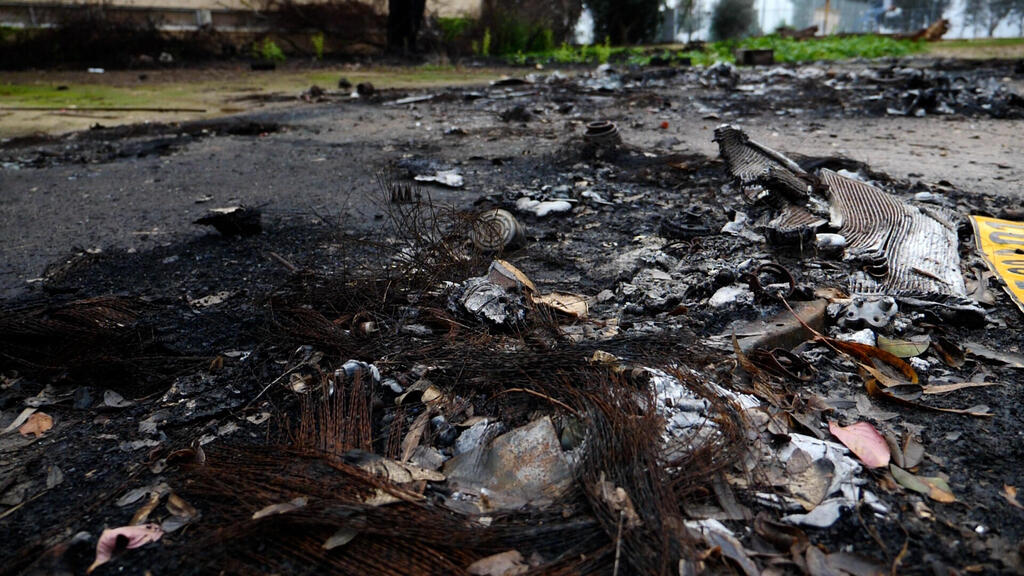
Destruction in Kibbutz Nirim following the October 7 terror attack
(Photo: Yaron Sharon)
They issued calm, orderly reports to the surviving forces,” the probe noted. “At one point, a 20-year-old squad commander was the only one left on the ground, guided over the radio by a lookout soldier without a live fire-control system.” Of the 153 soldiers and commanders from the Golani and 7th brigades stationed in the sector, around 100 were killed or wounded.
Get the Ynetnews app on your smartphone: Google Play: https://bit.ly/4eJ37pE | Apple App Store: https://bit.ly/3ZL7iNv
In response to the report’s release, Kibbutz Nirim issued a statement: “The IDF investigation reinforces the depth of the abandonment we experienced on October 7. An entire community was forced to defend itself alongside a small number of heroic IDF soldiers who gave their lives on our soil. We bow our heads in memory of those who fell while trying to save others.”
The statement also renewed calls for a state commission of inquiry: “This investigation only underscores the urgent need for a national commission to examine the systemic abandonment, expose every failure and draw clear conclusions to prevent such a disaster from ever happening again. A year and a half later, it’s clear: nothing is more important than bringing the hostages home. The living for rehabilitation, and the deceased for burial. We demand that the government make the return of the hostages a top national priority—and bring them back now.”
The kibbutz concluded: “Kibbutz Nirim will continue to stand strong and fight for the return of the hostages, while demanding accountability and transparency from the government and military that abandoned the Gaza border communities. Despite the terrible destruction and heavy loss, we will return—and rebuild our home.”