

The United Arab Emirates’ announcement Tuesday night that it was severing all trade ties with Iran following a missile attack that Abu Dhabi says was launched against it by the ayatollahs’ regime has sparked debate among experts over the past 24 hours about the implications for Iran’s economy.
The Islamic Republic is currently under a U.S. blockade and is already in a severe economic crisis, which President Donald Trump has vowed to worsen soon with new sanctions in an effort to pressure Tehran into compromising and accepting his terms for ending the war. Abu Dhabi’s announcement came hours after a phone call between Trump and UAE President Mohammed bin Zayed, though it remains unclear whether the United States was involved in the move.
Gallery
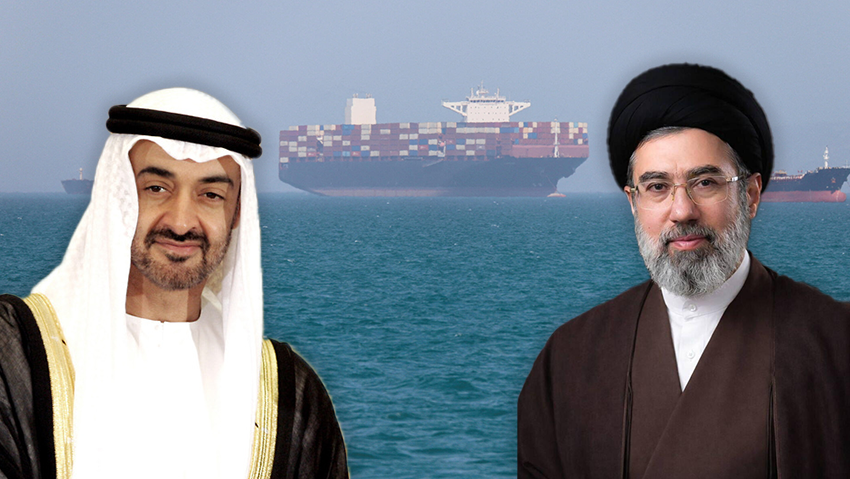
Iranian leader Mojtaba Khamenei and UAE President Mohammed bin Zayed
(Photos: AP, Amirhosein Khorgooi/ISNA/WANA (West Asia News Agency) via Reuters)
The UAE, like several of its Gulf neighbors, came under numerous missile and drone attacks during the war, as well as during exchanges of fire between the United States and Iran in the months following the first ceasefire in April. Unlike its other neighbors, it is generally considered to take a tougher, more hawkish line toward Tehran, though reports indicated that it too feared the consequences of a broader escalation during the war.
Over the past two weeks, Abu Dhabi has reported at least four Iranian attacks on its oil tankers as they attempted to cross the Strait of Hormuz despite Iran’s “ban” on passage through the waterway. However, no alarms had sounded in the UAE itself for a month and a half. That quiet was broken Tuesday, when Abu Dhabi said two missiles were fired at unspecified maritime targets and landed in the waters of the Persian Gulf.
The attack came amid a deadlock in negotiations between Iran and the United States, with senior officials in Tehran threatening escalation if the U.S. blockade is not lifted. Tehran quickly denied involvement and said it had not fired the missiles. The UAE rejected the denial and announced its response Tuesday night: the suspension of all trade, exchange and financial transactions with Iran.
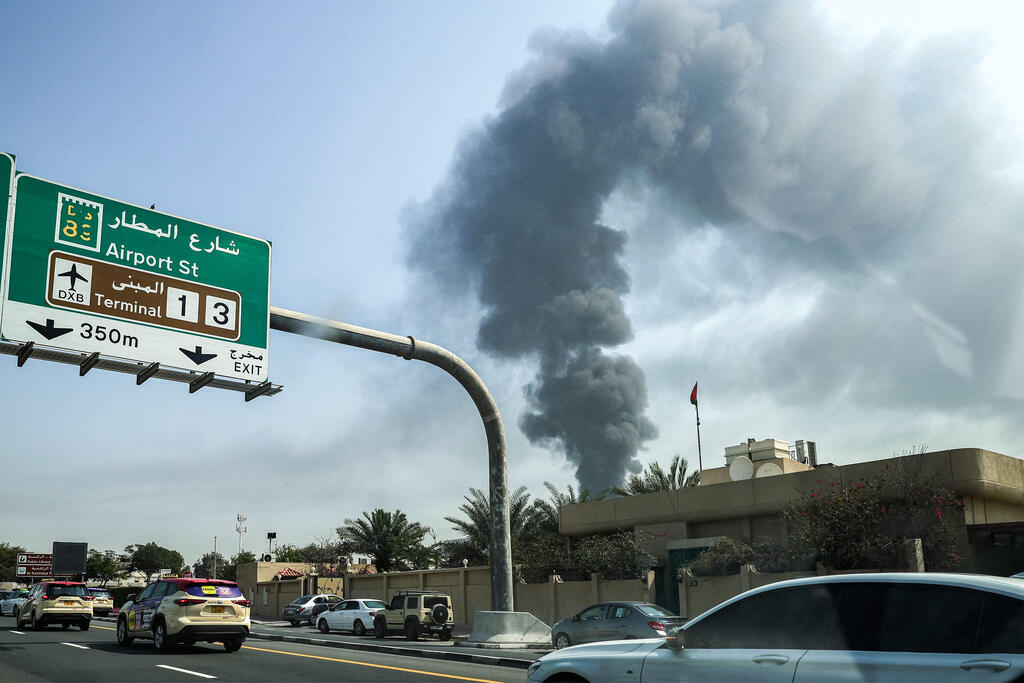
Fire in Dubai following Iranian attack on airport there, at the height of the war in March
(Photo: AFP)
Analysts say the move could have significant consequences for the Iranian economy. Although commercial ties were effectively severed at the height of the war, Iran later reported that they had resumed to some extent. Before the war, the UAE was an especially important commercial hub for the Islamic Republic, with bilateral trade totaling $28 billion in 2024. According to the World Trade Organization, the UAE was Iran’s largest source of imports that year, supplying goods worth a total of $21 billion, and was also the destination for 13% of all Iranian exports, worth $7 billion.
Mohammad Farzanegan, a professor of Middle Eastern economics at Germany’s University of Marburg, told The Associated Press that more time and data would be needed to assess the full impact of the move and of the war as a whole on trade between Iran and the UAE. Still, he said it was clear that Abu Dhabi is a critical economic partner for Iran.
Beyond direct trade between the two countries, he said, “the UAE has been very important for Iran as a re-export hub” and has helped Tehran absorb some of the blows caused by U.S. sanctions.
“Iran therefore depends heavily on the UAE, not because the UAE itself produces one-third of Iran’s imports, but because it serves as a major gateway for Iran to access third-country goods and commercial infrastructure.”
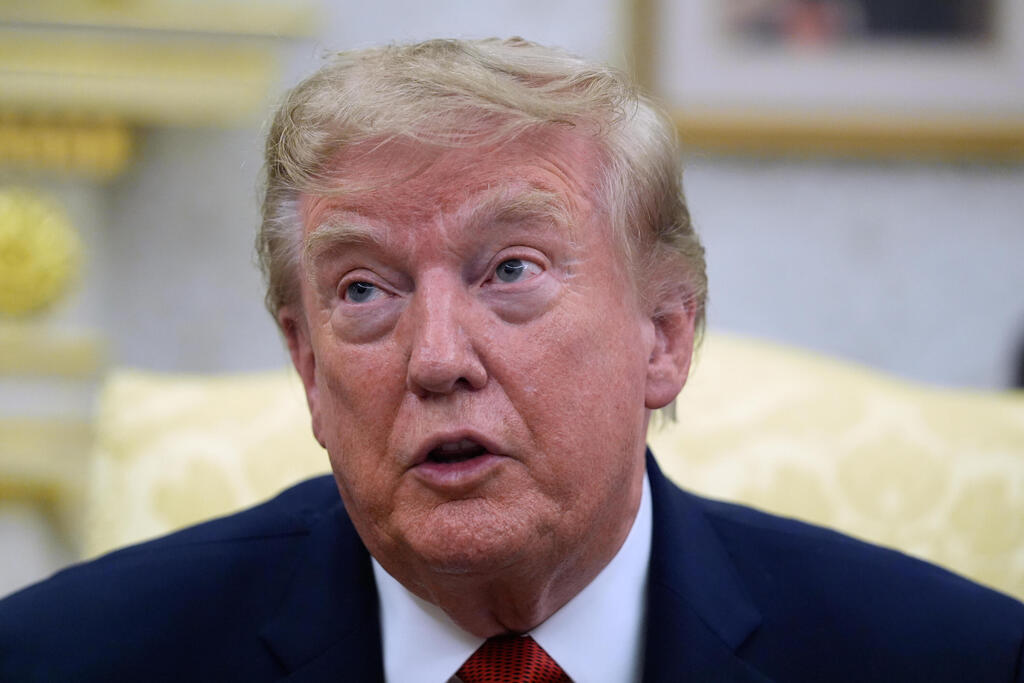
US President Donald Trump: Changes direction - and wants to 'strangle' the regime economically
(Photo: : Manuel Balce Ceneta/AP)
Farzanegan warned, however, that the embargo now imposed by Abu Dhabi also carries the risk of renewed confrontation with Iran.
“As a relatively small country seeking to remain a regional hub for business and finance while attracting tourists and investors, the UAE depends heavily on regional stability,” he said. “Any major conflict with Iran can therefore cause substantial damage to its economy.”
That concern is already being reflected on the ground. On Wednesday morning, Iran claimed that its Revolutionary Guards had seized an oil tanker named Amara in the Strait of Hormuz, saying it was “linked to the United Arab Emirates.” According to reports in Iran, after being stopped for reasons that were not immediately clear, the vessel “changed course toward Bandar Abbas,” the Iranian port city on the strait.
Iran’s new military chief of staff, Ali Abdollahi, also issued a warning Wednesday morning to countries in the region: “Countries that have issued statements rejecting the use of their territory by the U.S. against us should know that nothing is hidden from us. It seems unlikely that such a large number of military aircraft, especially refueling aircraft, would be at regional bases without the knowledge of the host countries. We warn: Any assistance to the U.S. military is equivalent to operating alongside U.S. military forces.”
The UAE announcement comes as the United States prepares to intensify economic pressure on Iran. Last week, U.S. Treasury Secretary Scott Bessent said the administration in Washington would soon announce “measures like have never been seen in the history of economic isolation.”
Trump himself said Tuesday night that there are currently no negotiations with Iran. Tehran is now demanding what amount to terms of surrender from Washington, including compensation and a withdrawal of forces in exchange for removing the threat to ships in the Strait of Hormuz. Trump stressed in a post on his Truth Social platform that the naval blockade of Iranian ports, which prevents Iran from exporting oil, would remain in place.
“There are no talks or contacts taking place or planned with the Islamic Republic of Iran. The Naval Blockade remains fully in effect. The Strait of Hormuz is open and operating. All sea mines have been removed or detonated,” the president wrote.
All this comes against the backdrop of Iran’s dire economic situation. Alongside the enormous damage its economy sustained during the war, inflation is now soaring. According to the International Monetary Fund, it is expected to approach 70% this year, while the economy as a whole is forecast to contract by a steep 5.4%. Iran’s currency, the rial, fell at the beginning of the month to a new record low of 1.9 million to the dollar.
Trump’s statement that no talks were underway with Iran contradicted comments a day earlier by his adviser and son-in-law Jared Kushner, who said talks with Tehran were going “better than ever.” According to a CNN report overnight, Trump published his post after ordering his senior envoys to halt those discussions.
A source familiar with the details said White House officials informed political allies of a “change in strategy.” According to the report, Trump is dissatisfied with Tehran’s unwillingness to accept his demands and now prefers to “strangle” the ayatollahs’ regime economically and wait until it signals a willingness to reach an agreement on the terms the president is seeking.