

Prime Minister Benjamin Netanyahu and Defense Minister Israel Katz said Saturday that senior Hamas terrorist leader Raad Saad was killed in a targeted Israeli strike in Gaza City, describing the operation as a response to a Hamas explosive attack that lightly wounded two Israeli reserve soldiers earlier in the day near Khan Younis.
Israeli security officials, however, stressed that the killing was not directly connected to a violation of the ceasefire and said the decision to carry out the strike was based on longer-term intelligence considerations.
Strike that killed Raad Saad
(Video: IDF)


Saad, considered Hamas’s second-in-command and one of the architects of the Oct. 7 massacre, was killed at 2:49 p.m. when a small missile fired from an IDF drone struck his vehicle in western Gaza City, according to Israeli officials.
Despite understandings between Jerusalem and Washington under the ceasefire framework, the United States was notified of the operation only after it was carried out, at 3:09 p.m., a move Israeli officials acknowledged carried the risk of angering U.S. President Donald Trump’s administration.
The strike, carried out in al-Nabulsi Square in Gaza City, was described by Israeli officials as highly unusual given the ceasefire in place over the past two months. Senior IDF officers recommended moving forward after what officials called a rare operational opportunity, as Saad had emerged above ground and was traveling openly.
After confirming the killing, Netanyahu and Katz issued a joint statement saying they had ordered the elimination of Saad in response to “a Hamas explosive device that wounded our forces in the restricted area of the Gaza Strip.”
They described Saad as head of Hamas’s force buildup headquarters and accused him of actively rebuilding the organization, planning attacks against Israel and restoring Hamas’s strike capabilities in what they said was a “blatant violation” of the ceasefire and Hamas’s commitments to a plan proposed by President Trump.
Security officials said there were internal disagreements over whether to carry out the strike, noting that Hamas has yet to return the body of fallen hostage Staff Sgt. Ran Gvili. Officials said Israel was concerned that such a move could further delay efforts, through U.S.-led mediation, to pressure Hamas to return Gvili’s remains.
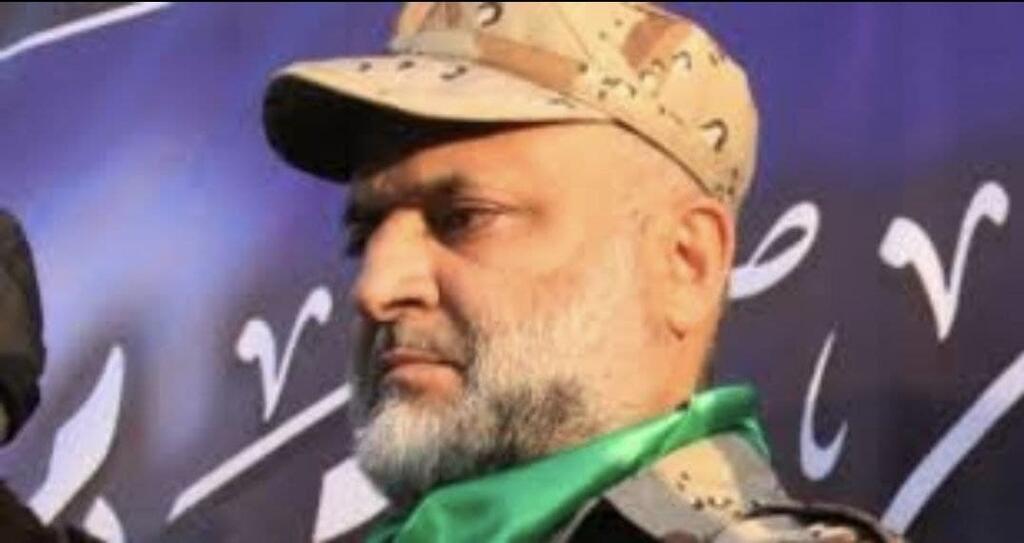
Raad Saad
Saad rose through Hamas’s ranks over decades and was part of the group’s so-called “2005 generation” of field commanders who emerged during the first and second intifadas. He is widely believed to have authored the “Jericho Wall” plan — a 39-page, top-secret operational blueprint that formed the basis for the Oct. 7 attack, which relied on total surprise and involved nearly all of Hamas’s military forces, including its elite Nukhba unit.
In a speech in 2013, Saad said Hamas was “constantly strengthening and preparing for the next battle against Israel,” a vision Israeli officials say was realized a decade later.
At one point during the war, Saad’s photo mistakenly appeared in an IDF collage of detainees captured at Gaza’s Shifa Hospital. The IDF and Shin Bet later acknowledged the inclusion was a human error and said Saad had not been arrested, rejecting speculation that the image was part of a psychological warfare effort.
Israeli officials say Saad had recently been deeply involved in rebuilding Hamas’s military infrastructure, making him a high-priority target despite the diplomatic and security sensitivities surrounding the strike.