


Following the delegation of hostage mothers who traveled from Israel to meet with the President of the Red Cross, and in light of the publication of the horrific videos of the two Israeli hostages Rom Breslavsky and Evyatar David, Israel believes there has been a significant change in the approach of the Red Cross toward the hostages held in Gaza.
In practice, the organization is now attempting to intensify efforts for dialogue with Hamas in order to bring food and medicine to the hostages – efforts which, until now, showed no results, or at least none that were disclosed. In addition to the families, Prime Minister Benjamin Netanyahu and President Isaac Herzog also requested the Red Cross’ involvement in delivering food to the hostages and providing them with immediate medical care.
The Red Cross, which does not operate under the direction of the UN, is an independent international organization headquartered in Geneva, Switzerland, and operates worldwide. Sources in Israel describe the Red Cross as less problematic than organizations such as UNRWA, OCHA, and the UN Human Rights Council, though they still criticize it on certain issues.
Gallery

The Red Cross has not appeared to act empathetic to the families of hostages held in Gaza
(Photo: Abdel Kareem Hana/AP)
Since the start of the war on October 7, 2023, the organization has been perceived as having acted with insensitivity and a lack of empathy toward Israeli civilians, including the hostages held by Hamas. However, unlike other organizations, it has not often criticized Israel. The Red Cross has tended, both then and now, to focus on the Palestinian side and prisoners in Israel, since it sees this as its traditional role. For this reason, due to Israel’s refusal to allow the organization to visit the prisoners and Nukhba terrorists in the country, it felt its role had been impaired.
An Israeli source familiar with the Red Cross’s work told ynet that Red Cross officials "weren't empathetic enough toward the hostage families mainly because they are Swiss and follow protocols, not because they are anti-Israel.”
According to him, families who approached the organization regarding medicines were met with official, procedural responses that matched its character, but that the Red Cross should have been more sensitive given the extreme distress of the family members.
“They could have done better when it came to the hostages’ medicines and not just acted according to the rules,” the source said.
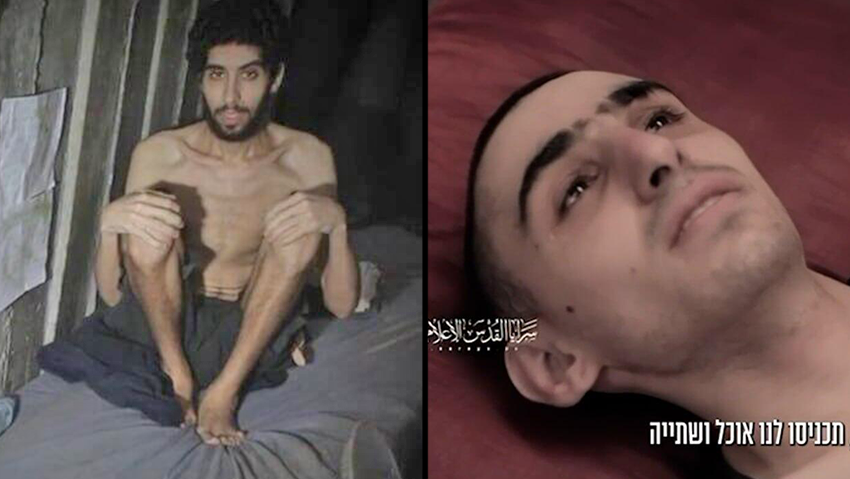
Hostages Rom Breslavsky and Evyatar David from Hamas propaganda video
He added that only after Israel formally organized the needs of each hostage did the Red Cross begin to act. “They tried to talk to Hamas and create a mechanism to deliver medicines, but Hamas made it hard for them,” he said.
The source claimed that had the Red Cross personnel been a bit more persistent, the situation could have been different.
“They could have taken the medicines and tried to place them in Gaza so they’d reach the hostages – but not out of bad intent; they stuck to protocol and didn’t understand this was a special situation,” he said.
Still, he stressed there is no need to condemn the Red Cross. “In the end, everything depends on Hamas, not them. In the deal they weren’t Uber drivers. They worked discreetly. Sometimes Hamas threatened their people when they didn’t like what they were doing for the hostages – they did their job and sometimes clashed with the terror organization.”
(Israeli saterical television show Eretz Nehederet portrays the Red Cross as glorified Uber drivers)
He also credited the organization for appointing humane representatives to its offices in Israel and for the fact that its president always meets with hostages, and that the Red Cross has condemned Hamas more than any UN body. According to him, the difference in the organization’s treatment of Israel stems from the difference between Israel and Hamas.
Get the Ynetnews app on your smartphone: Google Play: https://bit.ly/4eJ37pE | Apple App Store: https://bit.ly/3ZL7iNv
“In the end, you’re a state, so they can hold you accountable. With Hamas, they are constantly trying to maintain communication channels because they need them – if there’s a deal, Hamas needs to feel the other side trusts them,” he said.
Meeting of hostage mothers with the Red Cross president
Four mothers of hostages still held in Gaza met Tuesday with Red Cross President Mirjana Spoljaric and called on her to act to allow food and medicines to be brought to their children.
Galia David, mother of hostage Evyatar, said after the meeting: “We spoke from our hearts to the heart of the Red Cross president as a mother. She also received the Health Ministry report released today, so she can truly see the facts, both from the condition of those who have returned and based on the latest videos Hamas released. We felt she was very sincere, and she promised to do everything in her power.”
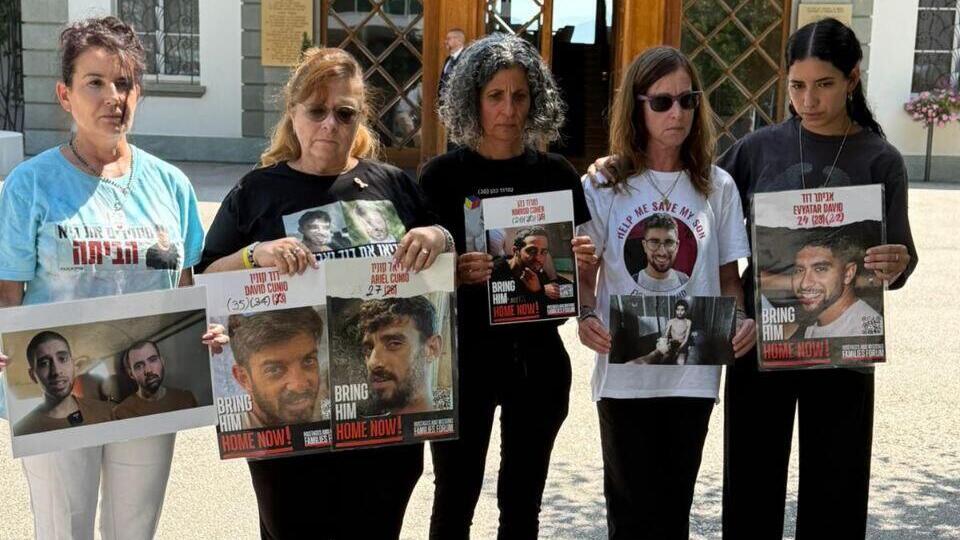
Mothers of hostages met with the president of the International Committee of the Red Cross
Merav Gilboa Dalal, mother of hostage Guy, added: “We left there feeling we had touched her heart. She managed to understand us and our feelings as mothers. She saw the photos of our children, she understood the situation is severe and that there’s a need to bring in medicines and food.”
“The meeting was intimate and discreet. We expressed our concern for our loved ones’ fate, and the president showed great empathy and care. She promised she is doing everything she can," said Viki Cohen, mother of abducted soldier Nimrod.
Sylvia Cunio, whose two sons David and Ariel Cunio are still held captive by Hamas, said: “I felt relatively good, and I continue to ask everyone to do everything possible to bring them back, and for people to go in and see their condition – their health, their physical state, and their mental state. I ask that they bring them food, water, medicines, and everything they need. Even hygiene.”