

Iran’s opposition television channel Iran International reported Sunday evening that satellite broadcasts of several Iranian state TV channels were hijacked, with anti–ayatollah regime protest messages and statements by Crown Prince Reza Pahlavi aired for several minutes. Pahlavi, the exiled son of the shah ousted in the 1979 Islamic Revolution, has in recent weeks sought to position himself as a leader of the protests aimed at toppling the regime.
Iranian state TV channels were hijacked, with anti–ayatollah regime protest messages and statements by Crown Prince Reza Pahlavi


According to Iran International, the messages were seen by viewers watching Iranian state channels via the Badr satellite. During the brief takeover, videos and images documenting protests against the regime appeared on screen, alongside a call by Prince Reza Pahlavi urging the Iranian people to join the demonstrations and appealing to the armed forces to side with the protesters. The opposition outlet noted that Iran’s state broadcasting authority relies on the Badr satellite to transmit a number of regional channels nationwide.
Videos circulating on social media showed on-screen messages such as: “People of Iran, continue your struggle. Freedom is closer than ever,” as well as “Europe is with you!” and “Prince Reza Pahlavi is our voice, he is mobilizing global support for us.” For several seconds, another message flashed repeatedly: “This is a message to the Iranian army and security forces: Do not turn your weapons on the people. Join the nation for Iran’s freedom!” A photograph of Iranian President Masoud Pezeshkian later appeared, alongside a written appeal addressed to him: “Mr. Pezeshkian, the moment of truth has arrived. Do you stand with those spreading lies about ‘mercenaries,’ ‘Mossad agents’ and similar nonsense?”
Gallery
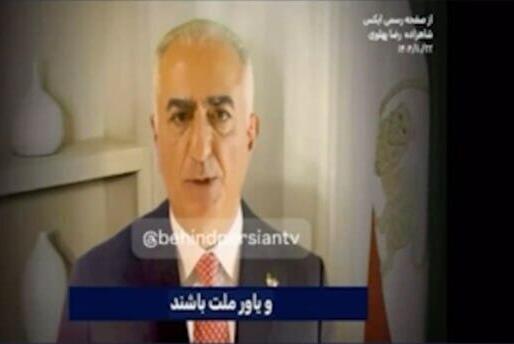
One of the segments of Crown Prince Reza Pahlavi that was broadcast during the hacking of state television
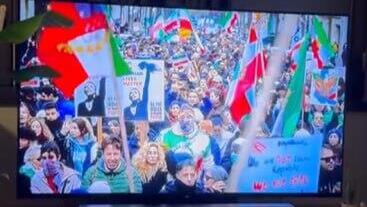
Images of protests broadcast during hte hacking of state television
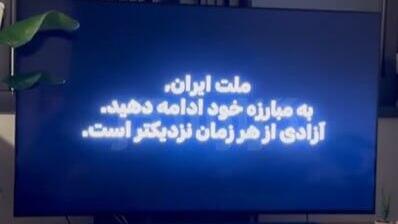
Message: 'This is a message to the army and security forces: Do not turn your weapons against the people. Join the nation for the freedom'
The satellite broadcast hack came as the Islamic Republic remains largely cut off from the outside world, a week and a half after authorities shut down internet access. NetBlocks, an organization that monitors internet traffic and cybersecurity, reported that Iran briefly saw an uptick in connectivity earlier Sunday after usage had hovered at about 1% of normal levels over the past week, before dropping again later in the day. According to NetBlocks, there was a sudden spike in access to Google and certain messaging services from inside Iran, allowing a small number of Iranians to relay detailed information about the severity of conditions on the ground. That window was short-lived, however, as internet traffic soon plunged again.
Iran’s authorities cut internet access on January 8, the day protests against the regime escalated into mass demonstrations and, according to reports, the deadliest day of clashes with security forces. Earlier Sunday, Pezeshkian said that, given the need to ease online business activity and reduce communications restrictions, he had recommended that the secretary of the Supreme National Security Council remove internet limitations as soon as possible, though he did not specify when this would happen.
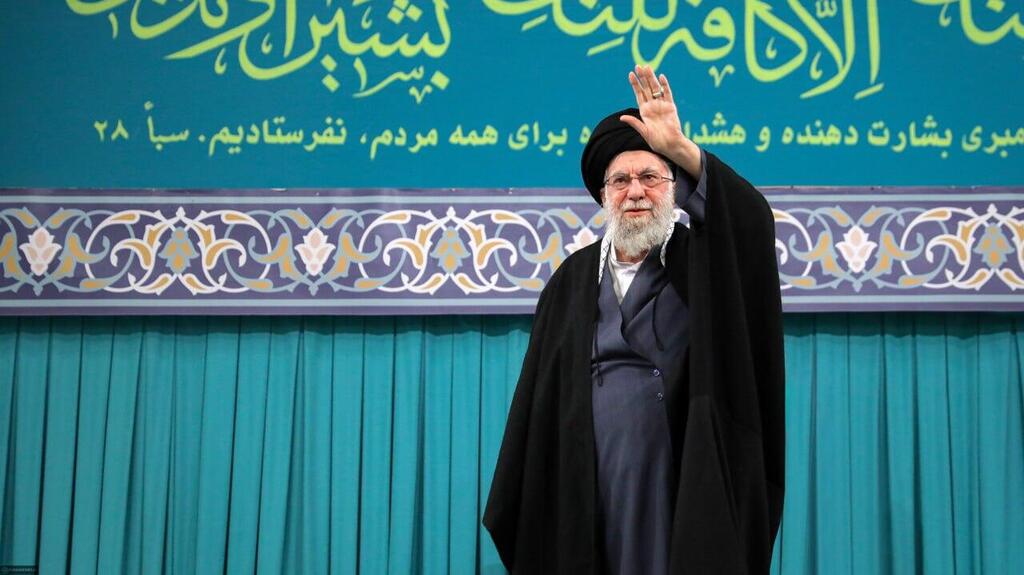
Iran's Supreme Leader Ali Khamenei in Tehran
Journalists with Agence France-Presse in Tehran reported Sunday that they were briefly able to connect to the global internet in the morning, even as major internet service providers remained blocked. Some Iranians were able to send and receive WhatsApp messages for the first time in days. International phone calls to and from Iran, which were blocked last week, were restored on Tuesday, and SMS services resumed on Saturday.
Despite the severe restrictions on internet access and Iran’s longstanding bans on certain apps—including Instagram and Facebook, which require VPNs to access—reports of atrocities committed by security forces against protesters have nonetheless leaked out in recent days, mainly via users connected to Elon Musk’s Starlink satellite internet service.
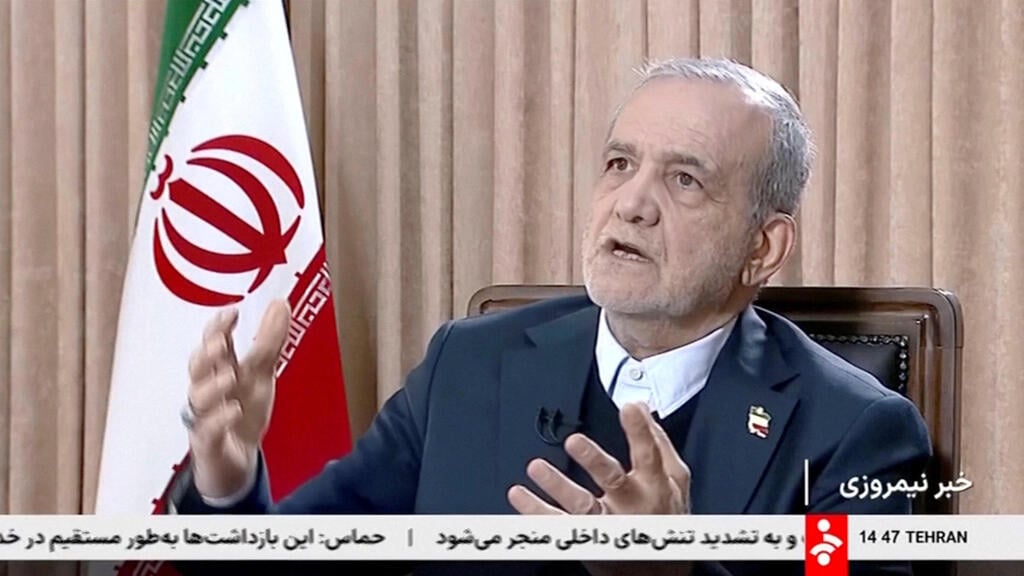
Iranian President Masoud Pezeshkian speaks in an interview on Iranian state television following the protests
(Photo: IRIB/via Reuters TV/Handout via Reuters)
Earlier Sunday, Iran’s semi-official Fars news agency reported that the CEO of Irancell, the country’s second-largest mobile operator, had been dismissed after failing to comply with a government order to shut down the internet. Iranian state television reported that schools and universities reopened Sunday after being closed for a week, saying authorities had regained control of the situation.
Iran admits 5,000 killed, toll may be far higher
Earlier in the evening, Pezeshkian warned that any attack on Iran’s supreme leader, Ali Khamenei, would be considered a declaration of all-out war against the Iranian nation, and that the Islamic Republic’s response to any military aggression would be severe and regrettable. His remarks followed comments a day earlier by former U.S. ambassador to Israel Dan Shapiro, who said he believed President Donald Trump would attempt to kill Khamenei as early as this week.
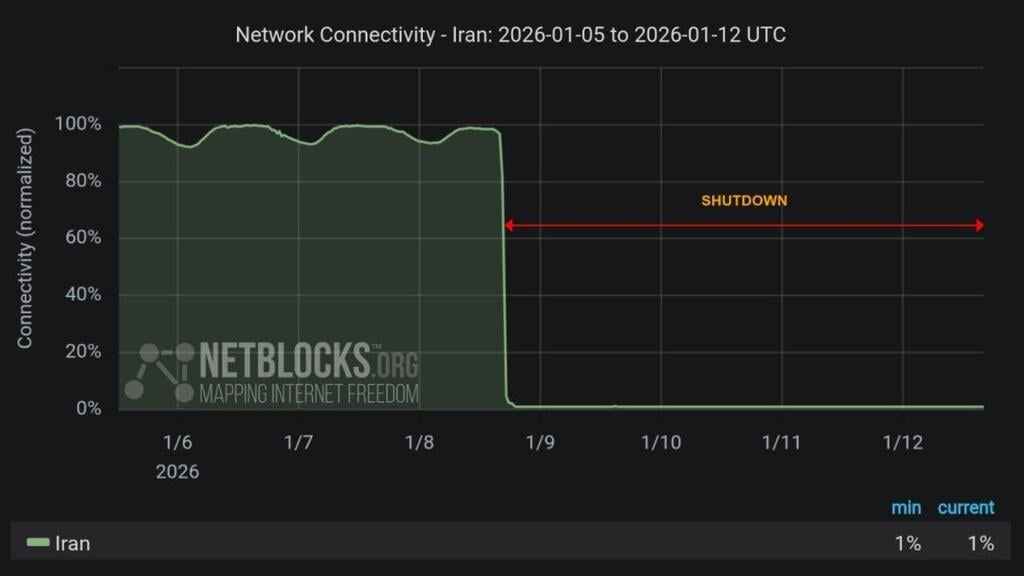
96 hours without internet in Iran
In a post on the X platform on Sunday evening, Pezeshkian wrote: “If there are difficulties and hardships in the lives of the dear people of Iran, one of the main causes is the long-standing hostility and inhumane sanctions imposed by the U.S. government and its allies. Any harm to the supreme leadership of our country would amount to a declaration of all-out war against the Iranian nation.”
Trump has signaled in recent days that he has decided, for now, to pause any strike on Iran—falling short of the promise he made to the Iranian people at the height of the unrest a week and a half ago that “help is on the way,” urging them to continue fighting the regime. Still, over the past 24 hours, threats and insults have again been exchanged between Trump and Iran’s leadership. In the background, the United States continues to move an aircraft carrier and forces suited for a large-scale strike closer to the Middle East, leading many to believe the likelihood of a U.S. attack remains high.
In a series of posts on X, Khamenei on Saturday harshly attacked Trump, claiming the United States was responsible for the wave of protests sparked by Iran’s dire economic situation. “Responsibility must be placed on the United States,” he wrote, adding: “We find the U.S. president guilty of all the losses, damages and slander.” Trump responded in an interview with Politico, calling Khamenei a sick man and saying, “It’s time to look for new leadership in Iran.”
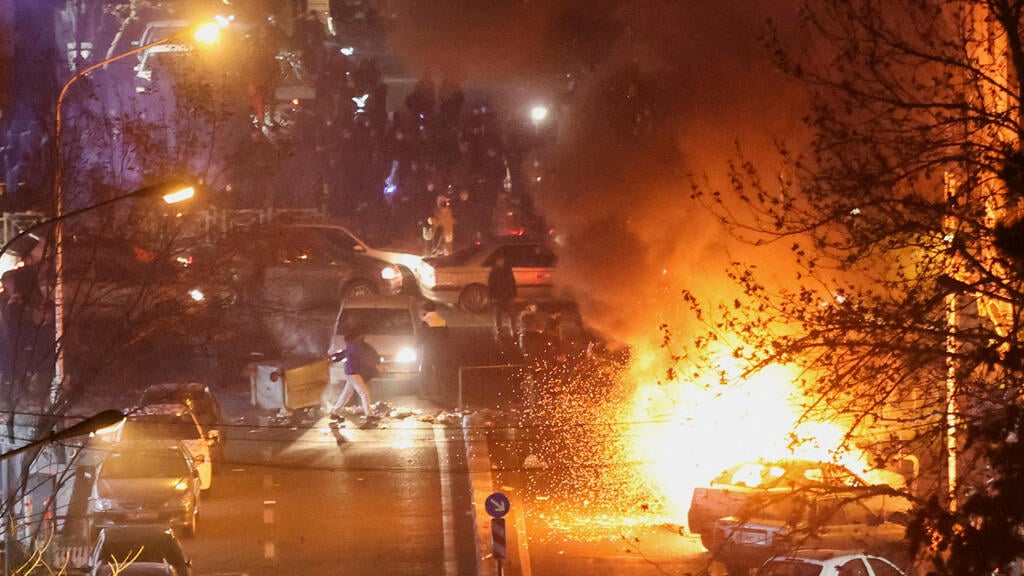
Protests erupt in Tehran on January 8
(Photo: Stringer/WANA (West Asia News Agency) via Reuters)
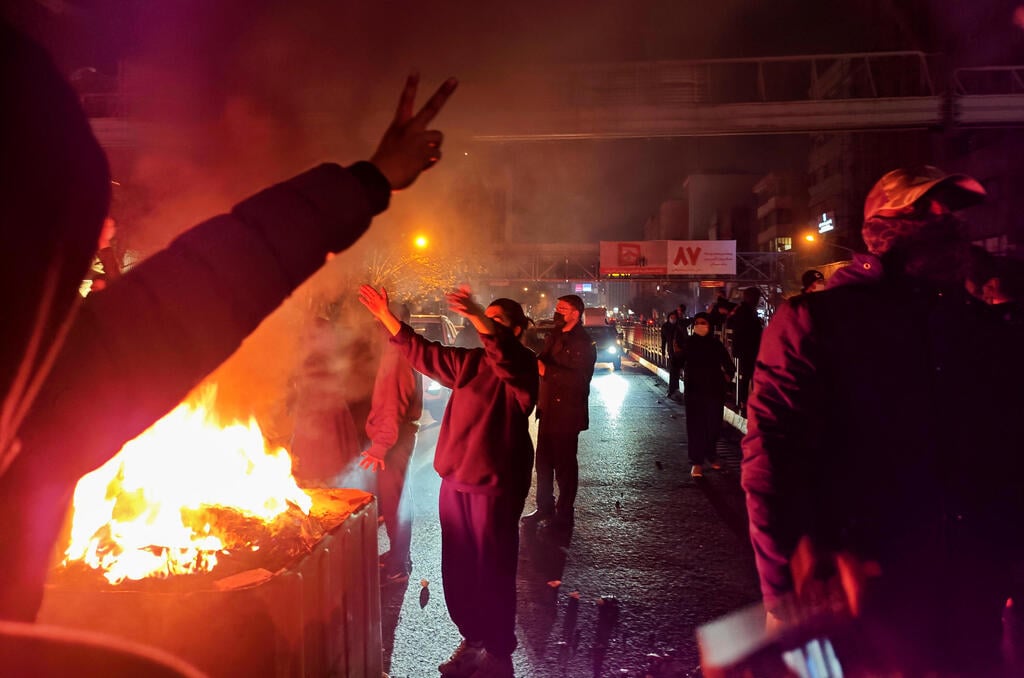
(Photo: Anonymous/Getty Images)
On Sunday morning, an Iranian official told Reuters that at least 5,000 people have been killed in the crackdown on protests since the beginning of the month. He said the dead included about 500 members of the security forces and, in line with the regime’s official narrative, blamed the deaths of “innocent civilians” on “terrorists and armed rioters,” whom he claimed were armed by Israel and other foreign actors. A day earlier, Khamenei himself acknowledged that “thousands” had been killed in the suppression of the protests, also pointing the finger at the United States, Trump and “the Zionists,” as he put it.
According to the Iranian official who spoke to Reuters, the final death toll is not expected to rise significantly. However, unverified reports suggest the number of fatalities is far higher. Britain’s Sunday Times reported Sunday morning that, according to doctors in Iran, the death toll may exceed 16,000. Citing a medical report compiled inside Iran and leaked by doctors using Starlink, the paper said between 16,500 and 18,000 protesters had been killed and about 330,000 wounded, including children and pregnant women.
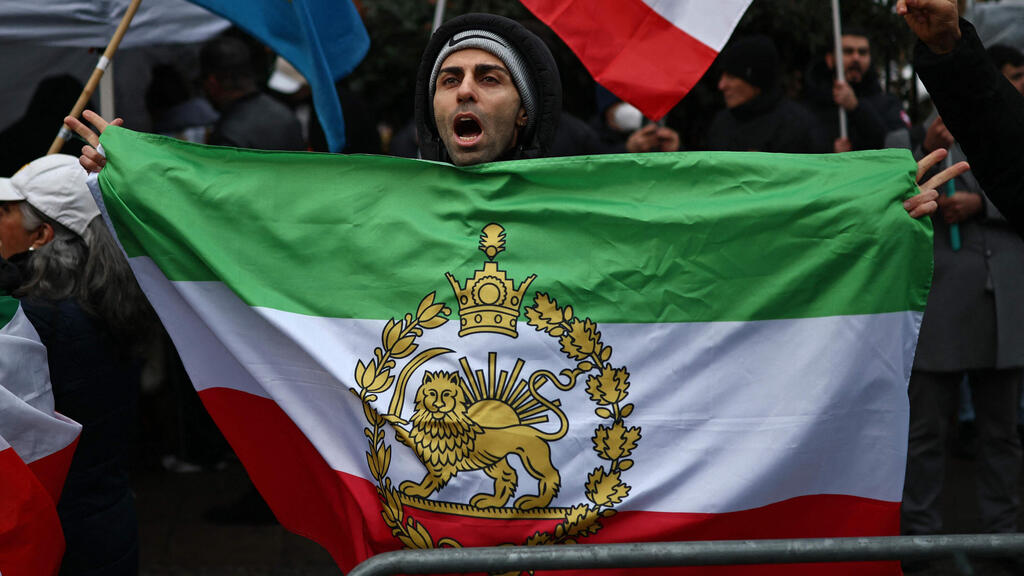
Demonstration in London in support of the protesters in Iran - waving the flag of the Shah
(Photo: Henry Nicholls / AFP)
On Saturday night, the U.S.-based Human Rights Activists News Agency (HRANA), which reports on Iran through a network of activists, said it had verified 3,308 protest-related deaths, but was still investigating another 4,382 cases, meaning the toll could rise sharply. HRANA said more than 24,000 protesters had been arrested, and despite Trump’s claim that Iran halted 800 planned executions of detainees, it is highly possible that many will eventually be tried and executed, as Iran has done after previous protest waves, including the 2022 “hijab protests.”