

In Lebanon, outrage continues over remarks made Tuesday by U.S. envoy Tom Barrack. During a press conference in Beirut on Washington’s push to disarm Hezbollah, Barrack grew frustrated with the noise in the room and snapped at local journalists.
Barrack's outburst


“We’re going to have a different set of rules … please be quiet for a moment. And I want to tell you something, the moment this starts becoming chaotic, like animalistic, we’re gone. So, you want to know what’s happening? Act civilized, act kind, act tolerant, because this is the problem with what is happening in the region,” Barrack said.
His comments were widely condemned in Lebanon as condescending and racially charged. The presidential office expressed “regret” over “the words of one of our guests,” while the Lebanese Journalists’ Union demanded a U.S. State Department apology, warning that, without one, they would call for a boycott of Barrack’s visits and meetings.
Media outlets affiliated with Hezbollah amplified the criticism. The daily Al-Akhbar ran his photo on its front page with the caption “The rude Yankee,” accusing Barrack of reviving colonialist rhetoric about rescuing the peoples of the region from “animality and barbarism” and bringing them into Western civilization.

Hezbollah-aligned sources seized on the controversy to claim it demonstrated U.S. subservience to Israeli interests. They argued Washington’s real aim was to force Hezbollah’s disarmament in return for a limited Israeli withdrawal, which they warned Israel would later abandon.
The incident comes as the U.S. and Gulf allies press Lebanon to dismantle Hezbollah’s arsenal as part of a broader arrangement with Israel. The plan, viewed as essential for unlocking billions in international aid, would see Israel halt strikes and withdraw from remaining border outposts if Hezbollah disarms.
Though Hezbollah was dealt severe blows in the war it launched against Israel after October 7—including the killing of longtime leader Hassan Nasrallah—his successor Naim Qassem has rejected disarmament, hinting at civil conflict if forced, warning it would mean “there will be no life” in Lebanon.
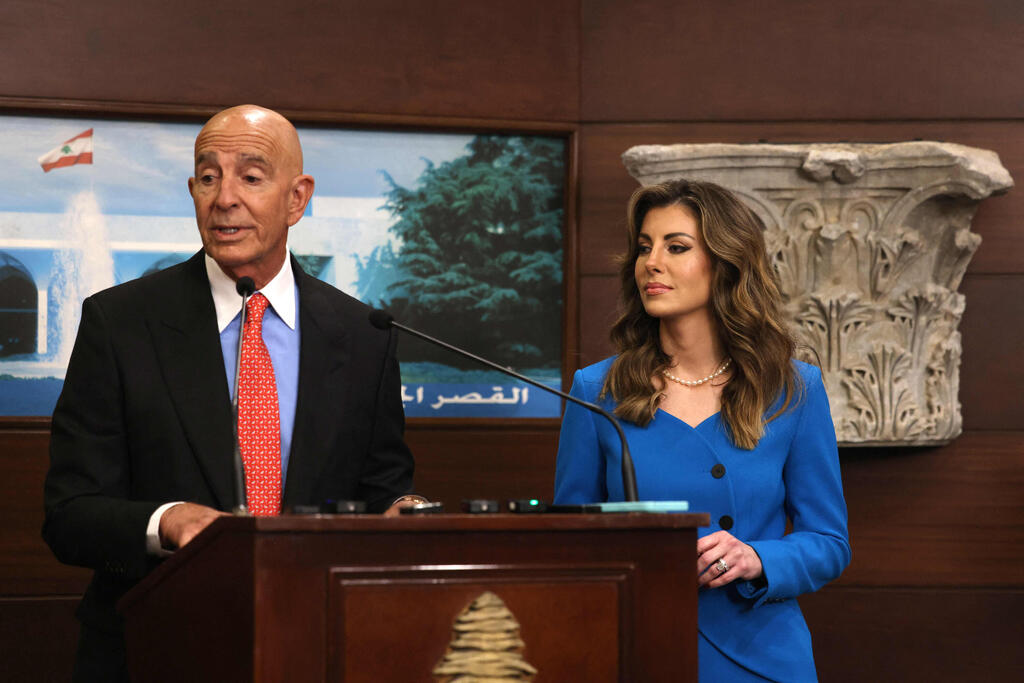
(Photo: ANWAR AMRO / AFP)
Lebanese President Joseph Aoun, elected this year after Hezbollah’s weakening broke a two-year political stalemate, is leading the push to place all weapons under state authority. Prime Minister Nawaf Salam has ordered the army to present a disarmament plan by year’s end, expected later this month.
At the same press conference, Barrack welcomed Prime Minister Benjamin Netanyahu’s unusual statement of support for the Lebanese government, in which Netanyahu said Israel was prepared to withdraw from southern Lebanon in exchange for “real steps” toward Hezbollah’s disarmament. Barrack stressed that Lebanon’s plan does not necessarily involve military force, but rather a strategy to persuade Hezbollah to hand over its weapons.