

Israel's announcement of support for the Lebanese government, on Monday, in its efforts to disarm the Hezbollah terror group, came at a critical time for the neighbor across the northern border.
Hezbollah refuses to engage in any dialogue before the IDF withdraws from South Lebanon, halts its attacks there and releases members of the group held in Israel.
Gallery
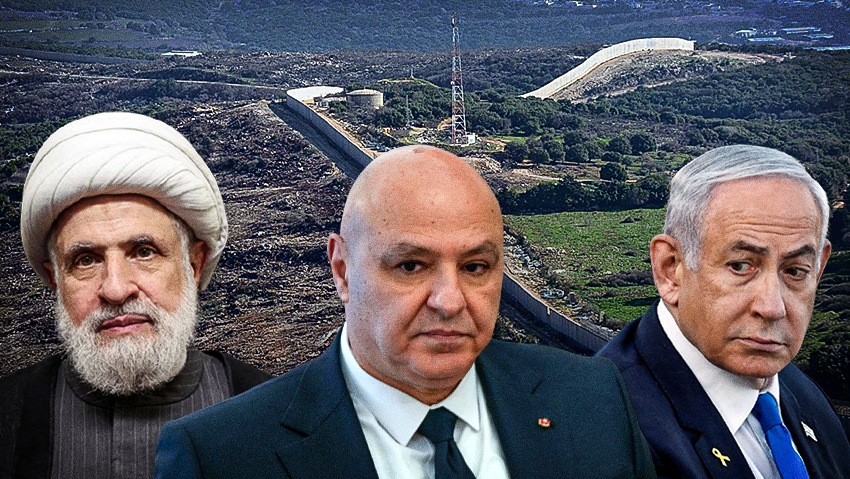
Naim Qassem, Joseph Aoun, Benjamin Netanyahu
(Photo: Petros Karadjias / Reuters, Amir Cohen / Reuters , Yossi Meir )
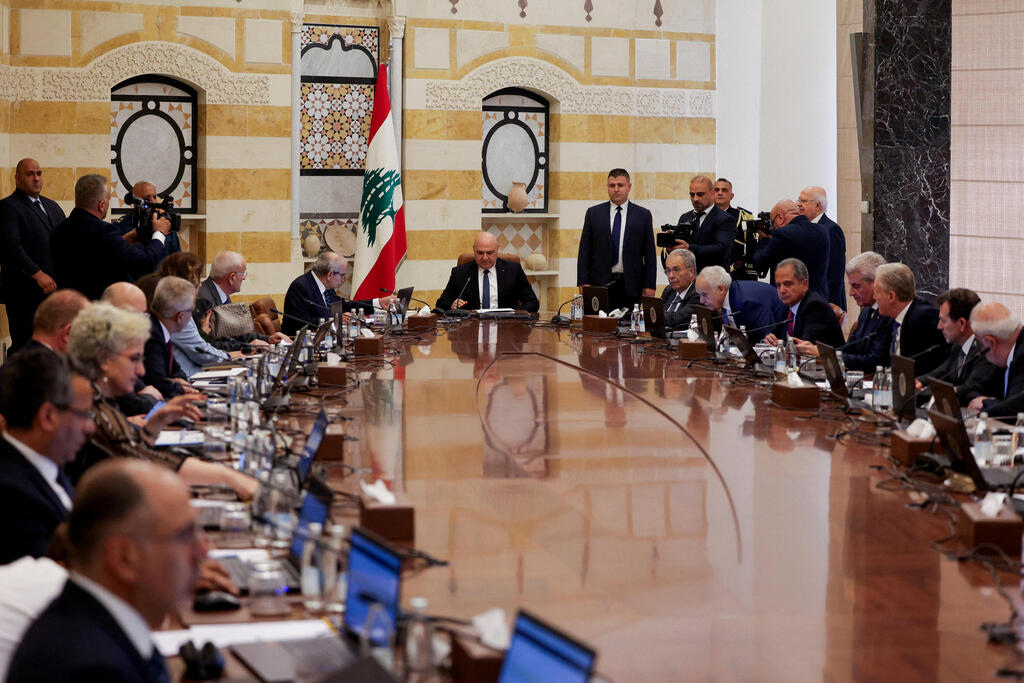
The Lebanese government
(Photo: Emilie Madi / Reuters)
Such a show of support for the Salam government, while its opponents accuse it of collaborating with Israel, may not contribute to Beirut's efforts to collect all arms from the various factions.
Israel's demands and terms
“Israel views this as a major step and an opportunity for Lebanon to reclaim its sovereignty and rebuild its state institutions, army and government without interference from non-state actors,” the Prime Minister's Office in Jerusalem said in a statement, adding that it was prepared to support Lebanon in its efforts and to work toward a secure and stable future for both countries.
Lebanon’s Al-Jadeed TV reported in recent days that Israel has “agreed in principle” to a gradual halt in airstrikes and targeted killings, a phased withdrawal from certain occupied areas, and a resolution to the issue of Lebanese prisoners.
According to the report, Israel has demanded that the destroyed border villages not be repopulated. Instead, the area would be designated an economic zone with factories owned by the Lebanese state, creating a buffer between Lebanese villages and Israeli communities across the border.
The office of the president in Lebanon said Aoun has not received any official notification of Israeli plans to create such a zone.
What is Hezbollah's position and what comes next?
Lebanon’s new government has decided that all weapons must be under the control of the army, officials said. Hezbollah, which is part of the cabinet, joined the decision but insists any discussion of its arsenal must be tied to a broader national defense strategy.
The group has also reiterated it will not move forward on the issue as long as Israel “fails to implement the cease-fire agreement.”
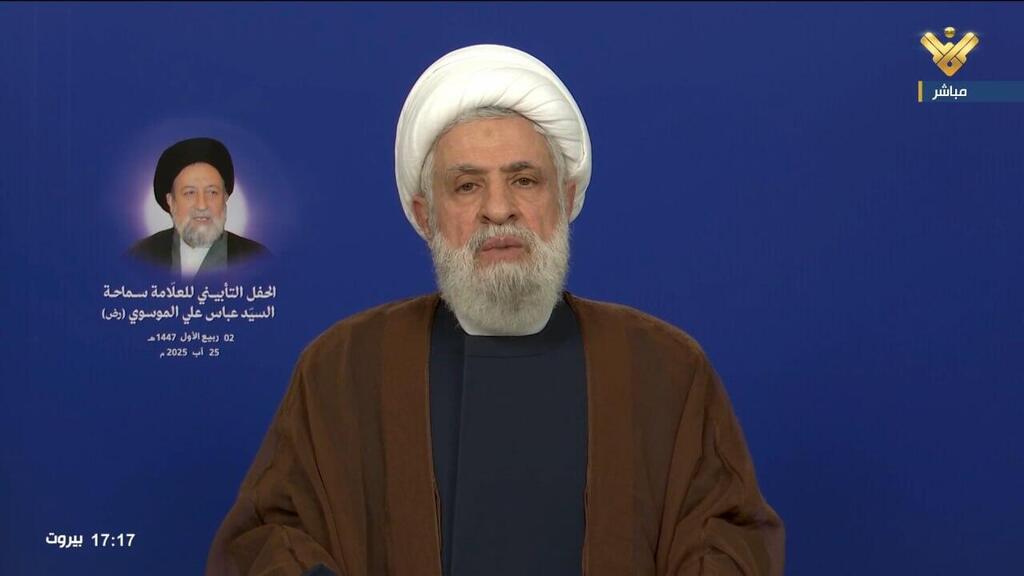
Naim Qassem
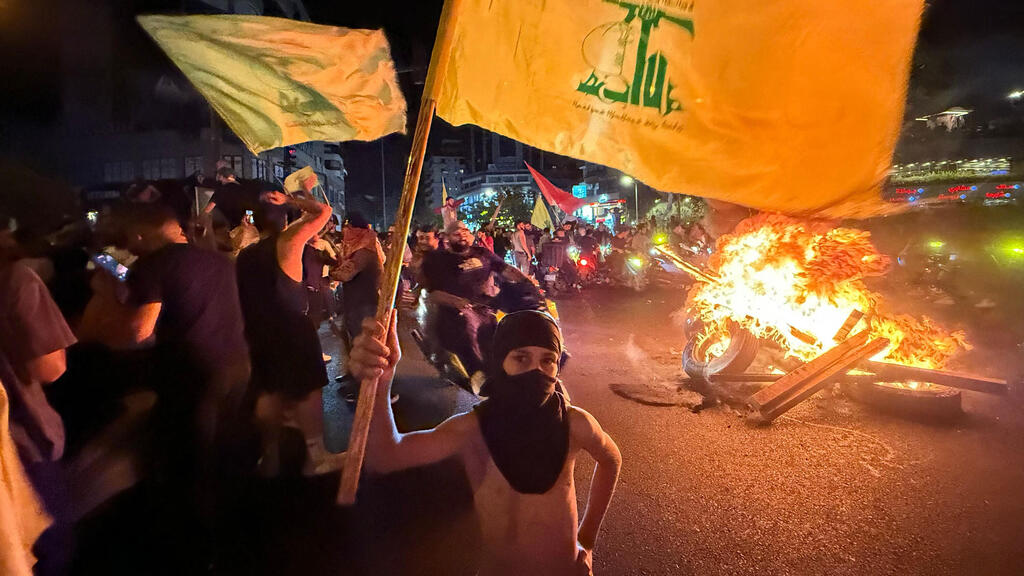
Hezbollah supporters protest the government's call for disarmament
(Photo: Ibrahim Amro / AFP)
So far, Hezbollah has not handed over any of its weapons. The Lebanese army is expected to draft a plan for collecting arms by the end of the month and present it at the cabinet meeting scheduled for September 2.
"We will not surrender the weapons that protect us from our enemies," Hezbollah leader Naim Qassem said in a speech on Monday. "There is a roadmap. The enemy must be banished from our land and its aggression stopped. Prisoners must be released and rehabilitation started. Then we can discuss defense strategies. Israel must first implement the existing agreement."
What about the weapons held by Palestinian factions?
Most weapons in the hands of Palestinian groups are in the refugee camps spread around Lebanon. They are expected to be handed over to the Lebanese Army. The first handover was last week in the Burj El Barajneh camp in Beirut. This was a mostly symbolic event where less than one truckload of weapons was delivered. Although both the prime minister and U.S. envoy Thomas Barrack praised the handover, Palestinian factions said it was only the Fatah movement that decided to cooperate with the demand and it is not an indication of the position of the other factions.

Palestinians hand over weapons to the Lebanese army in theBurj El Barajneh camp in Beirut
(Photo: Anwar Amro / AFP)
Israeli positions in South Lebanon
Despite a cease-fire that took effect on Nov. 27, 2024, Israeli forces remain stationed at five points in southern Lebanon — in the areas of al-Hamamess, al-Aziya, al-Awaida, Jabal Balat and al-Labuna. Neither the Lebanese government nor Hezbollah has accepted the Israeli presence.
The main difference between Hezbollah and official Lebanese authorities is the terror group’s demand that Israel withdraw before it takes any further steps. Hezbollah claims neither it nor Lebanon has violated the ceasefire, while accusing Israel of breaching it “thousands of times.”
On August 18, the Hezbollah-aligned newspaper Al-Akhbar reported that Israel had expanded its presence from five to seven points and now holds roughly 14 kilometers along the southern border — up from 11 kilometers when the cease-fire began — either through direct deployment or buffer zones.
Separately, Saudi-owned Asharq al-Awsat reported on July 27 that residents of southern Lebanon complained about constant Israeli drone activity over their villages. Locals said the drones monitor those returning to their homes for summer visits, with some claiming small drones have even entered their houses. “It feels like the area is occupied, even without soldiers on the ground,” residents told the media outlet.
What is the Trump administration's role?
Barrack’s latest proposal to Lebanon addresses a range of unresolved issues, including the disarmament of Hezbollah. Lebanon’s government approved the plan in two cabinet sessions on Aug. 5 and 7, though Shiite ministers walked out of the latter in protest. Hezbollah supporters argue that Beirut is bowing to U.S. and Israeli pressure, while critics of the group warn of continued Iranian interference.
What is the scope of Iranian involvement?
Lebanon’s new leadership has sent signals to Tehran urging it to avoid meddling in domestic affairs. Foreign Minister Youssef Rajji has been among the most outspoken, condemning recent Iranian statements.
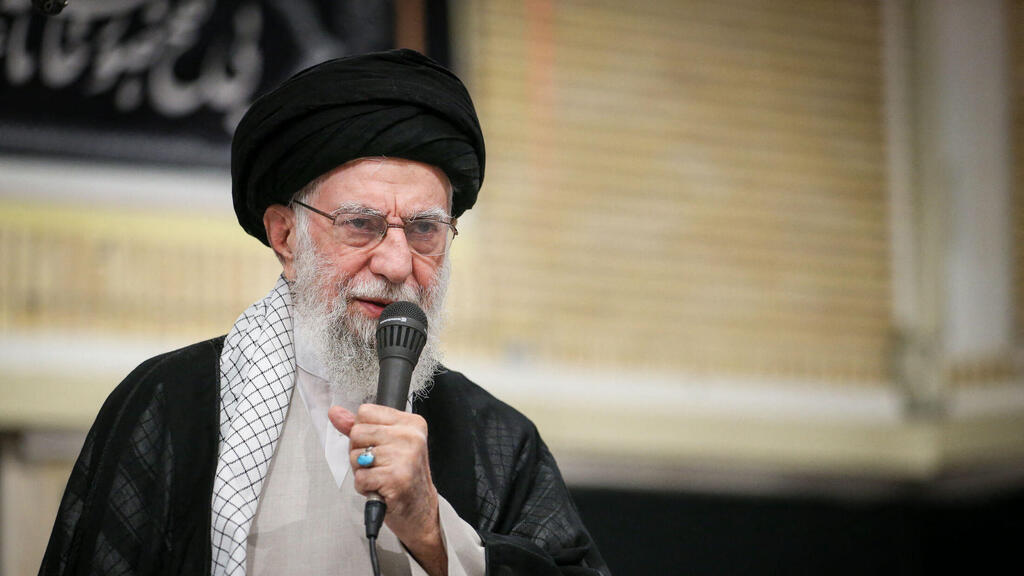
Ali Khamenei
(Photo: AFP)
“I do not accept Iran arming an actor outside the state framework. The Shiites are being held hostage by Hezbollah and exploited,” Rajji said earlier this month in an interview with Saudi-owned Al Hadath TV. Ali Larijani, secretary of Iran’s Supreme National Security Council, visited Beirut and met with President Michel Aoun, who cautioned against foreign interference.
Meanwhile, the U.N. Security Council was expected to vote Tuesday on renewing the mandate of UNIFIL, the peacekeeping force deployed in southern Lebanon, which expires at the end of the month. No decision has yet been announced.
On Saturday, Aoun stressed the importance of extending the mission until full implementation of Resolution 1701. France has circulated a draft resolution that would extend UNIFIL’s mandate until Aug. 31, 2026, and prepare for a gradual withdrawal of the force, contingent on Lebanon’s government maintaining full territorial control and both sides agreeing to a broader political settlement.