

Protests continue to take place across France as students and unions demand that the cash-strapped government fix understaffed and dilapidated schools. Nationwide protests come after days of demonstrations which began in the deprived suburbs of Paris before spreading across the country, sometimes turning violent.
Tear gas and and trash bins set on fire: clashes in the 'student revolt' in France


Clashes in the “student revolt” sweeping the country in recent days resumed Tuesday afternoon. Tens of thousands marched in several cities throughout the morning, in demonstrations that were largely peaceful, but by midday clashes were reported between protesters and police in Strasbourg, where demonstrators were filmed using trash cans to confront officers, as well as in Lyon and Caen. Police used tear gas in all three cities.
The scale of the clashes was not immediately clear, but tensions remained high across France throughout the day, which protest groups had declared a nationwide day of demonstrations.
The student protests in France erupted last week, when students at hundreds of schools, especially in poorer working-class suburbs such as Saint-Denis outside Paris, began blocking entrances to their schools, obstructing roads, setting trash cans on fire and attacking police officers and passersby, ostensibly in protest over neglected school infrastructure, overcrowded classrooms and teacher shortages.
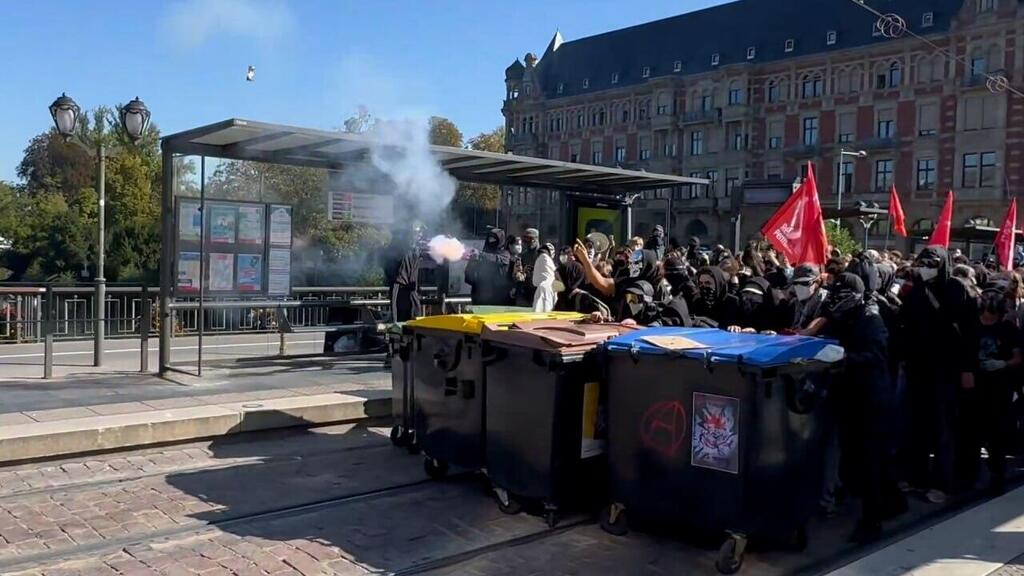
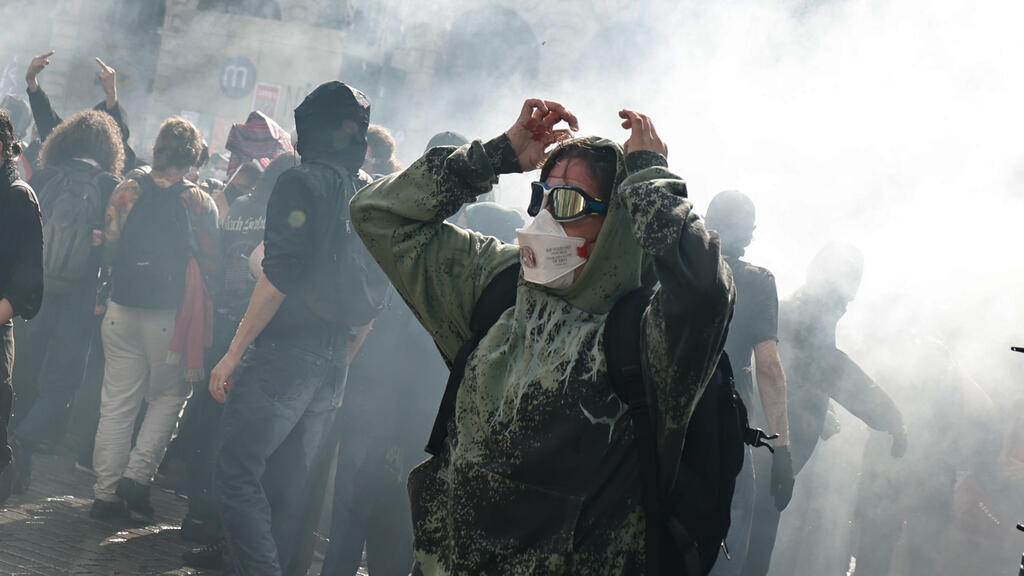
Police use tear gas
(Photo: Jeremias Gonzalez/AP)
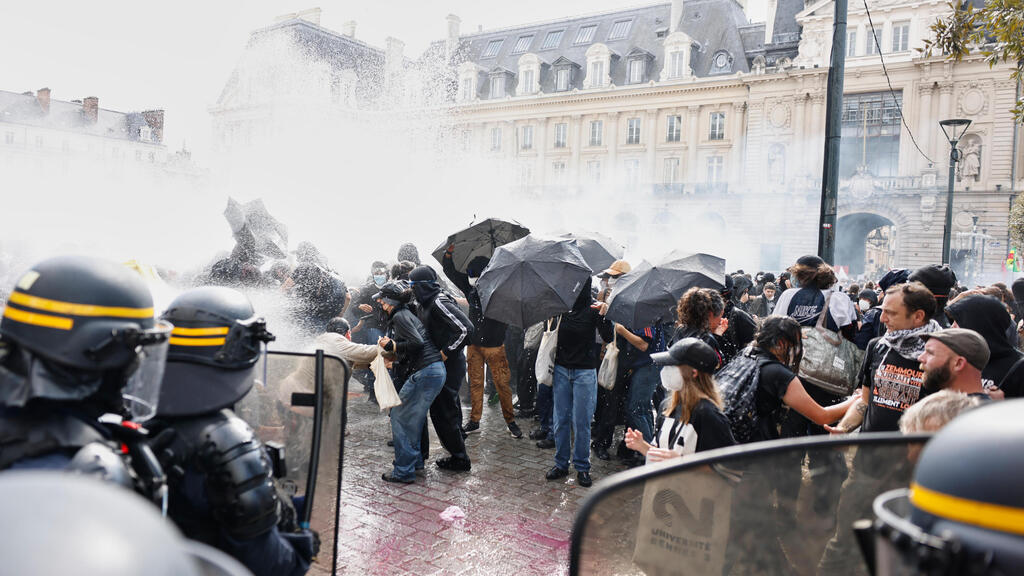
Police use water cannons in Bern
(Photo: Jeremias Gonzalez/AP)
The demonstrations broke out as the French government is trying to pass the 2027 state budget, which is aimed at reducing the deficit.
Since the protests began last Monday, at least 24 schools have been set on fire or looted and 78 education staff members have been injured. At least 715 police officers and 215 teenagers also have been wounded in clashes.
According to the latest official figures, 6,000 people have been arrested across France since the protests began, most of them teenagers. The Justice Ministry said Tuesday that 1,800 of them will be prosecuted, including 1,483 minors. Property damage caused by the violent unrest is estimated at tens of millions of euros.
Opponents of the protests have accused the France Unbowed party of radical-left leader Jean-Luc Mélenchon, a staunchly anti-Israel politician, of inciting violence and inflaming the unrest, while highlighting the role of immigrants and children of immigrants in the street violence.
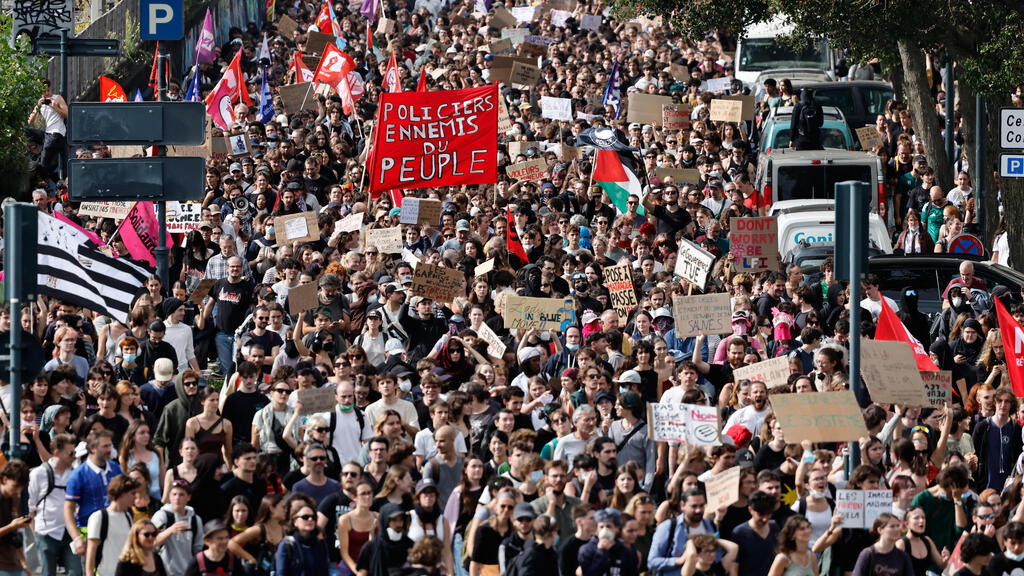
Demonstrations and clashes in city of Rennes
(Photo: Jeremias Gonzalez/AP)
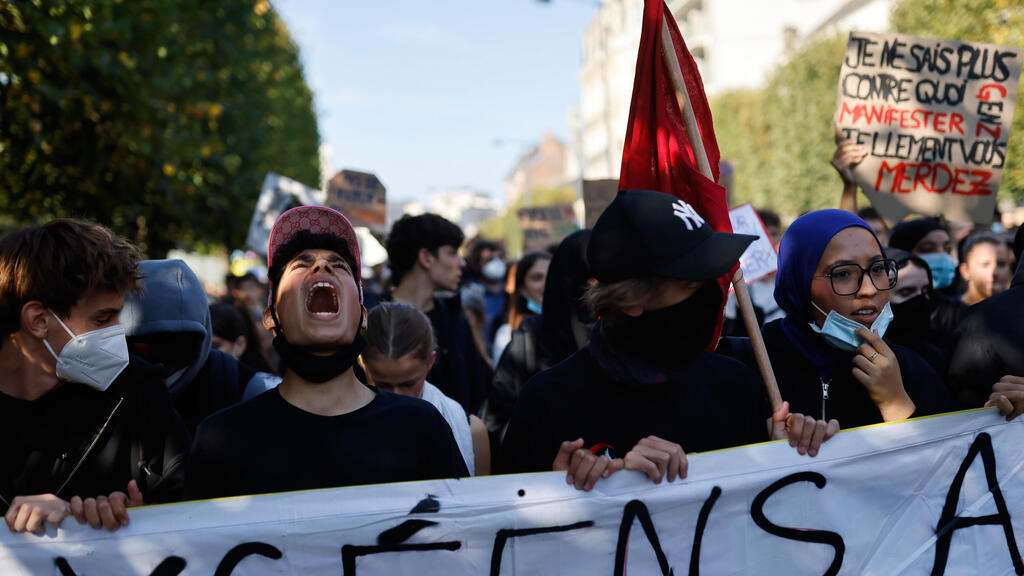
(Photo: Jeremias Gonzalez/AP)
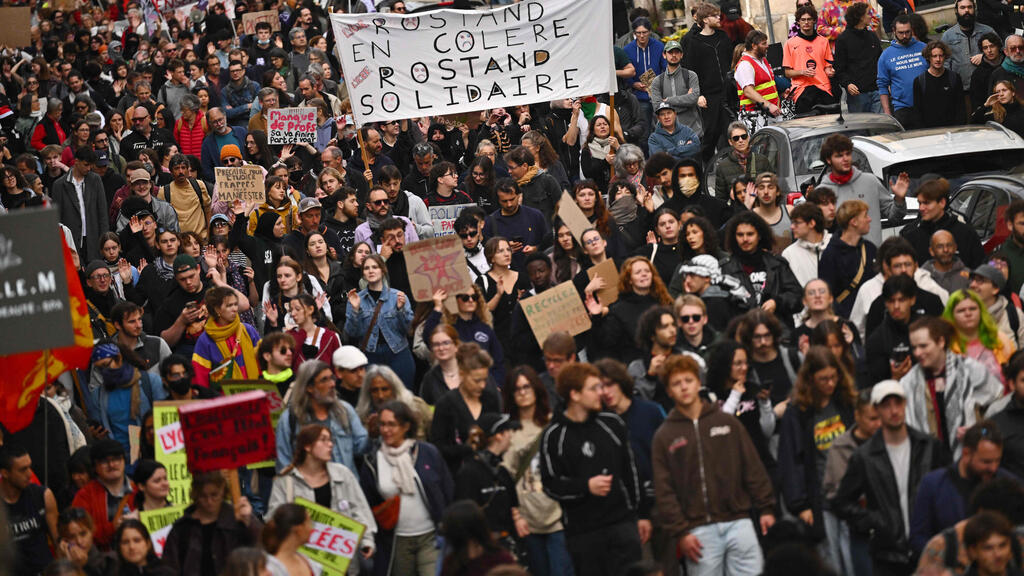
Student demonstration in the city of Caen
(Photo: Guillaume Saligot / AFP)
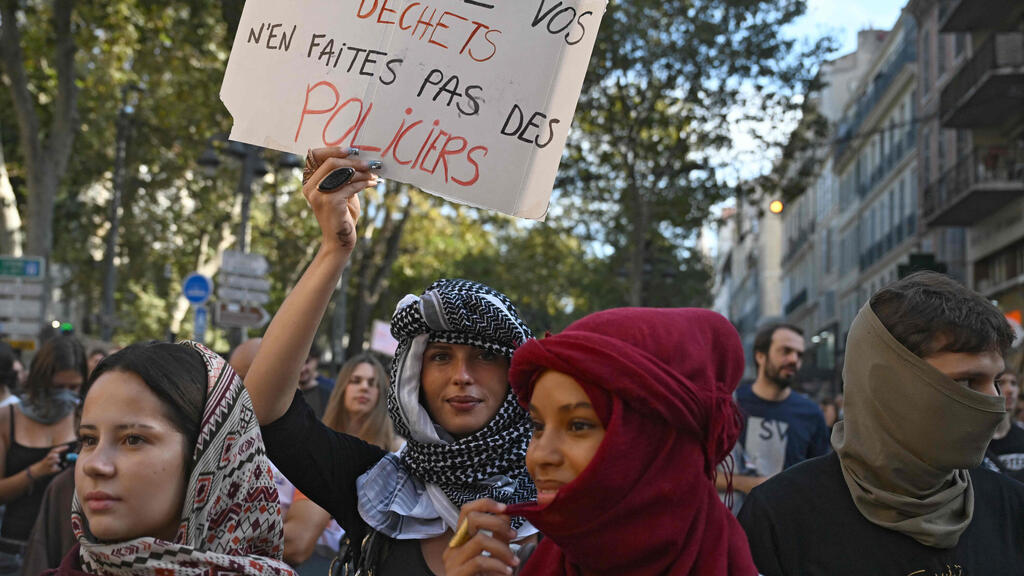
Protests in Marseille
(Photo: Miguel Medina/ AFP)
Mélenchon, for his part, denied any active involvement in the protests. He and labor organizations supporting the students have instead accused police of using excessive force against them.
Police have defended their conduct, stressing that officers responded in a “proportionate” manner, against the backdrop of footage showing rioters attacking police officers, with at least one officer subjected to an attempted mob lynching.
“Be careful,” Mélenchon told young protesters at a large march in Paris on Tuesday afternoon. “What you are doing is extraordinary. This is the most powerful youth movement we have seen in 50 years, and no one can say that you are wrong, because you are right.”
Parents who support their children also joined Tuesday’s marches in cities across France, amid fears that they too could fall victim to violent police officers.
“Don’t touch my child!” read one sign held by a woman at a demonstration in Rennes.
At Hélène Boucher High School in Paris’ 20th arrondissement, which remained closed Tuesday and where protesters set fire to trash cans and bicycles to create a makeshift barricade at the entrance, parents also stood between demonstrators and police, acting as a kind of monitoring and buffer force.
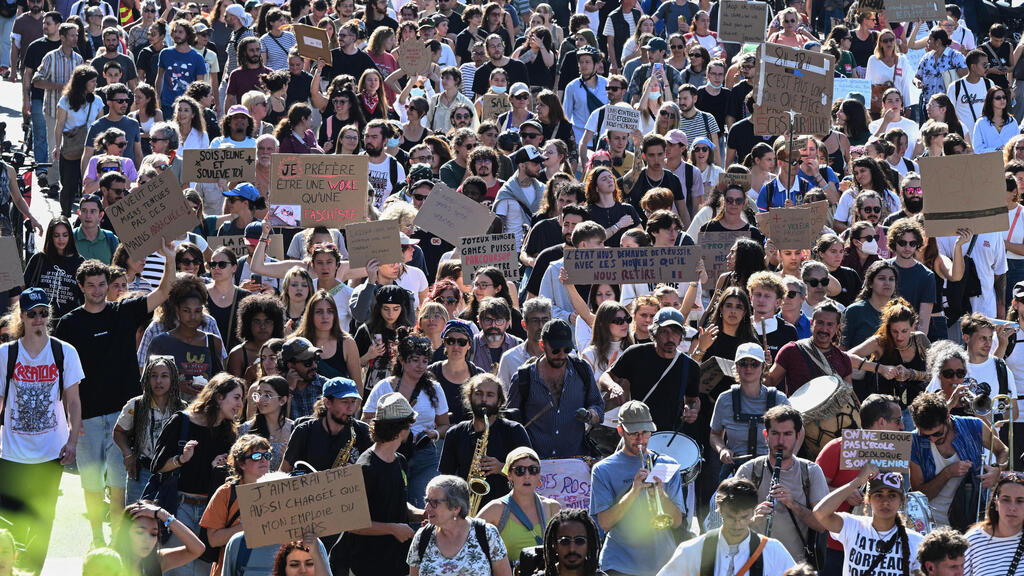
Demonstration in Bordeaux
(Photo: Caroline Blumberg/AP)
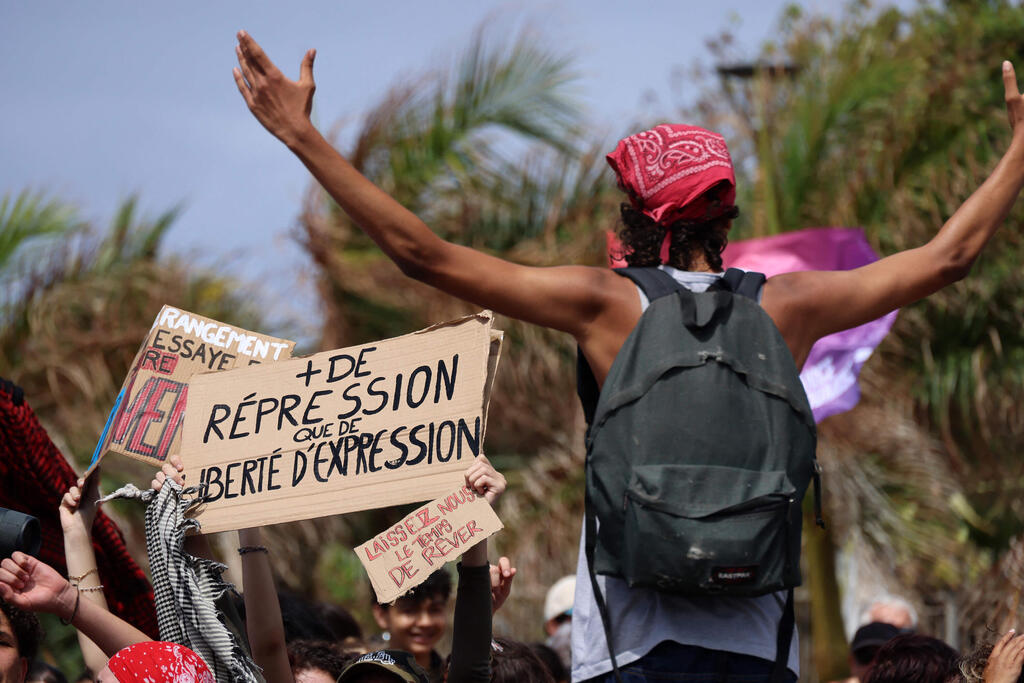
(Photo: Richard Bouhet / AFP)
According to student unions, 1,800 high schools across the country were closed Tuesday because of the protests, out of 3,700 in total. The Interior Ministry later said, however, that only 900 schools had been fully or partially disrupted.
In response to the widespread protests, President Emmanuel Macron’s prime minister, Sébastien Lecornu, instructed his ministers to find solutions to the students’ main demands.
Among other things, the students are demanding action to address the teacher shortage, a reassessment of the length of the school day, which in France is among the longest in Europe and runs from 8 a.m. to 6 p.m., and consideration of longer lunch breaks.
The government also will examine renovation work needed at aging schools, and Lecornu said he had instructed ministers to submit their proposals by the end of October.
Finding funding for such measures, however, is expected to be difficult as the government is also trying to reduce the swelling deficit.
Concerns over the scale of French debt, weak economic growth and a lack of willingness to curb government spending have driven up yields on French government bonds in recent days. Last week, they briefly rose above 5%, their highest level in 24 years.
The current wave of unrest comes seven months before the presidential election, against an already tense social and political backdrop, with fuel prices rising and far-right candidate Marine Le Pen leading in the polls.
For now, polls indicate that Le Pen would not win in the first round and would face radical-left leader Mélenchon in the decisive runoff, where she would defeat him.
Either way, such a showdown would mean France abandoning the political center and finding itself forced to choose between two parties regarded as extremist.
Against the backdrop of the protests, Le Pen on Tuesday presented her overall platform and promised even deeper cuts to public spending if elected, among other things in an effort to bolster her credibility with investors.