


A judge on Sunday sharply criticized police investigating suspected vote-buying linked to the Arab Ra'am party, ordering the unconditional release of a 38-year-old doctor after finding that investigators had failed to strengthen the evidence against him and could not justify restrictions on his freedom.
The ruling by Be'er Sheva Magistrate's Court Judge Eran Tzabari came amid a politically charged investigation into allegations that cash was distributed to voters in Bedouin communities in southern Israel ahead of last Tuesday's parliamentary election.
The investigation has become a focal point of Prime Minister Benjamin Netanyahu's allegations of electoral misconduct, with his Likud party seeking to challenge results at polling stations where it claims voting irregularities occurred.
But election authorities have emphasized that the allegations under investigation do not establish that votes were falsified or that voters were actually bribed.
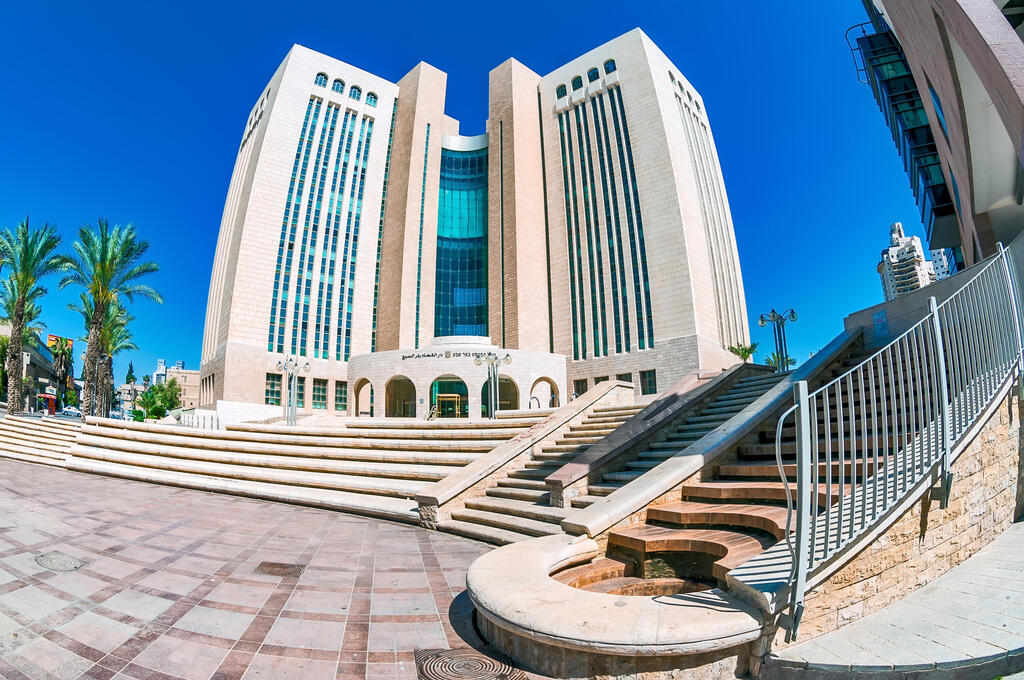
The suspect, Saif Abu Riash, a physician from the Al-Sana tribe, was brought before the court Sunday after being detained by investigators from Lahav 433, the Israel Police's national investigations unit, on suspicion of election-related offenses.
Police asked the court to release Abu Riash to seven days of house arrest and impose additional restrictions, including a prohibition on internet use.
Tzabari rejected the request, ruling that Abu Riash should be released without conditions.
The judge described Abu Riash as a person leading a law-abiding life and said investigators had offered no convincing explanation for restricting his internet access, particularly because his professional work depends on it.
Police also failed to explain why house arrest was necessary, the judge said.
"The state of the investigation is exactly where it was," Tzabari said.
The judge noted that Abu Riash had cooperated with investigators and provided an account of his activities, but police had failed to carry out the checks needed to verify or challenge his explanation.
"The reasonable suspicion has not strengthened, and it can even be said that the strength of the reasonable suspicion has diminished," he said.
Tzabari nevertheless stressed that the court regarded suspected offenses involving the integrity of elections as serious matters.
Police acknowledge searches without warrants
The hearing also exposed questions about how investigators conducted searches of suspects' homes.
Abu Riash's attorney accused police of carrying out an unlawful search of his client's residence.
An investigator acknowledged that officers had entered and searched the home without obtaining a warrant but maintained that the operation was justified by intelligence received shortly beforehand.
"A search was conducted without a warrant. Call it illegal. There was recent intelligence. No search warrant was needed," the investigator told the court.
Police had previously acknowledged during a court hearing on Election Day that officers searched the homes of detained activists without warrants.
Sunday's proceedings also revealed that investigators had attempted to compare money found during the searches with Abu Riash's personal cash withdrawals.
An investigator conceded that police had been unable to complete the examination.
"We tried to carry out an elementary, basic investigative action, and we did not succeed," the investigator said.
Tzabari cited the failure as part of his criticism of the investigation, noting that Abu Riash had provided his version of events but police had not managed to verify it.
Police also sought to extend the detention of two other suspects in the case.
One, Ibrahim al-Gharibi, was released to house arrest under restrictive conditions.
The third, Hussein Masoudin, had his detention extended until Tuesday.
Police had initially planned Saturday night to release the suspects but subsequently changed course and sought additional restrictions or detention extensions.
The intelligence that led to their arrests was provided to police by Ido Norden, acting chief of staff to Netanyahu.
Cash-filled envelopes and allegations of vote-buying
The investigation began in the days leading up to the Oct. 27 election, when police arrested three suspects from the Segev Shalom area and Ar'ara in the Negev.
Officers said searches of their homes uncovered envelopes containing tens of thousands of shekels in cash, along with ballot slips and other materials suspected of being connected to election offenses.
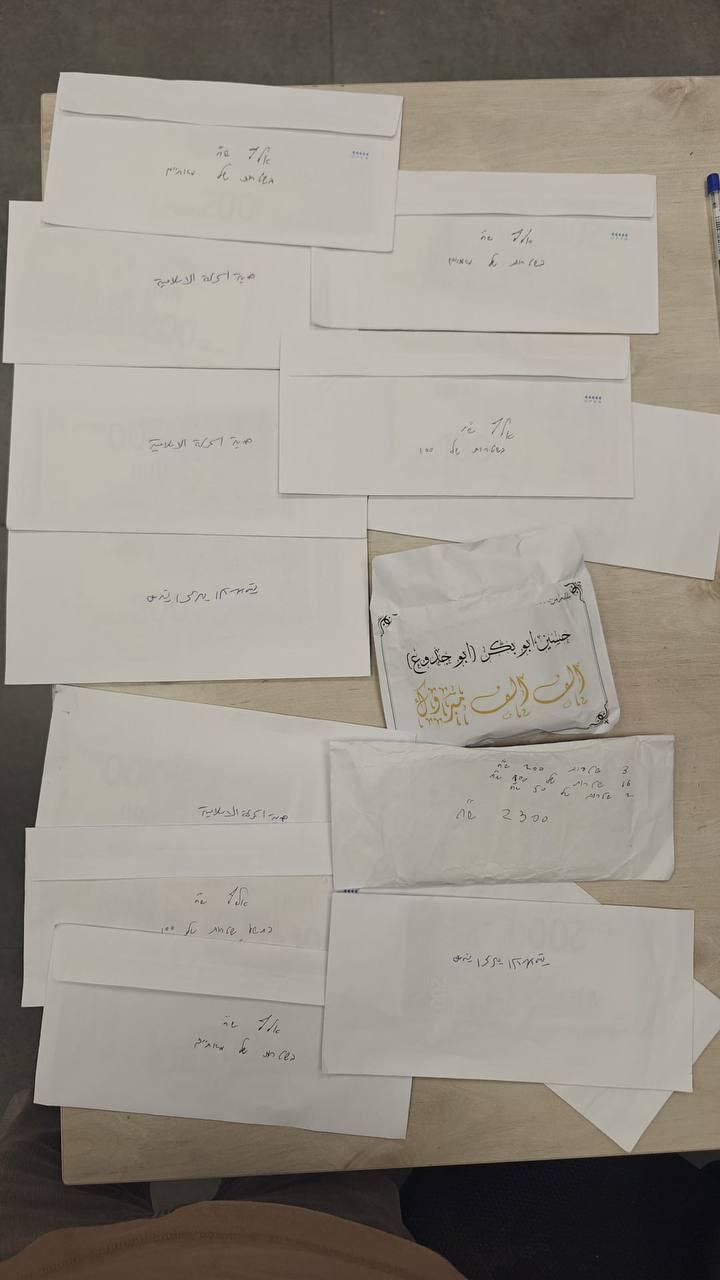
The envelopes located at the suspects' homes
Some envelopes reportedly bore the logo of Ra'am, an Arab political party.
Police alleged that the money was intended to be distributed to voters in exchange for supporting Ra'am at the ballot box.
The initial police announcement did not accuse the party's leadership of involvement in the suspected scheme.
Investigators said the operation was part of broader nationwide efforts to prevent election offenses and ensure that citizens could exercise their voting rights freely.
The case subsequently expanded.
On Thursday, police arrested four additional suspects, including three school principals from Bedouin communities in southern Israel, in connection with the alleged vote-buying operation.
Three of those four suspects were subsequently released to house arrest.
The arrests came as Likud prepared a legal challenge seeking new votes at Arab polling stations where the party alleges bribery and other irregularities compromised the election.
Netanyahu and Likud seized on the discovery of cash and ballot slips on Election Day to allege an attempt to steal the election.
Their rhetoric intensified after the results emerged and escalated further following reports of a separate affair involving allegations that Qatar and Turkey had spent money attempting to influence Israeli public opinion.
The allegations involving foreign influence are distinct from the investigation into suspected vote-buying in Bedouin communities, and no connection between the two cases has been established.
Election authorities, meanwhile, have sought to distinguish suspected criminal conduct from claims that the election results themselves were manipulated.
The Central Elections Committee has emphasized that there is no indication votes were falsified or that voters were bribed, despite the suspicions being examined by police.