


There is little point in closely examining and analyzing the wording of the the "road map" for implementing U.S. President Donald Trump's peace plan in the Gaza Strip published today (Friday) by the “Peace Board.” The first and simplest reason is that it is a vague declaration of intent rather than a binding agreement.
The plan lacks basic details and definitions that Israeli citizens — shaped by the bitter experience of October 7, 2023 — need to know. For example, what exactly is defined as “heavy weapons” that Hamas supposedly agrees to transfer to the Palestinian technocratic government? Does this include RPG launchers? What about explosive devices? And what exactly will happen to these weapons? Will they be destroyed, dismantled or merely taken out of service? Where will they be stored and who exactly will take responsibility for guarding the storage sites?
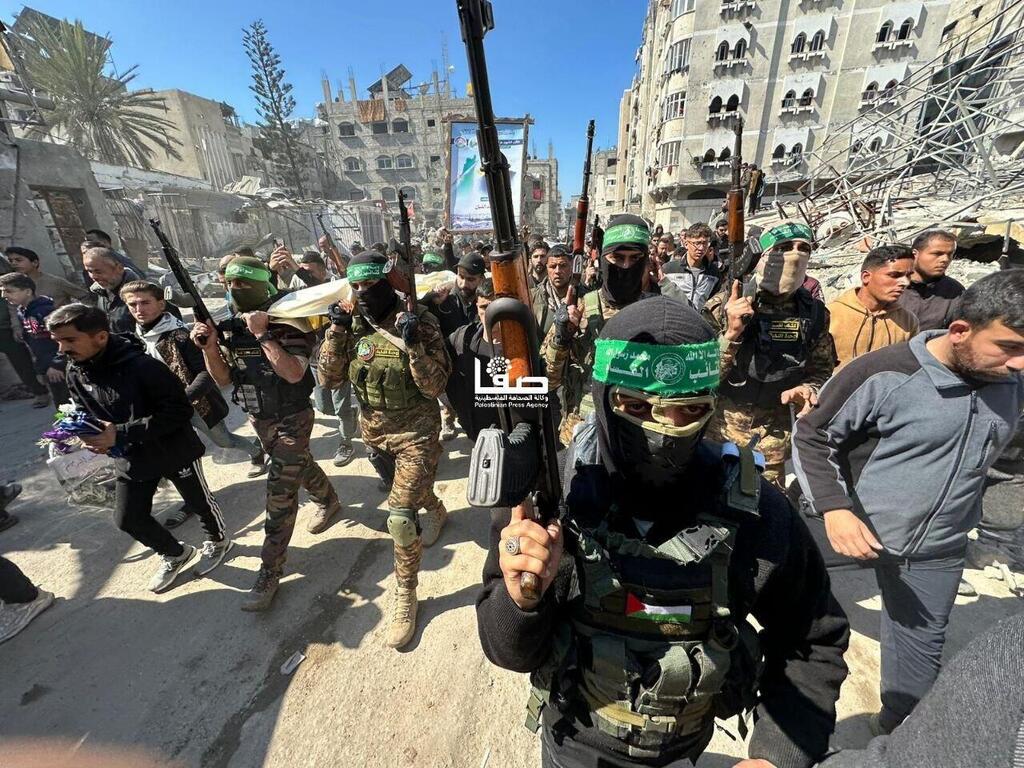
These questions are especially critical given an even more troubling fact: The Peace Board’s “road map” grants Hamas in the Gaza Strip exactly the same status that Hezbollah currently holds in Lebanon. This means armed political influence through Hamas members who will be absorbed into the new police force established in Gaza, as well as behind-the-scenes management of central government institutions through Hamas officials who will retain their positions. All this will happen without Hamas bearing any responsibility for residents’ welfare, their safety or the provision of essential services.
Israeli political officials and senior Hamas figures rushed to clarify that there is still a deep dispute between the sides over the synchronization between Hamas’ disarmament and the timing of the Israeli withdrawal to the Yellow Line. Israel claims that the withdrawal to the original Yellow Line will take place only after Hamas hands over its weapons, without specifying which weapons. Hamas, meanwhile, claims that Israel must first complete the IDF’s withdrawal to the security zone on the outskirts of the Strip, and only afterward will the weapons be handed over to the Palestinian technocratic committee.
This is an artificial dispute that members of the “verification committee” to be established under the road map, together with officers from the international stabilization force that currently exists mainly on paper, will be able to resolve easily if and when they begin operating.
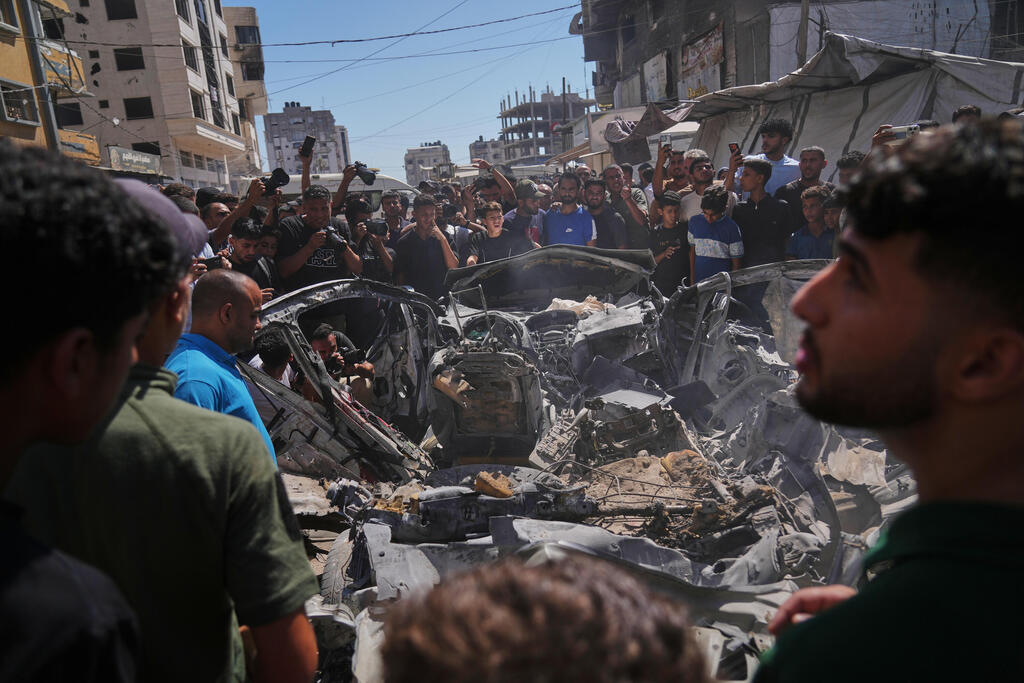
The real problem that Israel and its citizens will have to confront is that the road map leaves Hamas as a force of power in the Gaza Strip
(Photo: AP Photo/Jehad Alshrafi)
The real problem that Israel and its citizens will have to confront is that the road map leaves Hamas as a force of power in the Gaza Strip. The plan improves the personal situation of surviving Hamas operatives and commanders by guaranteeing their continued presence in Gaza, providing jobs and financial compensation for those who do not find roles in the new governing institutions and paving the way for future integration into the government.
But that is far from all. The road map speaks of opening a “credible pathway” toward self-determination and a Palestinian state. This means Hamas has also secured a significant political and public-relations achievement that will allow it to expand its influence among Palestinians. All this comes in exchange for a questionable disarmament plan that, at best, dismantles Hamas’ heavy weapons, tunnels and weapons-production capabilities.
Yet Hamas had already lost most of these capabilities and weapons during the war, and the IDF destroyed at least 70% of them. The loopholes visible in this disarmament plan without the need for a magnifying glass allow Hamas not only to rebuild but also to gradually regain what it surrendered.
Hamas members who serve as police officers or receive weapons permits from the technocratic government will retain their personal weapons. By contrast, the militias and clans that cooperated with Israel and the IDF during the war and clashed with Hamas will face consequences. They will be disarmed and will not be allowed to serve as officials in the new government.
So what does Israel gain for its security and the security of its citizens from the road map? Not much. We are on the giving side and Hamas is the one receiving. Israel is required to carry out a full withdrawal from the Gaza Strip, which will be gradual and phased according to a timeline that has yet to be set and to a border line that has yet to be determined, but will certainly pass east of the current Yellow Line.
Israel is also required to halt military operations, including the targeted strikes it is currently carrying out. This is a serious failure from the Israeli perspective because, according to the road map, the IDF will have no ability to address violations of the agreement by Hamas and Palestinian Islamic Jihad, even if the technocratic government and the international stabilization force fail or refuse to deal with them.
Not only does Israel have no veto over who will hold senior positions in the new government established in Gaza, it also has no right to conduct “hot pursuit” if Hamas attacks or fires a mortar shell toward communities near the Gaza border.
In summary, the Peace Board is attempting to create a situation in the Gaza Strip that is very similar in its limitations to the situation that the United States has recently imposed on Israel in Lebanon.