

The Trump administration is weighing a broad spectrum of possible responses to Iran’s violent suppression of nationwide protests, including covert and non-traditional military measures alongside more familiar strike options, U.S. officials said.
According to Reuters and CBS, citing U.S. defense officials, President Donald Trump has been briefed on tools that extend beyond airstrikes and missile attacks, such as cyber operations and influence campaigns designed to disrupt Iran’s military command, communications networks and state-controlled media. Those options could be deployed independently or combined with conventional force, officials said.
White House press secretary Karoline Leavitt


Senior national security officials were expected to convene at the White House on Tuesday to review updated scenarios involving Iran, according to U.S. officials familiar with the planning. It was unclear whether Trump would personally attend.
The internal deliberations come as protests against Iran’s ruling system have spread to all 31 provinces, presenting one of the most serious challenges to clerical authority since the 1979 revolution. U.S.-based human rights group HRANA said it has verified at least 646 deaths linked to the unrest, including more than 500 protesters. Iranian authorities have not published official figures and accuse foreign powers, including the United States and Israel, of fomenting the violence.
Trump has repeatedly warned that Washington could intervene if Iranian security forces continue using lethal force against demonstrators. Speaking to reporters over the weekend, he said Iranian leaders had conveyed interest in talks, while stressing that the U.S. military was examining “very strong options.”
Asked whether civilian or commercial infrastructure could be targeted, Trump said potential targets extended well beyond what Iran might expect.
White House press secretary Karoline Leavitt said Monday that the president would not rule out the use of force, though she emphasized that diplomatic engagement remains the administration’s preferred course.
“The president is unafraid to use military options if and when he deems necessary,” she said, adding that private communications from Tehran differ sharply from its public statements.
Protests in Isfahan
Iranian Foreign Minister Abbas Araghchi confirmed that channels with Washington remain open and said he has continued contact with U.S. special envoy Steve Witkoff. Officials on both sides said a possible meeting is under discussion.
In parallel with military planning, Trump has escalated economic pressure on Tehran, announcing that countries doing business with Iran would face a 25% tariff on exports to the United States. Iran, already under sweeping U.S. sanctions, exports most of its oil to China, with Turkey, Iraq, the United Arab Emirates and India among its other key trading partners.
Defense officials said cyber operations and psychological measures could form part of integrated campaigns that combine digital, informational and kinetic elements. They stressed that no decisions have been finalized and that diplomatic efforts remain active.
Inside Iran, authorities last week cut mobile phone and internet access in parts of Tehran, according to internet monitoring group NetBlocks, though some residents have continued to access the web via Elon Musk’s Starlink satellite service. Iranian state television aired rare footage showing mass casualties at a morgue near the capital, a move analysts said may have been intended to deflect blame from the government.
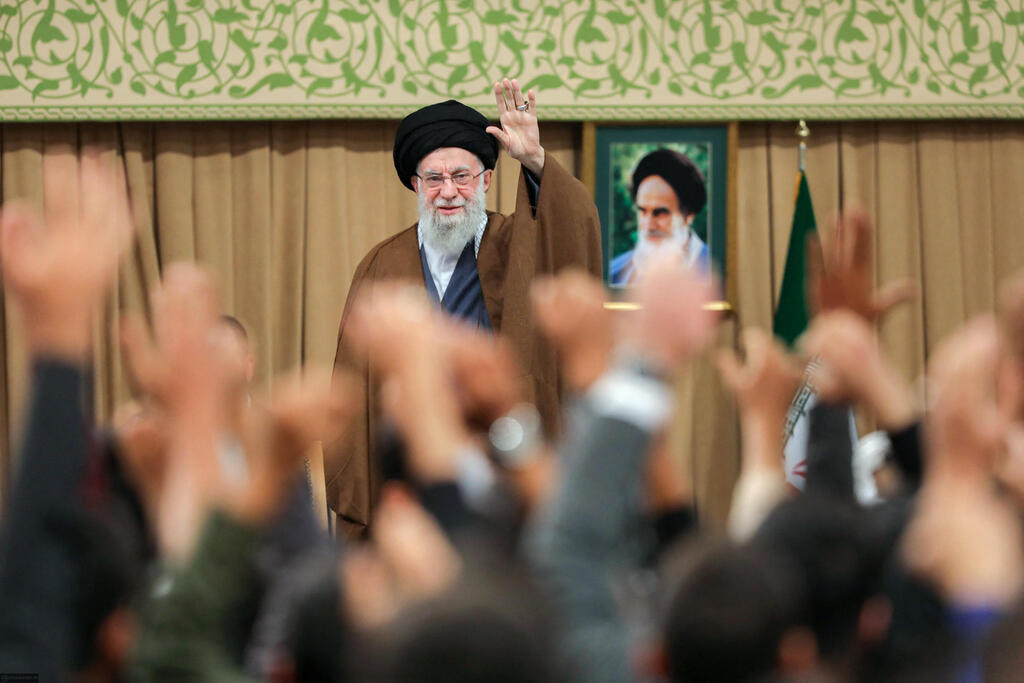
(Photo: KHAMENEI.IR / AFP, West Asia News Agency/Handout via REUTERS)
Iran’s leadership has warned against U.S. military action. Parliament Speaker Mohammad Bagher Ghalibaf said the country was facing economic, psychological, military and terrorist threats, while Supreme Leader Ayatollah Ali Khamenei accused Washington of misjudging Iran’s resolve.
Trump said Sunday that Iran had reached out regarding renewed talks over its nuclear program, which was struck by U.S. and Israeli forces during a 12-day conflict in June. He said talks were being arranged but warned that action could come sooner if the violence continued.
Any escalation would have direct implications for Israel. Iranian officials have said that in the event of an attack, Israel, along with U.S. bases and naval assets in the region, would be considered legitimate targets. Iran’s regional influence has been weakened in recent months following Israeli strikes and setbacks suffered by allied groups such as Hezbollah
Global oil prices rose to seven-week highs this week amid concerns that instability in Iran and possible U.S. action could disrupt supplies.
Trump ordered strikes on Iranian nuclear facilities seven months ago during the brief but intense conflict between Iran and Israel.