


Kibbutz Holit is the last community for which the IDF has published an investigation into the October 7 massacre. The probe was released Monday morning, nearly two and a half years after 13 people were murdered in the kibbutz during the Hamas surprise attack.
The delay in publication stemmed from sharp criticism by kibbutz members over the probe’s conclusions, following findings related to the failure of IDF forces to function that day. The community is demanding deeper answers about the conduct of forces in the field, including the Bardelas and Caracal battalions.
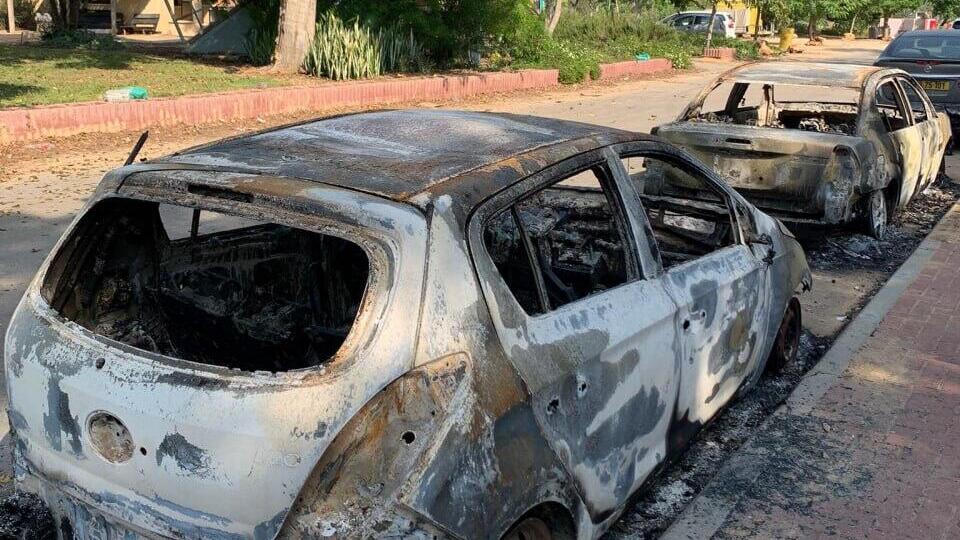
At the same time, residents stressed they do not intend to personally blame the soldiers. “Their merits are many, but a probe is meant to identify failures, learn from them and rebuild trust,” they said.
The probe was first presented to the community in July 2025, but instead of bringing closure, it reopened a wound. Kibbutz members argued that the conclusions failed to provide deep answers to the most critical questions: how forces in the area functioned, how decisions were made in real time, and whether murder and abduction could have been prevented.
Following the kibbutz’s objections, the IDF decided to “reopen the probe,” a move that further delayed its public release.
At the heart of the criticism is one central claim: a systemic failure by IDF forces on the day of the attack, especially the lack of effort by forces near the kibbutz to seek contact with the terrorists in real time.
‘Is it legitimate for a force aware of a terrorist infiltration not to act?’
Gideon Kovany, a member of the kibbutz, described his feelings after the investigation was presented.
“I asked, on behalf of the community, to receive deeper, more professional and more reasoned answers,” he said. “There are three main cases for which we did not receive a satisfactory explanation, and in my view they could have been serious game changers.”
One of the most prominent examples, he said, was the conduct of the 33rd Caracal Battalion commander Lt. Col. Or Ben-Yehuda, who commanded a force of about 25 male and female soldiers.
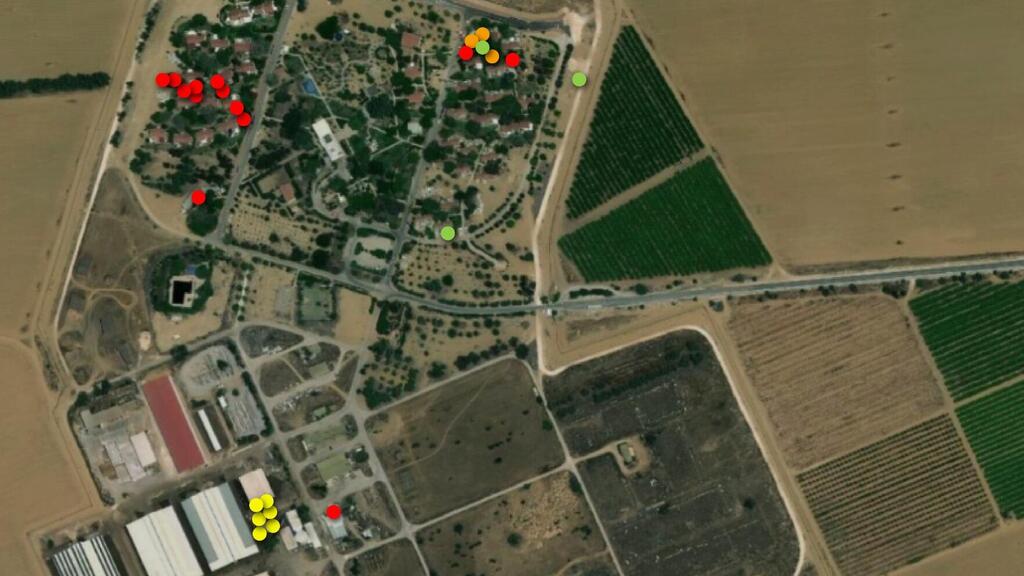
Event sites during the battle at Kibbutz Holit:
Red marks massacre sites; yellow marks abduction sites; orange marks attempted abduction sites; green marks sites where IDF soldiers fell
(Photo: IDF)
According to the probe, the force under her command spent about 12 hours on the outskirts of the nearby Sufa post, which overlooks Holit, and did not seek contact.
“From the post, it was possible to see the smoke, hear gunfire and explosions,” Kovany said. “Despite that, from the morning until the evening hours, the force did not go out to assist any community. The question is whether it is legitimate for such a force, aware that terrorists had infiltrated a civilian community, not to act for so long. They were equipped with armored jeeps, grenade launchers, Negev machine guns, medics, a battalion aid station, an ambulance and more.”
Similar criticism was directed at the force led by the 227th Bardelas Battalion commander Lt. Col. Ivan Kon. The force reached the kibbutz gate in the afternoon, while a nearby battle against terrorists was underway. Despite this, according to the probe, the force did not enter the fighting, even after being asked to do so by Paran Brigade commander Col. Shemer Raviv.
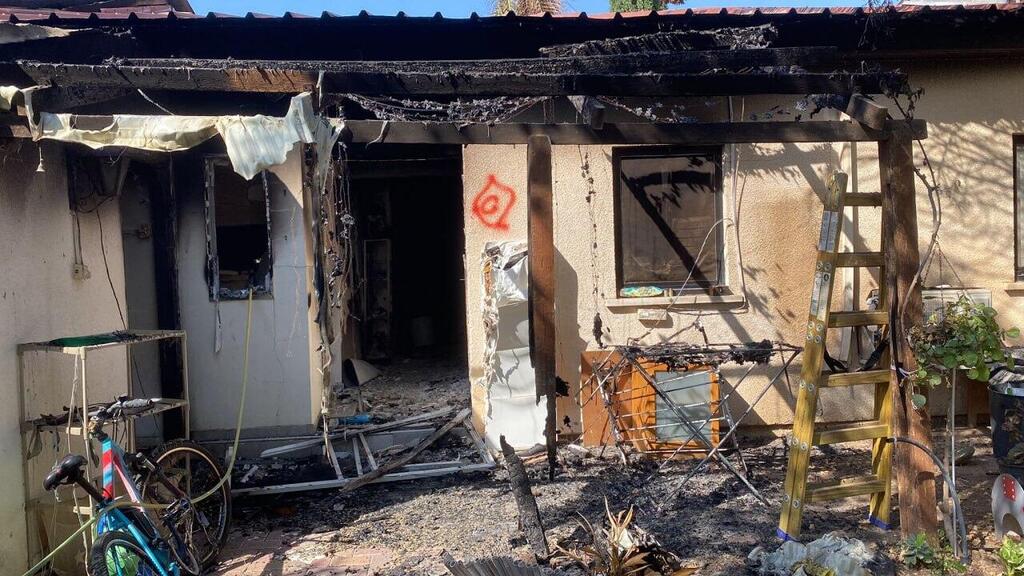
Kibbutz Holit
(Photo: Shir Azulay)
A source familiar with the investigation said the conduct in the field resembled a kind of “refusal of an order”: most of the force did not enter the fight for nearly an hour, and only after that did four soldiers enter to fight alongside the brigade commander.
“At around 3 p.m., a woman and two children were abducted,” Kovany said, referring to Avital Eldajem and the children Eshel and Negev. “On the face of it, an earlier entry by the force into the battle could have prevented murder and abduction.”
The third case Kovany and other community members point to concerns the first hours of the attack. Around 7 a.m., a patrol in two military vehicles reached the kibbutz gate.
“In the video, you see them at the gate, while at the same time terrorists breached the kibbutz fence about 100 meters away using explosive charges. In the radio recordings, they report terrorists inside Holit, but after a few minutes they leave and break contact because they received a report about a soldier asking for help somewhere else,” Kovany said.
He questioned the decision.
“Here the question is this: A soldier faces a dilemma when a comrade from his company calls for help, while on the other side terrorists have entered to slaughter helpless civilians, families and elderly people. At that stage, 15 terrorists had entered Holit, and security coordinator Avi Korin was still exchanging fire with them. If they had stayed, then eight trained infantry soldiers plus the security coordinator facing 15 terrorists, there is a high chance the event would have looked completely different.”
Alongside the harsh criticism, Kovany emphasized that he was not personally accusing the soldiers.
“I have great appreciation for the soldiers and commanders. I have no doubt their merits are many. But a probe is meant to identify failures, learn from them and present them transparently, in order to rebuild trust and draw conclusions for the future. The IDF’s wording, that the officials ‘failed professionally and not morally,’ is unacceptable and unclear. If there was a professional failure, what was done as a result? Who was investigated? And where is the chief of staff’s response? Come and present the facts to us transparently and honestly so we can rebuild trust.”
The Holit probe paints a grim picture of the forces’ conduct on the day of the massacre. The military system collapsed in the first hours, and residents were the ones who prevented an even greater disaster. Thirteen members of the kibbutz were murdered, two members of the local rapid-response team fell in battle and six residents were abducted to Gaza. Some returned in a deal, others were murdered in captivity, and the community itself has still not returned home.
Holit residents are currently evacuated to Kibbutz Revivim. The return to the kibbutz is expected to begin only in August, and it remains unclear how many residents will actually go back.
Against this backdrop, the demand for full transparency is not only a matter of principle. For members of the kibbutz, it is a basic condition for rebuilding trust.
“To rebuild, be credible,” Kovany said. “Only that way will we be able to move forward.”
‘They chose to evacuate soldiers at the expense of civilians’
Lotem Hashai, who was the security coordinator for the Shalom region on October 7 and fought in the sector, also sharply criticized the Holit probe.
“The probe that was presented shows that the IDF is not really taking responsibility,” he said. “It says, ‘We failed,’ no problem, we understood that, but it does not really get to the bottom of the matter and criticize the command decisions by soldiers and commanders such as Lt. Col. Ben-Yehuda and Kon, who saw and heard and chose not to seek contact in the kibbutzim, but went to other places that had no impact. They chose to evacuate soldiers first at the expense of civilians and local rapid-response teams. That is in complete contradiction to the spirit of the IDF.”
Hashai also criticized the conduct of the force at the Sufa post.
“The distance between the outskirts of the Sufa post and Holit is ridiculous. The claim that they did not know is simply ridiculous; it is a lie. I invite everyone to come with me to the outskirts of the Sufa post, I will fire five rounds from an M-16 there and you tell me if you do not hear it. It is simply a lie, forgive me. Certainly, it cannot be that they did not see the smoke.”
He added, “I met these battalions in the field. They passed through the junction quite a few times. I tried to stop them and ask for help, and they drove past me. I asked them to come several times and they told me ‘no.’ If we really want to learn going forward, we must stop this nonsense of not telling the truth so as not to damage prestige. If we continue like this, it will simply happen again, maybe not in the coming years, but it will happen again.”