


Prime Minister Benjamin Netanyahu’s office published his annual health report Friday, disclosing that he underwent treatment for prostate cancer after doctors discovered a small malignant tumor following a previous prostate procedure.
According to the report, Netanyahu, 76, underwent surgery Dec. 29, 2024, for benign enlargement of the prostate. The procedure was successful and without complications. An MRI performed as part of routine follow-up after the operation showed a tiny lesion, less than 1 centimeter, with suspicious characteristics in the prostate, the report said.
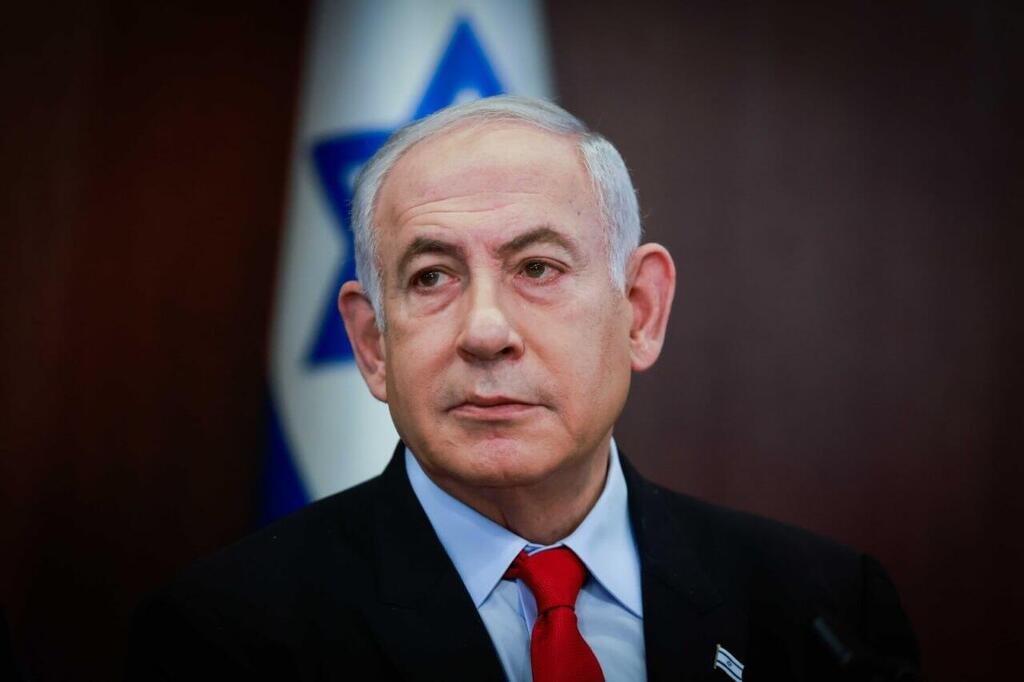
Prime Minister Benjamin Netanyahu
(Photo: Chaim Goldberg/Flash90)
A further examination confirmed it was an incidental, early-stage discovery of prostate cancer.
“This was early detection of a tiny lesion, without metastases, as all other tests proved beyond any doubt,” the report said. “In lesions of this type, it is possible to continue with close monitoring only or with short, focused radiation treatment. The prime minister chose the treatment option.”
The report said the treatment, led by Prof. Aharon Popovtzer together with Dr. Mark Vigoda and Dr. Shraga Gross, was completed successfully, with the full disappearance of the lesion, as shown by all imaging and laboratory tests.
Netanyahu said he had asked to delay the publication of the report by two months “so it would not be published at the height of the war, in order not to allow the terrorist regime in Iran to spread more false propaganda against Israel.”
He said he wanted to update the public on three points: “Thank God, I am healthy; I am in excellent physical shape; I had a small medical problem in the prostate that was fully treated. Thank God, it is behind me.”
Netanyahu said he underwent successful surgery in December 2024 for benign prostate enlargement and has since been under routine medical follow-up.
“In the latest follow-up, a tiny spot of less than a centimeter was found in the prostate,” he said. “An examination showed it was a very early stage of a malignant tumor, with no spread or metastases. The doctors told me it is very common for people my age, and that there were two options: It does not have to be treated, and it is possible to remain under monitoring only. You can live with it, and many do. Or undergo treatment and remove the problem.”
“You already know me,” Netanyahu added. “When I receive timely information about a possible danger, I want to deal with it immediately. That is true on the national level and on the personal level. That is what I did. I underwent focused treatment that removed the problem and left no trace of it. I came in for a few short treatments, read a book and continued working. The spot disappeared completely. Thank God, I defeated this too.”
Popovtzer, who heads the oncology division at Hadassah Medical Center in Jerusalem, said after the report was released that the finding was discovered several months ago during routine monitoring.
“A few months ago, as part of completely routine follow-up, a 0.9-centimeter finding was incidentally discovered in the prime minister,” Popovtzer said. “The prime minister underwent a comprehensive workup, and it became clear that this was a disease at a very early stage. It is important to note that this is a very common disease, especially among patients over the age of 70.”
He said Netanyahu was presented with two standard treatment options after the evaluation: monitoring only or radiation therapy.
“The prime minister chose the second option and underwent modern, focused radiation treatment at Hadassah Medical Center two and a half months ago,” Popovtzer said. “At the end of the treatment, after about two and a half months, the prime minister underwent an evaluation that included imaging and blood tests. We can say, based on the findings of these tests, that the disease has disappeared. There is no evidence of disease. The prime minister will continue routine, standard follow-up, as is customary.”
The report also said the pacemaker implanted in Netanyahu in 2023 has never been required to operate. It said he underwent a cardiac stress test this year as part of routine monitoring, with normal results that placed him in the top 10% for people his age. Blood tests conducted as part of routine monitoring were also completely normal, the report said.