



After attempting to quietly sideline the possibility of a national unity government following the elections, arguing behind closed doors that the political price would be too high for both sides, Prime Minister Benjamin Netanyahu is now bringing the idea back to the table out of necessity. He is expected to pursue the option in the coming days while continuing efforts to prevent the formation of any alternative government.
"This is a time for unity," Netanyahu said Saturday night in a combative prerecorded address. "There is only one choice, not national suicide, but national unity. I call for the establishment of a national unity government that includes all the parties of the national camp and all the Zionist parties that want to protect our country."
Gallery
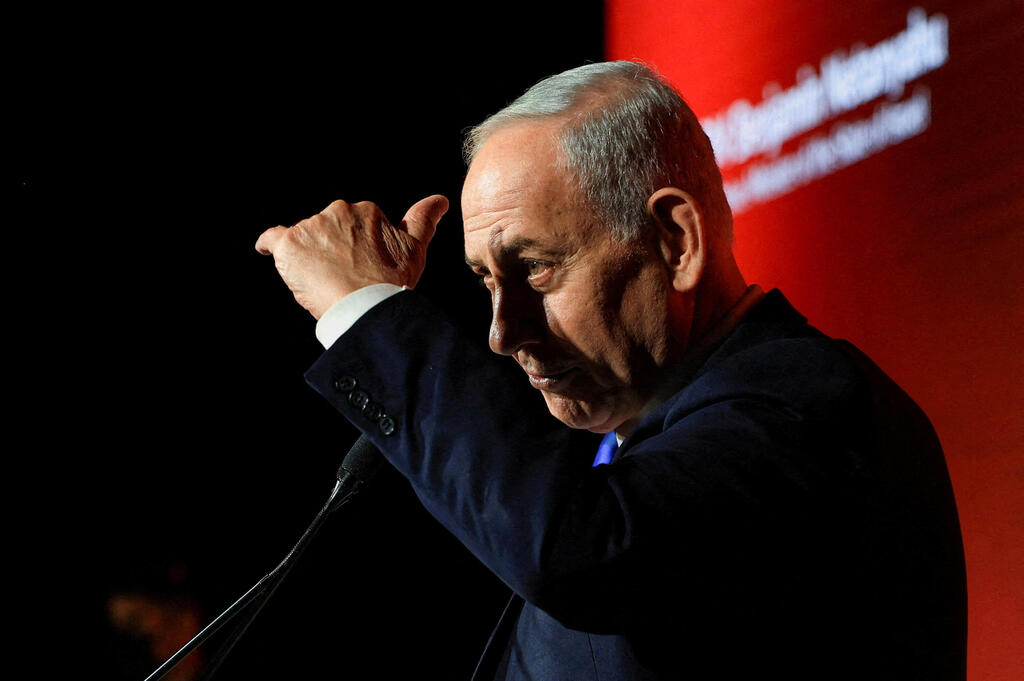
Netanyahu: His party understands that unity with Eisenkot is better than staying outside
(Photo: Ronen Zvulun/File Photo/Reuters)
His remarks mark a shift from the position expressed in private discussions, where it had been clear that a unity government was not a realistic option. Netanyahu was unwilling to agree to a rotation agreement for the premiership and, more importantly, had no intention of dismantling the right-wing bloc that includes his natural allies Itamar Ben-Gvir, Bezalel Smotrich and, more recently, Moshe Feiglin.
Behind the scenes, senior Likud ministers had argued that the concessions required to establish a unity government would be too costly for both sides, making the arrangement impossible. They pointed to major issues awaiting the next government and made clear that, given a choice between national unity and another election, they would prefer the latter.
Likud officials recognize that the next government's term will involve numerous contentious decisions, foremost among them the establishment of a state commission of inquiry into the failures surrounding the October 7 massacre. Other issues include the identity of the next justice minister and a series of senior appointments, including the attorney general, state attorney and state comptroller.
But as political developments continue and Netanyahu's options narrow, he is increasingly reconsidering his position. Faced with the possibility that the opposing bloc could establish a government with the Haredi parties, assuming such an arrangement proves possible, Netanyahu is seriously examining whether it would be preferable to form a unity government himself, even at the cost of significant concessions and compromises.
In recent days, Netanyahu has come to believe that Liberman is coordinating more closely with the Gur Hasidic movement than is publicly apparent regarding the options under consideration. He believes that, given the opportunity, Gur's leadership is already prepared to make the switch and sever its ties with Netanyahu's bloc.
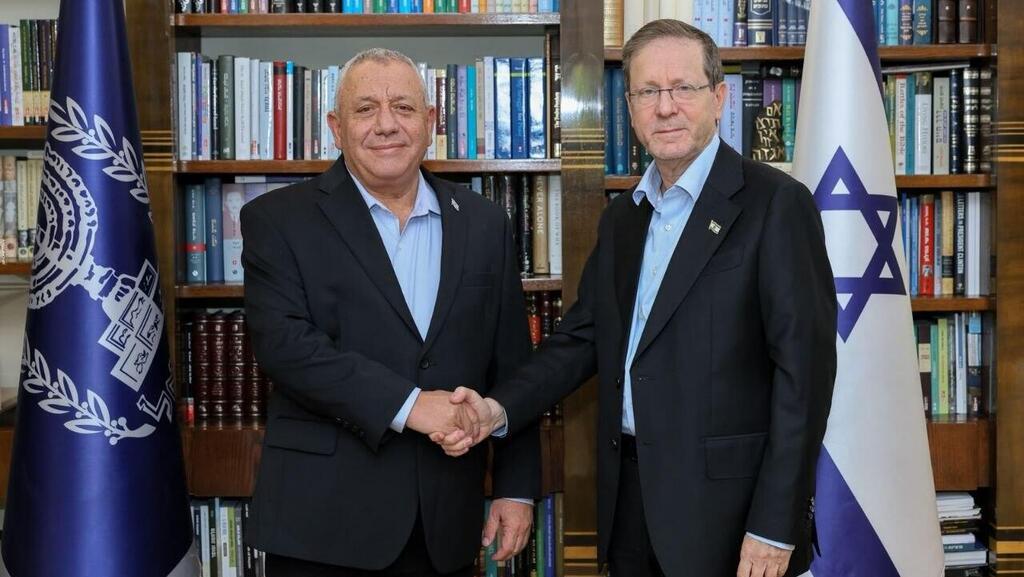
President Isaac Herzog meets with Gadi Eisenkot
(Photo: Arnon Bosni)
For Netanyahu, the main pressure is now being directed at Shas chairman Aryeh Deri. Although he considers it highly likely that Deri will refuse to join such a move, he cannot be certain. As a result, Netanyahu currently sees two possible scenarios.
Likud officials believe Liberman could join forces with United Torah Judaism and then break another political promise by relying on the Arab parties. Alternatively, Netanyahu could succeed in forming the government he has been so reluctant to establish, together with Eisenkot.
Such are the twists of politics. Netanyahu will attempt to persuade Eisenkot that unless they reach an agreement, a government could emerge in which both men lose their leading positions.
Netanyahu's central problem is that, since the election results were published, Eisenkot has increasingly come to accept that he cannot join forces with the prime minister, despite maintaining a degree of public silence on the issue. This is largely because of Likud's attempts to undermine the legitimacy of the election results.
Within Yashar!, officials believe Likud has not only crossed a line in its attempts to cast doubt on the results and encourage public skepticism, but that such tactics could intensify if another election is held. Some in Eisenkot's party argue that it is no longer certain a repeat election could be conducted while preserving the integrity of the electoral process.
"Likud has crossed the line, and concern over what might happen if the current Knesset is dissolved and another election is held is real and tangible," a Yashar! official said Saturday night.
The party described Netanyahu's remarks as a "hysterical speech" and issued a sharply worded response.
"If Likud and its allies have suddenly developed an interest in 'unity' and a broad government, they are more than welcome to publicly announce that they are dismantling their alliance with the extremists, accepting Gadi Eisenkot's four principles and are prepared to join a government led by Prime Minister Eisenkot," the party said. "Until then, this is nothing more than a pathetic political stunt."
Meanwhile, within the bloc seeking to replace Netanyahu, Naftali Bennett has faced mounting criticism in recent days over his silence. Liberman's negotiations with the Haredi parties have been poorly received by some factions, prompting criticism of Bennett and demands that he respond to the latest developments.
Senior figures in the anti-Netanyahu bloc also say the chances of establishing the 48-seat emergency government Eisenkot is pursuing are slim, with all signs indicating that Liberman has no intention of supporting such an arrangement.
"It appears that the only option is a government comprising the bloc seeking change together with all the Haredi parties, adding their 13 seats to reach 61, or another election," a senior figure in the bloc said.