


The New York Times reported overnight that during a security assessment on Oct. 1, 2023, six days before the massacre, Prime Minister Benjamin Netanyahu disregarded warnings he had received and did not mention them. Now, documents revealed Saturday evening by Israel’s Channel 13 News explicitly show that one of the decisions made at that meeting was to “advance a civilian understandings with Hamas.”
That security assessment followed a telephone situation review on Sept. 27. According to a report published Saturday night by The Atlantic, Egyptian intelligence chief Abbas Kamel had arrived in Israel a day earlier and warned of a “major attack” by Hamas. According to The New York Times and other reports, UAE President Mohammed bin Zayed also warned Netanyahu, apparently during the same week.
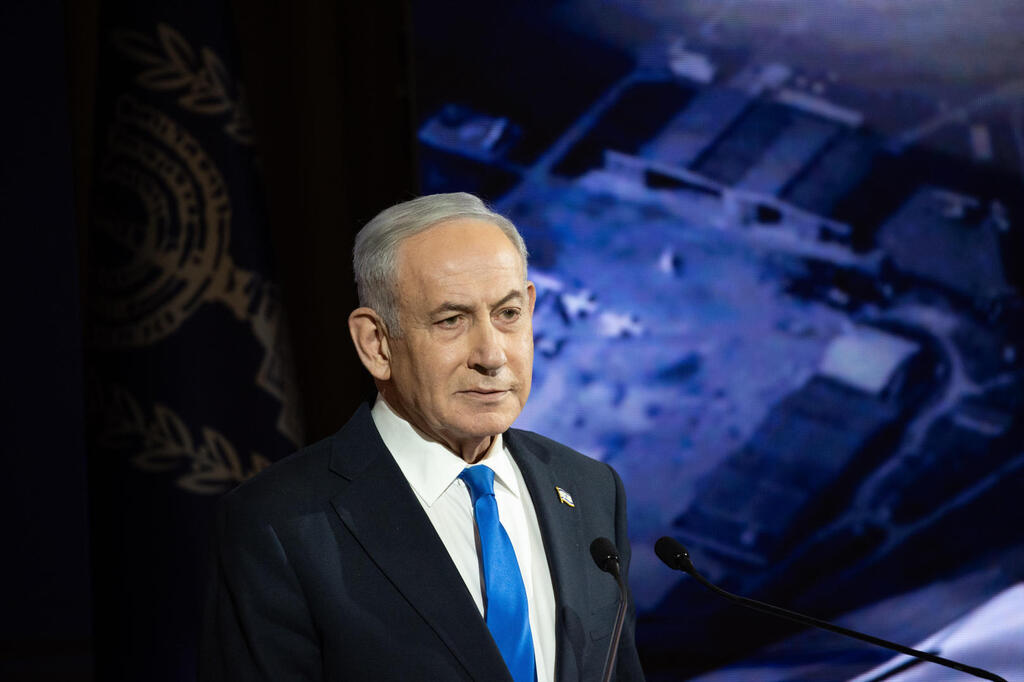
Prime Minister Benjamin Netanyahu
(Photo: Alex Kolomoisky)
Participants in that situation review included then-Defense Minister Yoav Gallant, then-IDF Chief of Staff Lt. Gen. Herzi Halevi and the heads of the Mossad and Shin Bet at the time, David Barnea and Ronen Bar.
At the start of the discussion, Netanyahu said: “There are changing trends in all the arenas that we are required to address — in Gaza, Lebanon and Iran, as a central driver of terrorism. We are working to contain and reduce the escalation through the judicious and controlled use of force (rather than completely refraining from it).”
Regarding Gaza, the document said officials should “continue preparations and activity along the fence in response to disturbances; sharpen and intensify the messages and actions regarding incendiary balloons; and begin and expand the use of measures involving humanitarian benefits, with an emphasis on workers (adding or reducing them depending on the conduct of the opposing side), as an additional tool alongside offensive measures.”
The document said Netanyahu stressed that “although we do not want to reach an escalation, preparations are required for flare-ups in both arenas.”
He therefore instructed officials to hold, under his leadership, “an in-depth security assessment as soon as possible, as well as a limited security consultation that will address ‘Ma’aseh Bereshit.’”
That security assessment was held several days later, on Oct. 1. According to the transcript, Netanyahu said at the outset: “From a broad national perspective, Israel currently has an opportunity to advance a historic peace agreement with Saudi Arabia. There are countries, actors and organizations that seek and are trying to derail the normalization process with Saudi Arabia, and we are required to fight and thwart those attempts.”
He said there was a need to “maintain an effective and measured level of security activity in response to the actions of our enemies (rather than ignoring and yielding to provocations).”
The document went on to say that, in light of this, the prime minister approved and clarified the operational policy, directives and priorities for the various arenas. Regarding Gaza, the decisions were:
- “Expand the use of measures involving humanitarian benefits, both granting and withdrawing them (‘accordion’), to influence Hamas’ conduct and policy. In the future, this should also be linked to terrorist intentions.”
- “Advance the civilian understandings with Hamas.”
- “Advance operational readiness for the recommended targeted operations — Hamas leaders (with an emphasis on emergencies), West Bank headquarters (in routine and emergency situations, from the air and covertly).”