

Prime Minister Benjamin Netanyahu did not tell Israel’s security chiefs about an alleged warning from the United Arab Emirates that Hamas was considering a major attack when he met with them six days before the Oct. 7 massacre, The New York Times reported Friday.
The warning itself has been reported previously, but the Times added a significant new detail: Netanyahu convened senior security officials on Oct. 1, 2023, for a discussion on Gaza and did not mention it, according to minutes of the meeting reviewed by the newspaper. Five former senior Israeli officials also told the Times that the Emirati warning never reached the heads of Israel’s security establishment or appeared in the internal investigations they later examined. Previous reporting has likewise said senior security officials were not informed of the alleged warning.
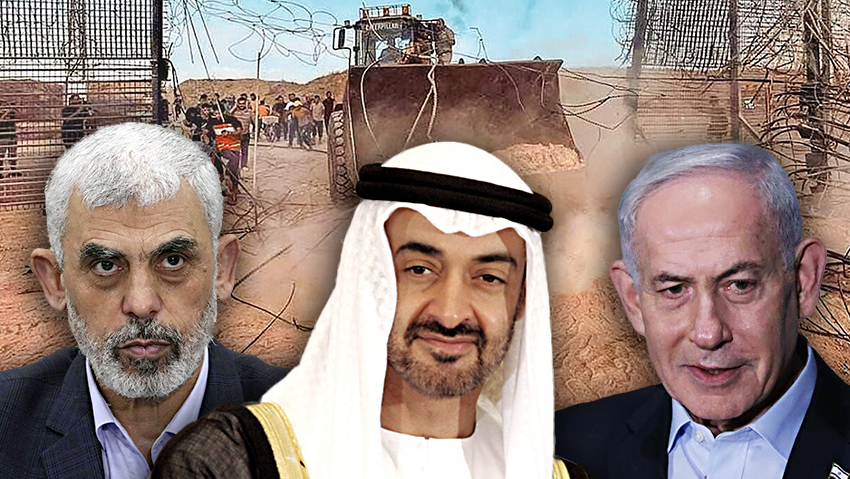
Benjamin Netanyahu, Yahya Sinwar and Mohammed bin Zayed
(Photo: AP, Alex Kolomoisky)
According to the Times, UAE President Sheikh Mohammed bin Zayed Al Nahyan called Netanyahu in late September after receiving information that Hamas was considering a major attack. Two people familiar with the matter told the newspaper about the conversation, including one who said they later spoke directly with the Emirati leader about it.
The warning was vague. It did not specify whether Hamas was preparing a rocket attack or a ground invasion, and its original intelligence source remains unclear. Netanyahu has repeatedly denied receiving such a warning and has said no relevant phone call with bin Zayed took place during the period in question. The Prime Minister’s Office has said that any relevant Emirati intelligence would have been conveyed through established intelligence channels. An Emirati source previously confirmed to The Times of Israel that a warning was conveyed during a phone call between the two leaders.
Six days before the massacre
At the Oct. 1 meeting, Netanyahu told security officials that Israel should seek to maintain calm in Gaza, according to the minutes cited by the Times. When officials raised the possibility of military action against senior Hamas figures involved in directing attacks in the West Bank, Netanyahu warned that escalation in Gaza could damage efforts to reach a normalization agreement with Saudi Arabia.
Separate reporting on the same meeting has said then-Shin Bet chief Ronen Bar urged action against Hamas leaders, including the possibility of targeting Yahya Sinwar. Netanyahu did not approve such a move at the time.
The Times reported that Netanyahu made no reference during the briefing to his alleged conversation with bin Zayed. That detail is particularly significant because the earlier reports about the Emirati warning had already raised questions over whether the information was passed to Israel’s intelligence and military leadership.
The newspaper also reported that bin Zayed later discussed his September conversation with William Burns, then director of the CIA. According to a person familiar with that discussion, the Emirati president told Burns that he had spoken to Netanyahu about the possibility of Hamas violence in Gaza or the West Bank.
Warning absent from Oct. 7 investigations
Five former senior Israeli officials told the Times that the alleged warning does not appear in the internal investigations conducted by the IDF, intelligence agencies or other bodies examining the failures that preceded Oct. 7. The officials had been involved in reviewing those assessments, according to the report.
The Emirati warning was far from the only indication that later came under scrutiny. Israeli intelligence had obtained Hamas’ “Jericho Wall” attack plan in 2022, but military officials assessed that the organization lacked the ability to carry it out. In the years before the massacre, both political and security officials broadly operated under the assessment that Hamas had been deterred and was more interested in governing Gaza than in launching a major war.
The dispute over what Netanyahu knew, when he knew it and what information reached Israel’s security leadership has become increasingly prominent ahead of next month’s election. Netanyahu has argued that the military and intelligence establishment bears primary responsibility for failing to warn of the attack, while his opponents have argued that the political leadership’s decisions before Oct. 7 must also be examined. Netanyahu has rejected allegations that he ignored a specific warning of the Hamas assault.