

As we approached the home of Nadir Shalaldeh in the village of al-Minya, overlooking the rolling slopes of the Judean Desert, we were forced to stop about 20 meters short. Shalaldeh moved aside a barbed-wire fence blocking the access path to the yard, and only then could we drive in. Two dirt roads lead to the house — one he blocked with large rocks, the other, as noted, with wire.
Later, as we sat with him and his wife, Kafiya, they showed us videos that made clear why the barriers were there. “It’s all because of the settlers over there,” he said, pointing to a cluster of structures on a nearby barren hill. “They come to our home at night, during the day, at all hours, throw stones, bang on the doors and windows, ruining our lives.”
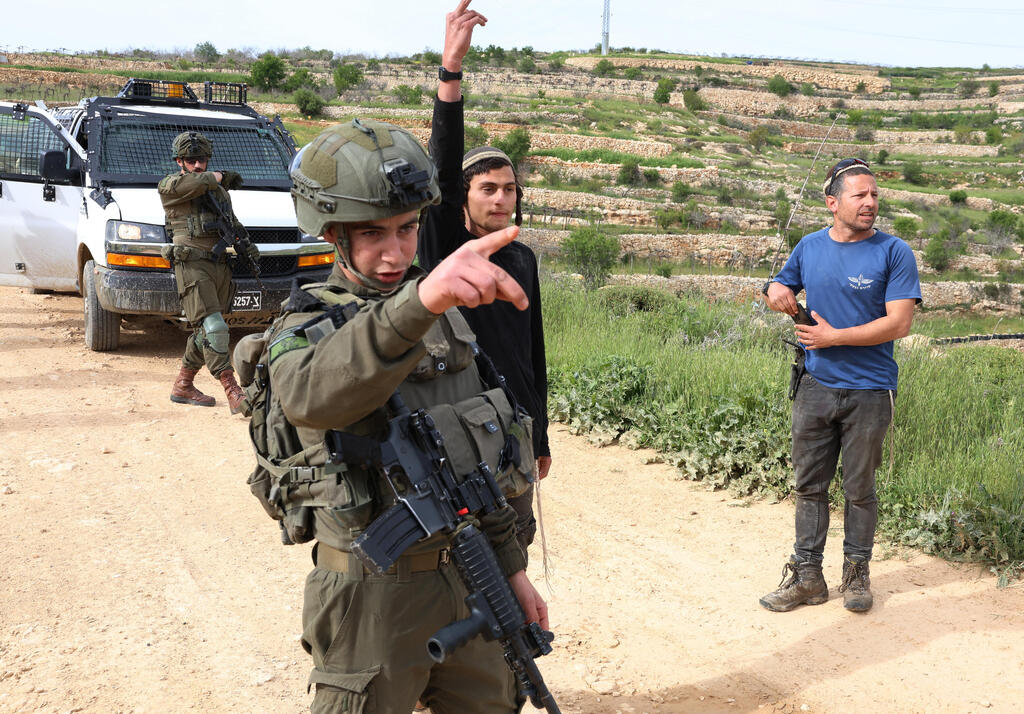
In one video, a masked settler is seen riding an ATV in the family’s yard, right outside the house window, revving the engine loudly and circling in place. In another, two settlers arrive on an ATV — similar vehicles purchased by the Settlement Ministry under Minister Orit Struck for hilltop youth — get off and move the rocks Shalaldeh had placed. Four cameras surround the small house, but they do not deter the attackers. For an hour we sat in the small living room as the couple repeatedly pleaded, “Help us, help us,” and we did not know what to say.
It is a breathtakingly beautiful area, dotted with outposts and settler farms whose residents, locals say, instill fear among Palestinians in the region. Hundreds of families have already left their homes following what they describe as a relentless campaign of violence that has included arson, theft and raids during which men were beaten and required medical treatment and hospitalization.
Israel has already invested many millions of shekels in the surrounding hills east of Gush Etzion — in newly paved roads, water and electricity infrastructure, ATVs and pickup trucks, yellow gates, and now also in a new settlement to be built here on the hill opposite Shalaldeh’s home, where an outpost already stands whose residents harass and attack him and his family. Every small noise startles those inside the house, who rush to the window to see who is approaching. “This is no way to live,” the homeowner said in despair. “You tell me — where should we go? This is our home. We have no other.”
100 red flags
This is one of 34 new settlements approved by the Security Cabinet in a confidential decision taken on the eve of Passover, during the war with Iran. It was this decision that prompted the IDF chief of staff to raise “10 red flags” and warn during the same meeting of the risk of the military’s collapse, particularly the reserve forces, due to the growing burden of missions. It took several days before details of the meeting leaked to the media.
It is likely that the decision was not immediately publicized so as not to anger the Trump administration, which at the time was focused on the Strait of Hormuz crisis. It may also be because the 34 new settlements are in addition to 69 others approved by the current government since it took office — 103 in total, an 80% increase in the number of official settlements in the territories in less than three and a half years.
Every settlement, every unauthorized outpost and every shepherding farm receives security protection from the military. As we toured several sites this week where the new settlements are expected to be built — places where outposts and farms already exist — we saw soldiers everywhere, both regular and reserve forces. The peak came when we reached an agricultural area east of Halhul, north of Hebron, where a force of at least 10 officers and soldiers from the Nachshon Battalion of the Kfir Brigade prevented a group of Palestinian farmers from reaching their vineyards, in order to avoid friction with hilltop youth who had settled nearby. And this was just one location.
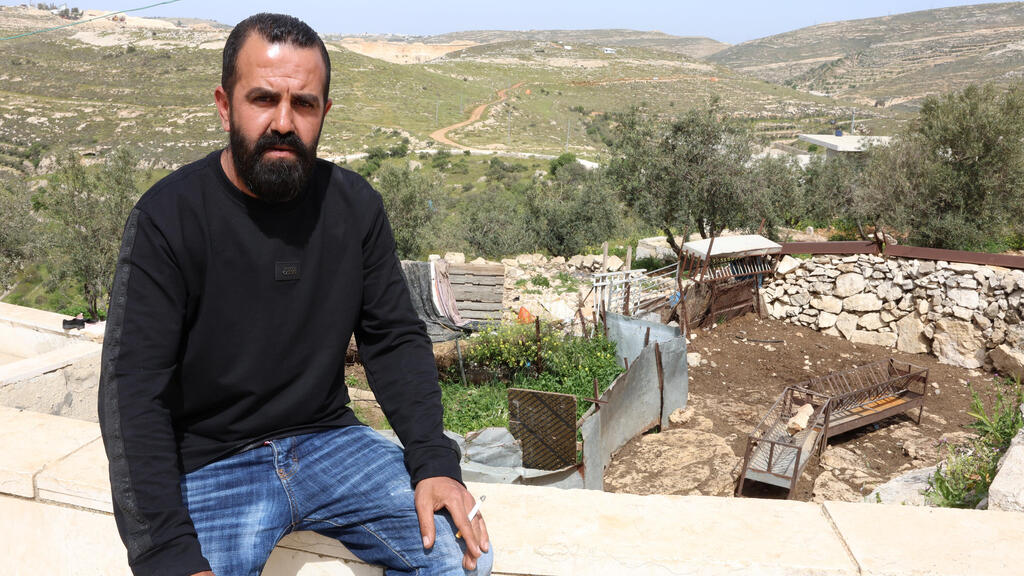
Mohammad al-Tarwa lives near Bethlehem
(Photo: Shaul Golan)
An officer who recently completed a reserve tour in the Binyamin sector said the burden on his battalion was extreme. “You’re responsible for securing dozens of points,” he said, “large, established settlements, outposts with a family and a half and two single guys, and farms run by a few guys with 40 sheep. It never ends. There isn’t a week when some group doesn’t go up to a hill and you’re required to check what they’re doing. It’s a huge area with pillboxes, junctions and daily friction points between unruly youth and Palestinians in the villages.
“You run from one point to another and can’t get everywhere. And you’re not the only battalion in the sector, right? The area is full of IDF and Border Police forces but, again, there are dozens of points, farms, outposts, dozens of incidents every day, and not enough forces. This is Samaria, northern Samaria, Binyamin, Gush Etzion, Hebron and the South Hebron Hills. It’s everywhere. I completely understand the chief of staff raising 10 red flags — he should have raised 100. We don’t have such a large army. With the current manpower and what’s expected of it in all sectors, especially in Judea and Samaria, no one should be surprised if this army collapses.”
At the site where the new settlement of Karmei Yehuda is planned, on leveled land overlooking Hebron, we met Amjad Naksha, an earthworks contractor and local resident. His problem, and that of others in the area, is not just the establishment of a new settlement. He says that even before the decision was made, homes in the surrounding area were cleared and all fruit trees uprooted.
“People planted grapes, apples, built homes to come to in the summer, made a living from this land,” he said. “I’m the contractor who prepared the land for them to work. I brought electricity there, I brought water. People paid a lot of money.”
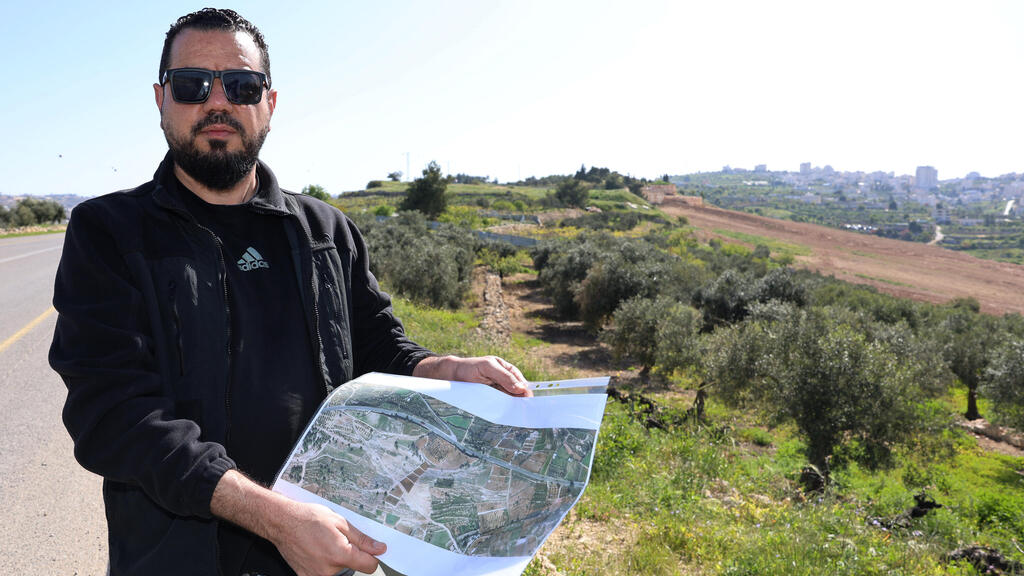
Amjad Naksha, an earthworks contractor
(Photo: Shaul Golan)
He arrived with a thick binder full of documents he says prove ownership of the land. “I know who owns every plot,” he said, producing work permits issued by the Civil Administration. “For every plot I got a permit. But after the war in Gaza began, settlers came and expelled everyone, destroyed their homes, uprooted the trees with tractors and put up a yellow gate so we couldn’t access the land. We went to the Civil Administration, to the police, filed complaints that settlers were preventing access, but nothing helped. If we try to get close, the army blocks us and calls the police to arrest us. The army works for the settlers, and now the settlers also got a prize,” he said, pointing to the area. “The government gave them a new settlement there.”
Less than an hour later, we stood in the yard of Mohammad al-Tarwa on the outskirts of the town of Beit Fajjar near Bethlehem, looking at a farm established on the hill opposite his home, called Ma’ale Tedehar. “It was on July 17, 2025,” said his cousin. Asked how he remembered the exact date, he replied: “It’s a day we’ll never forget. That day our lives turned upside down. The settlers came to the hill and we went down from the house to film them. Then they came toward us, to the path below the house, and the army and police arrived and asked them to leave. But that night the army came to our home, arrested me and my cousin, took us to Etzion base and released us only after seven hours. They punched me in the face, broke five of my front teeth.”
Since then, the hill has been evacuated of settlers seven times, until police and the army gave up. Each time they returned and rebuilt structures. In between, they repeatedly attacked families in the area, set a tractor on fire, sprayed graffiti, and in one instance even fired at youths who threw stones at them in an attempt to drive them away from the residential area. Fortunately, no one was injured in the shooting, which was captured on video.
Not far from the site where the hilltop youth established themselves, a new legal settlement is now planned. Until the state brings water and electricity — a process likely to cost millions — the settlers will continue living on the exposed hill. Photographer Shaul said he could see through his telephoto lens three men in IDF uniforms moving around the hill. “The soldiers are with them all the time,” Yosef replied.
Suddenly one of the youths shouted: “The settlers are coming!” Everyone jumped up and rushed to a better vantage point. “Ah, good, they went up to the area opposite,” Yosef said, sitting back down in relief. “This time they didn’t enter the village.”
'A distorted political consideration'
The organization Peace Now calculated how much the current government has invested in the West Bank and arrived at a striking figure: 19,327,921,000 shekels — more than 19 billion shekels. Most of the money was directed to settlements during the wars with Gaza, Hezbollah in Lebanon and the two rounds with Iran, while other government budgets were cut across the board and communities near Gaza and along the northern border struggled for funds to rebuild. Among the expenditures: 7 billion shekels for new roads, 800 million for farms and outposts, and 949 million for tourism development projects in settlements.
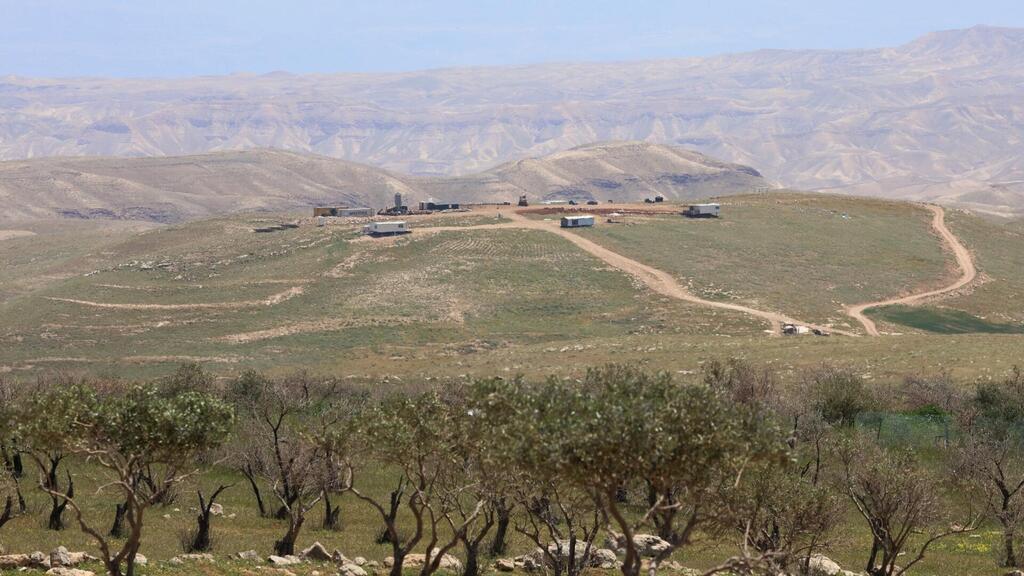
View of a West Bank outpost
(Photo: Shaul Golan)
Before heading to the field, we spoke with Moshe Davidovich, head of the Mateh Asher Regional Council and chairman of the Northern Confrontation Line Forum. Anyone following the situation knows that Kiryat Shmona has been struggling to bring back about a third of its residents even before the current round with Iran, and is in desperate need of rehabilitation funding, as are other communities along the Lebanese border. Davidovich was visibly agitated.
“After serious, organized work, we submitted a rehabilitation plan costing 32 billion shekels,” he said. “In the end the government approved 15 billion, and from that they cut 3 billion that went to the northern envelope — authorities south of the 9-kilometer line from the border. Of the remaining 12 billion, we’ve received only 7 billion so far. The rest is awaiting government approval. I’m not interested in the settlements. The budgets poured into them stem from a distorted political consideration. I care about the people who came in the late 1940s and 1950s and built Kiryat Shmona, Shlomi and all the moshavim and kibbutzim along the border. People who went through all the wars, you name it, and are getting crumbs. Here there are no communities in internal political dispute. The settlement here is not in dispute. The numbers you mentioned send a message — that the State of Israel does not count us.”
A few hours later we returned to Shalaldeh’s home on the edge of al-Minya, just before the desert begins. There we met Ofek Sinouani, 20, from Ramat Gan, an activist who, together with others from the religious-left group Bnei Avraham, maintains a protective presence at the house.
“I was here the day before the war with Iran broke out, and we tried to take Nadir’s sheep out to graze just dozens of meters from the house,” he said. “The settlers saw us Israelis from afar and didn’t approach. But the next morning, on Saturday, they came to take revenge on him.”
Shalaldeh added: “Around 11 a.m. they came with two ATVs. The children ran inside and I stayed outside to face them. They slapped and kicked me and said, ‘You need to get out of here. Take your wife and children and leave.’ I called Ofek to tell him the settlers had come, but he couldn’t do anything. He said there were sirens where he was because of missiles from Iran.”
Sinouani said: “I was stuck in a safe room all day because of the sirens.”
Roy Kleitman, also from Bnei Avraham, who was present at the meeting, said this is the settlers’ method. “They create constant, deliberate friction in Palestinian areas. It’s meant to create a sense of ongoing persecution, constant fear, insecurity, to make them flee, to leave their homes,” he explained.
Before we left, Kafiya asked where we were from, and we replied that we are from Tel Aviv. “I don’t understand them, these people,” she said, pointing to the settlers’ hill. “This isn’t Tel Aviv with a good life, the sea and everything. There’s nothing here, it’s desert. What are they looking for here? What do they want with our lives?”
First published: 20:12, 04.19.26