


Israel on Thursday evening pushed back against reports that Hamas and mediators were close to reaching an agreement that would allow a move to the next phase in Gaza. A political source clarified that the deal being discussed in Cairo is not an agreement with Israel, but rather one between Hamas and the mediators — and that Jerusalem does not accept the framework in its current form.
According to the source, Israel is demanding the complete disarmament of Hamas, including the removal of all weapons from Gaza and the full demilitarization of the Strip, as a prerequisite for any progress in the process. He added that the 15-point document currently under discussion does not adequately address Israel’s demands, and that Israel has conveyed its objections on the matter to envoy Tony Blair.

The political source stressed that there will be no Israeli withdrawal from the yellow line in Gaza before Hamas completes its disarmament and the Strip is fully demilitarized. According to the source, the issue of Gaza was not discussed at all during the meeting between Prime Minister Benjamin Netanyahu and U.S. President Donald Trump in Washington this week.
According to the roadmap being discussed in Cairo, Hamas is expected to hand over all weapons in its possession — light and heavy — and give up its tunnels, weapons depots and production facilities. The transfer of weapons is expected to begin within several weeks, with the weapons handed over to international forces, stored in designated facilities and taken out of use. The depots are expected to be guarded by a multinational force, and at the end of the process only the Palestinian technocratic committee managing Gaza will have authority over weapons.
A U.S. diplomatic source said talks with mediators in Cairo are “continuing and progressing,” and that the roadmap calls for the dismantling of all weapons, “heavy and light, without exception,” alongside the destruction of tunnels, weapons depots and production facilities.
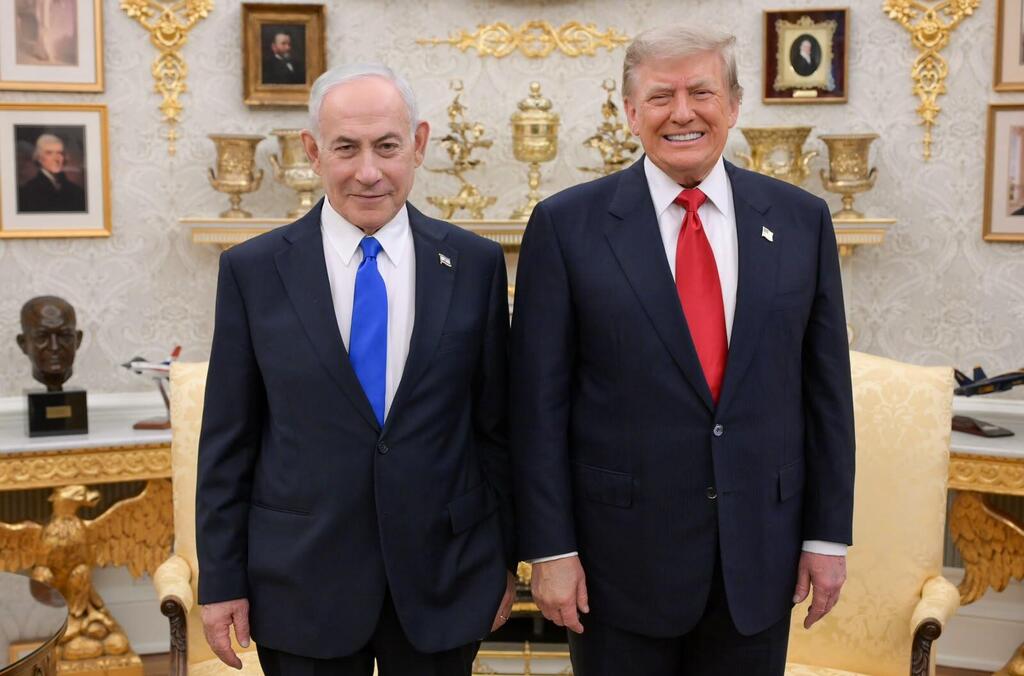
Trump and Netanyahu met at the White House this week
(Photo: Ma'ayan Toaf/GPO)
According to the source, at the end of the process, "Hamas will have no role in governing Gaza, whether openly or behind the scenes, and the Gaza management committee will hold full authority under the principle of one authority, one law and one weapon.”
He added that the process would be based on independent verification and reciprocity, rather than trust: Each step taken by one side would enable the next step by the other.
A source familiar with the details said that, at the first stage, weapons would be transferred from Hamas to international forces. According to the source, no force from any country would enter Gaza without Israel’s approval, and the countries participating in the mechanism would be friendly toward Israel.
“There are also very clear details regarding storage and supervision,” he said. “We do not take risks and do not rely on promises, but only on actions on the ground.”
However, this is where the main gap between Israel, the Americans and the mediators lies. While the framework allows weapons to be stored inside Gaza and taken out of use under international supervision, Israel demands that they be removed entirely from the Strip. Jerusalem fears that leaving weapons in Gaza, even if stored in monitored facilities, would allow Hamas to regain control of them in the future.
The model of storing and decommissioning weapons is based, among other things, on the mechanism used in the Northern Ireland peace agreements. However, Israel believes it cannot be applied to Hamas because of the risk that the organization would rebuild its power and return to military activity.
According to the framework, Israel would not be required to withdraw from the original yellow line, which includes about 50% of the Strip, before demilitarization is completed. Further withdrawals would take place only in accordance with proven progress in dismantling weapons. At the same time, Israel would be expected to stop its policy of targeted killings but would retain the ability to act against emerging threats. Hamas, for its part, would commit to halting all military activity, including recruitment and force buildup.
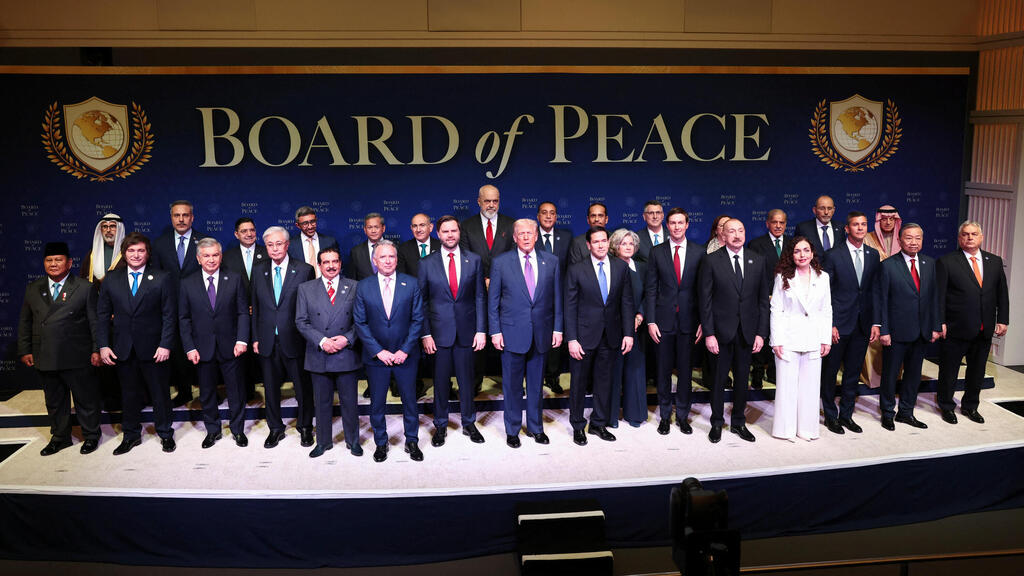
Trump's Gaza Board of Peace gathered in Washington
(Photo: Kevin Lamarque/Reuters)
The Israeli statement places Jerusalem in a public dispute with the Americans, who present the roadmap as a complete and absolute disarmament of Hamas. Israel, however, is making clear that storing weapons inside the Strip does not amount to demilitarization and that it has no intention of withdrawing based on promises or a mechanism that allows weapons to remain in Gaza.
As a result, Israel is rejecting the framework in its current form: As long as weapons are not removed from the Strip and Hamas is not completely stripped of its military capabilities, Israel will not carry out additional withdrawals from the yellow line.
Meanwhile, a source in Trump’s Board of Peace expressed surprise at Israel’s response and assessed that it was primarily driven by domestic political considerations and criticism of the government from the right.
“There is no dispute,” the source said. “When they see the full and detailed picture, they will embrace this historic agreement, which effectively determines that Hamas surrenders and fully disarms. The agreement is 100% about disarmament, and only afterward will there be withdrawal from the original yellow line established in the 20-point agreement.”
Second phase remains stalled
At the center of the dispute is the transition to the second phase of the U.S. plan for Gaza, which originally set several interconnected goals: transferring civilian governance to a Palestinian technocratic committee, disarming Hamas, a gradual IDF withdrawal, deployment of an international security force and the beginning of reconstruction in the Strip.
The Cairo talks were intended to establish the order of steps and the verification mechanism that would allow progress between phases.
In January, the U.S. announced the beginning of the second phase and the establishment of the National Committee for the Administration of Gaza (NCAG), a 15-member body headed by Ali Shaath, who previously served as a deputy minister in the Palestinian Authority. The committee is intended to replace Hamas rule and manage civilian services in Gaza, but it is still operating from Cairo and no date has been set for its entry into the Strip.
Earlier this month, Hamas announced that it had dismantled the emergency body that served as its de facto government and was ready to transfer civilian administration to the technocratic committee. However, the organization made clear that existing ministry and administrative employees would remain in their positions, and it continued to retain responsibility for security and policing in areas under its control.
Israel rejected the move and warned that as long as Hamas retains its weapons, even a supposedly civilian government could continue operating under its authority.
The issue of withdrawal has also remained one of the main obstacles in recent months. Hamas demanded guarantees of a full Israeli withdrawal before agreeing to discuss disarmament, while Israel insisted that demilitarization must come first.
The “yellow line,” to which forces withdrew as part of the ceasefire, was originally intended to be a temporary line on the way to further withdrawals. In practice, Israel continues to hold more than half of the Strip and has established along parts of the line a physical barrier and security zone.