


Amid recent warnings of possible Iranian missile fire during the holiday period, the IDF on Thursday evening destroyed tunnels in the Ali Taher Ridge in southern Lebanon, after completing the clearing of Hezbollah’s main underground complex in the area.
“Even now, after the operation has concluded, the IDF is prepared for a range of scenarios, including multi-front scenarios,” a security official said Thursday evening.
The announcement of the infrastructure’s destruction was made by Prime Minister Benjamin Netanyahu and Defense Minister Israel Katz, who said it had been built over two decades with Iranian funding and planning.

"The terror infrastructure and the command center on the ridge were designed to serve as the staging base for the conquest of the Galilee, and had observation and fire dominance over Metula and Kiryat Shmona. Their destruction completes the achievement of operational control over the Ali Taher ridge – above and below ground," they said in a statement.
The terrorist infrastructure destroyed Thursday stretched for more than two kilometers and contained dozens of Iranian-made rockets, missiles and drones, as well as machine guns, dozens of anti-tank missiles and hundreds of mines and explosive devices.
A central command complex belonging to Hezbollah’s Badr unit also was found there, including operations rooms, weapons storage rooms and living quarters that allowed operatives to direct fighting and remain underground for extended periods.
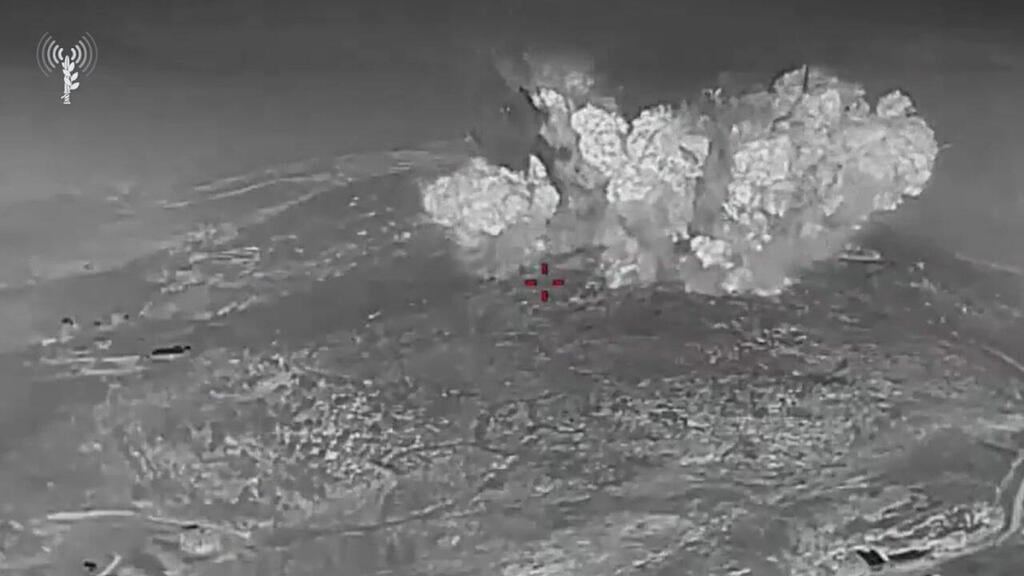
IDF attack on Ali Taher Ridge
(Photo: IDF Spokesperson's Unit)
The IDF is now preparing for multi-front scenarios while maintaining defensive readiness in the area of the blast. Although forces are leaving the ridge, they will continue to control the area from positions that provide observation and fire capabilities over Hezbollah zones.
The IDF’s current aim is to contain the event and prevent it from spilling into other arenas or other parts of southern Lebanon. The Operations Directorate, Military Intelligence Directorate and Air Force are preparing for a range of possibilities, from an Iranian response to rocket fire at northern communities and explosive drone attacks against troops.
At the same time, the IDF Operations Directorate on Thursday reached the culmination of an operational preparation process that has lasted about a month and a half. A series of plan approvals and readiness measures, which began in August ahead of the start of the school year, is now entering its final stage under the head of the Operations Directorate ahead of the holiday period, which will continue through October 7.
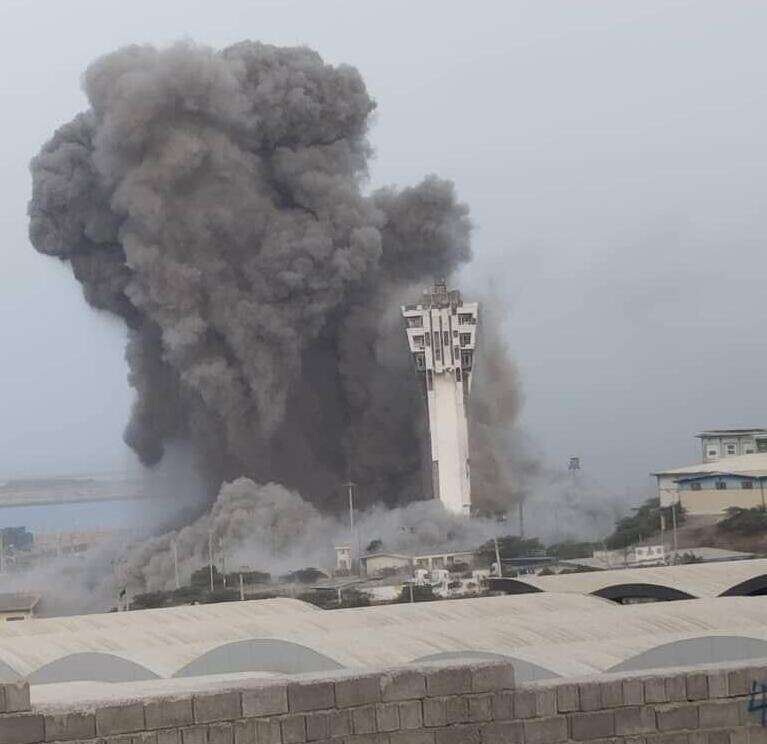
US military attacks Chabahar, Iran
Unlike at the same point last year, the IDF is not currently engaged in deep ground maneuvers, but is operating in a mode of “offensive defense,” deployed beyond the familiar border lines and deep inside enemy territory in all sectors.
The broad deployment provides operational gains and a deeper defensive layer for Israeli communities, but also places large numbers of troops in close daily friction.
“There will be no situation in which we do not act because of the holidays. The strikes will continue,” security officials said.
Possibility of Iranian escalation
The Iranian arena is still defined as the IDF’s main theater of operations, and resources and capabilities have been allocated accordingly.
As the U.S. economic squeeze and pressure on Iran deepen, the risk grows that Tehran will seek to redirect fire toward Israel. Military Intelligence and the Air Force do not currently identify indications that the Iranian leadership has decided to attack Israel directly, and deterrence from previous rounds remains in place.
The explosion on the Ali Tahrir Ridge, as documented in Lebanon


However, security officials believe Iran’s missile launches toward U.S. bases in Jordan, near the Israeli border, were intended as a direct provocation designed to show that Iran still has the capability to launch missiles as far as Israel.
That is the reason for a series of sharp warnings from Netanyahu and Katz, who said that “a powerful response will inflict severe blows on Iran that it has not yet suffered, including against its main energy facilities. Such a blow would set Iran back by decades.”
Israeli officials say the target bank is ready, and any spillover of fire into Israeli territory will trigger an automatic Israeli response. The IDF is prepared both defensively and offensively and continues to closely monitor the Houthi arena, particularly in light of the latest developments.
The assessment is that the organization is currently deterred, but Israel is preparing to act if necessary.
“We have an open account there,” a senior military official said.
Netanyahu also addressed the growing tensions with Iran Thursday evening.
“President Trump announced that Iran is trying to rearm with nuclear weapons. That is true,” he said. “After we destroyed its immediate ability to produce nuclear bombs, both in Operation Rising Lion and Operation Roaring Lion, they are trying again. I promise you: As long as I am prime minister, Iran will not have nuclear weapons.”
Blowing up the ‘giant complex’ on the Ali Taher Ridge
Netanyahu also referred to developments in Lebanon Thursday evening, saying: “We are striking the Iranian axis, not only very hard in the Gaza Strip, but also in Lebanon. We destroyed the Beaufort Ridge and now we are dealing with the Ali Taher Ridge. More will follow.”
Shortly after his remarks were published, a joint statement from Netanyahu and Katz said the IDF had destroyed Hezbollah’s underground infrastructure on the Ali Taher Ridge.
The two said IDF forces were preparing to defend the area and prevent the enemy from returning.
“The IDF will remain in the security zone and will continue destroying terror infrastructure and thwarting any attempt by the Hezbollah terrorist organization to re-establish itself and restore its capabilities,” they said. “The State of Israel will continue to defend the northern communities from within Lebanon – and any attempt to harm our citizens and our forces will be met with force.”
While attention was focused on Iran, a security drama was also unfolding on the northern border. Forces from the 36th Division, led by units from the Commando Brigade, carried out final preparations for the demolition of Hezbollah’s underground terrorist infrastructure on the Ali Taher Ridge, which was destroyed using 1,100 tons of explosives.
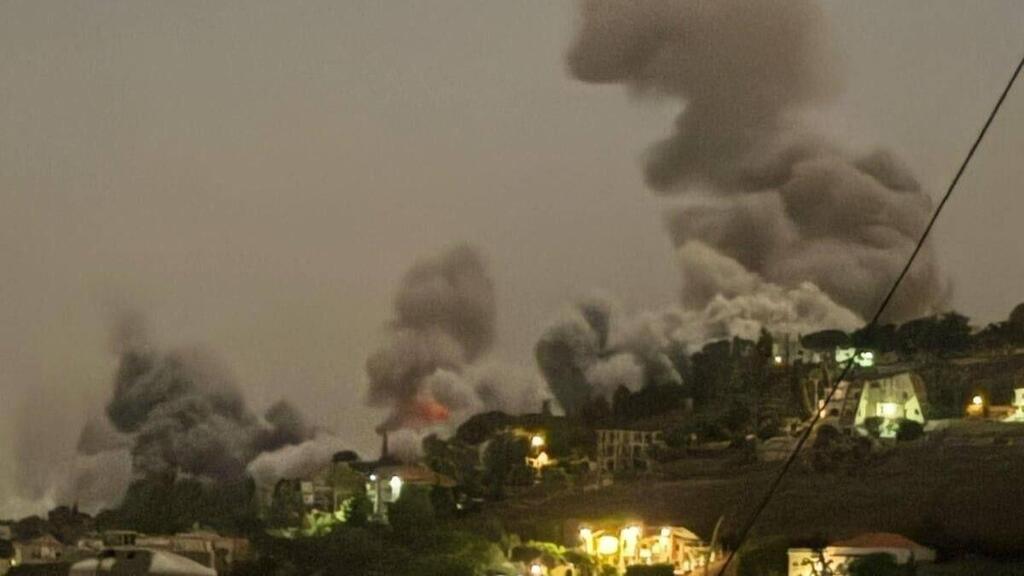
Early attack on Ali Taher
The infrastructure, built over years with extensive Iranian funding, is described by intelligence officials as “Hezbollah’s most significant and deepest infrastructure in the area.”
Waves of IDF strikes in the Nabatieh area were apparently intended as disruption and preparatory strikes ahead of the sensitive engineering operation.
The defense establishment is preparing for possible Hezbollah responses, ranging from explosive drone attacks on IDF forces to rocket fire on Israeli communities — considered a low-probability scenario — and even direct Iranian intervention, though that too is considered unlikely.
The destruction of the infrastructure is a sensitive event that could affect the framework of agreements in pilot areas where the Lebanese army is not carrying out its responsibilities sufficiently.
After the ridge is blown up, the IDF does not intend to remain there and will redeploy to rear defensive lines. Northern Command has already analyzed the terrain ahead of thinning forces and repositioning them in a way that will preserve deep observation and fire capabilities to prevent threats to Israeli communities.
Preparing for fiber-optic drones, as captured Hamas official provides intelligence
Meanwhile, in Gaza, the IDF continues aggressive targeted operations while maintaining control over 63% of the Strip and creating a significant security buffer for southern Israeli communities.
Since October 2025, ynet has learned, the IDF has killed more than 700 terrorists in the Gaza Strip.
Muin al-Arabid, a senior Hamas official who served as head of the organization’s internal security apparatus and was abducted in a special operation by Shin Bet forces, has already begun providing information during his interrogation, and security officials assess that “he will provide more information.”
IDF and Shin Bet destroy three Hamas weapons depots in Gaza
(צילום: דובר צה"ל)
Targeted strikes against Hamas force-building assets and senior officials are intended to increase pressure on the organization in connection with the American plan.
The recent strikes on three weapons depots also send a blunt message: If you do not disarm, we will disarm you.
It was also revealed that the IDF identified the direction of incendiary kites even before the matter was reported in the media and struck those directing them, including Hamas operatives and members of rogue organizations. That led to the phenomenon being halted and reduced the likelihood of its return to almost zero.
Southern Command is preparing seriously for terrorist attack scenarios during the holidays, including spontaneous assaults on outposts deep in the territory or explosive devices planted along routes, such as the old explosive device struck by an engineering vehicle a few days ago.
To deal with emerging threats, Southern Command has begun a General Staff process to procure equipment and deploy protective netting on vehicles against fiber-optic drones.
Although the threat has not yet materialized in Gaza, the IDF is studying lessons from the northern arena and preparing in advance for its possible spread southward, while maintaining the offensive momentum of two active divisions.
West Bank escalation also on the table
In the West Bank, the level of alert is unusually high. There are currently 26 battalions deployed in the area, including 14 standing-army battalions, among them units from the Nahal Brigade, Paratroopers Brigade, Search and Rescue Brigade and Panther Battalion.
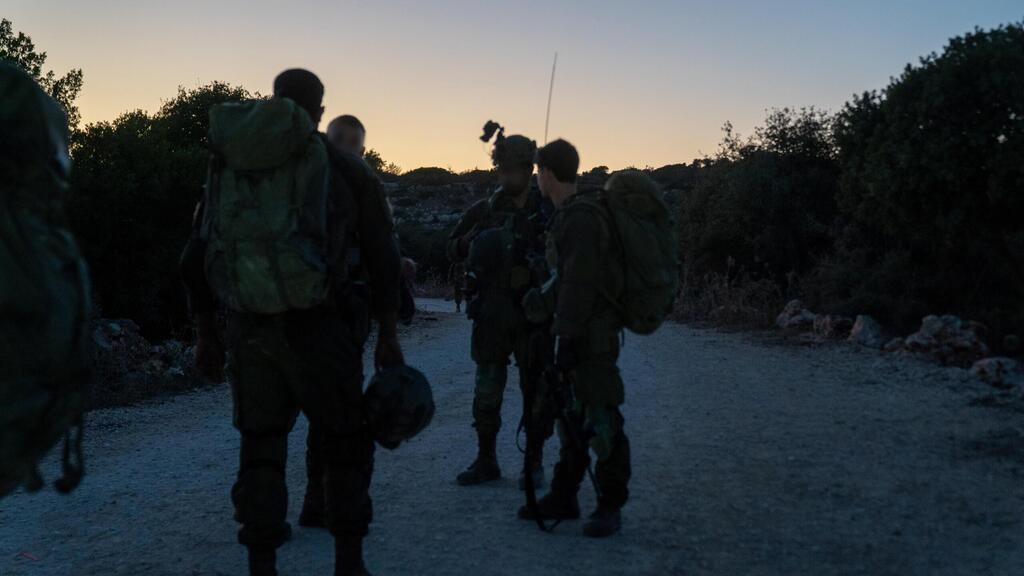
On high alert in the West Bank
(Photo: IDF Spokesperson's Unit)
In addition to the existing force, another division announced by the chief of staff has already completed battle procedures and operational adjustments and is ready for deployment within a few hours.
If activated, it would assume command over the southern part of the sector, from Jerusalem southward.
The main concern in the West Bank is infiltration attacks on communities, shootings along roads or rapid internal escalation. To that end, a broad wave of arrests of inciters has been carried out and the military presence deep in the territory has been increased, particularly amid growing friction around agricultural farms.
At the same time, lessons from October 7 have led to a major conceptual shift in the Air Force regarding border defense.
Whereas border defense was previously viewed as the responsibility of the territorial division, with air power serving in a supporting role, the military now employs a “golden hour” concept — rapid aerial response and the arrival of a critical mass of attack helicopters, drones and fighter jets to create an immediate “freeze” of the situation in extreme scenarios, alongside strikes on command centers deep in enemy territory.
As part of this approach, squadron commanders and deputy commanders have been assigned field days alongside battalion commanders in the divisions.
The concept has been adapted to each northern sector, and the deployment of an attack helicopter squadron has dramatically shortened the response time of the 91st Division.
In the West Bank, firepower is employed with particular caution because of the proximity to the civilian population, and on the eastern border, response capabilities are being activated along the dozens of kilometers of the buffer zone.