

Senior officials in Israel’s Finance Ministry are warning that if the 2026 state budget and the accompanying Arrangements Law are not approved in a first reading in the Knesset this week, it may become impossible to pass them in second and third readings by the legal deadline of March 31. Such a scenario would trigger the dissolution of the Knesset, the fall of the government and elections within 90 days, likely in early July instead of the original October 27 date mandated by law for elections every four years.
The prolonged delay in submitting the state budget for Knesset approval — which has continued even though the 2026 fiscal year has already begun — stems from the ultra‑Orthodox parties’ announcement that they will not support the budget unless a draft law legalizing exemptions for tens of thousands of yeshiva students from military service is passed simultaneously. As a result, there is currently no majority to approve the budget. Prime Minister Benjamin Netanyahu is now attempting to secure agreements to pass a conscription law that would allow the budget to be approved.
Gallery
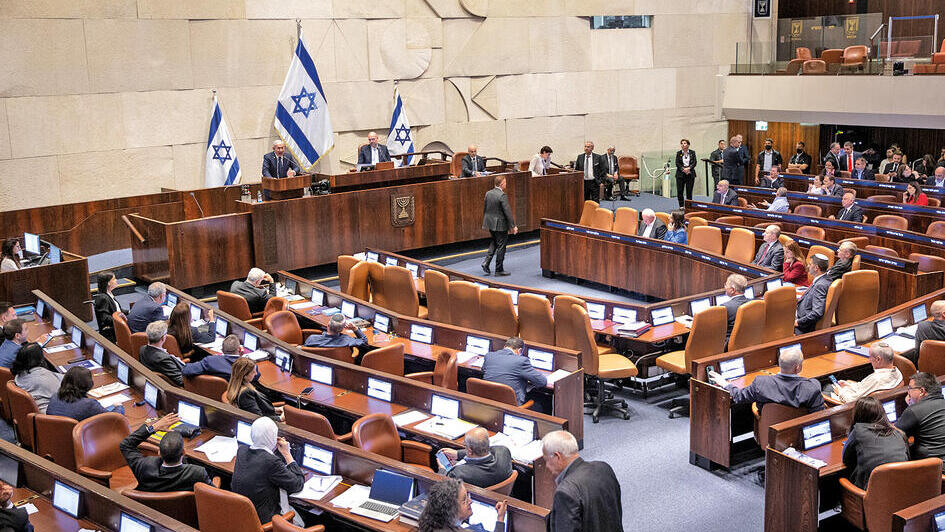
It is not certain the 2026 state budget and Arrangements Law will be approved in a first reading in Knesset this week
(Photo: Alex Kolomoisky)
The Finance Ministry’s warning arises from the fact that, in the current situation, there appears to be insufficient time to debate the hundreds of budget chapters and Arrangements Law clauses in at least five Knesset committees, especially since changes to parts of the Arrangements Law, and possibly even increases to the budget, are expected before final approval. This is particularly true in light of the defense establishment’s demands for an additional approximately 8 billion shekels, which the Finance Ministry currently opposes.
“There is simply no time. Committee discussions usually last between a month and a half to two months, and Knesset members will not be prepared to approve thousands of clauses without debate on a large portion of them, as is customary,” a senior Finance Ministry official told Mamon and ynet.
For about three weeks, the country has been operating under a continuing budget, which, according to State Comptroller Accountant General Yali Rotenberg (who is retiring at the end of the month), lacks 55 billion shekels. The comptroller also issued a directive in recent days, in a letter sent to government ministries, to immediately cut expenditures and avoid hiring staff or launching new projects, citing concern that 2026 could be spent entirely under a continuing budget.
The 2026 state budget currently stands at 662 billion shekels, of which 112 billion shekels is allocated to the defense establishment, and the current deficit target is 3.9%.
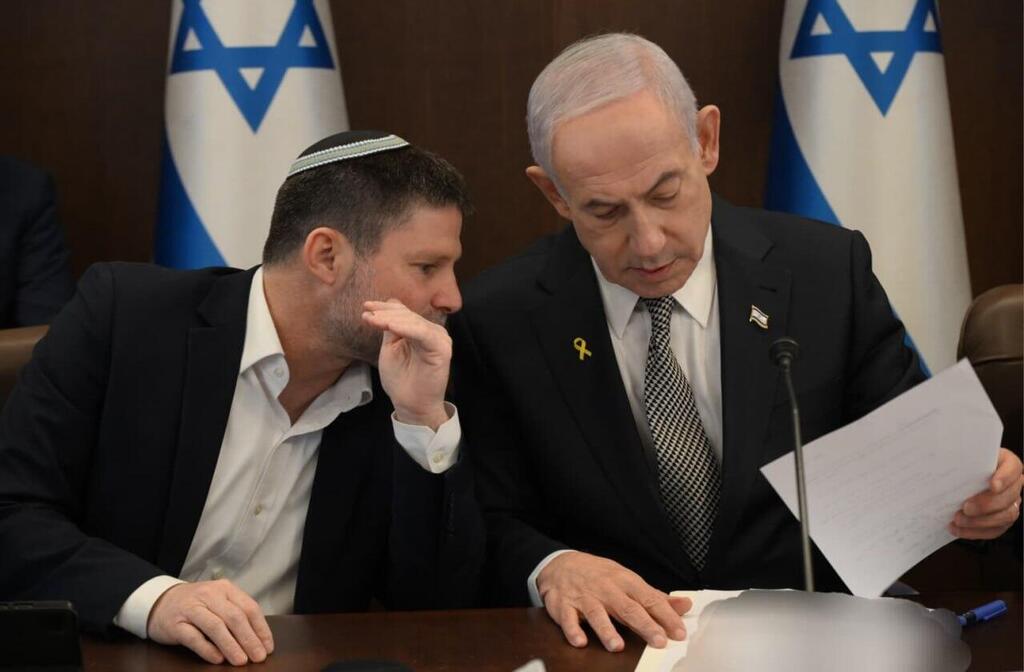
Finance Minister Bezalel Smotrich consults with Prime Minister Benjamin Netanyahu
(Photo: Haim Zach, GPO)
Late Sunday night the Finance Ministry formally submitted all volumes of the state budget for a first reading in their legal form to the Knesset. Under the Budget Law, at least 48 hours must pass before the budget can be debated and approved in a first reading in the Knesset plenum. For this reason, the chances of it being approved in a first reading this week are low.
Already‑accrued damage from a continuing budget
• Government ministries are unable to commit to new projects, cannot hire employees and must reduce services to citizens due to the lack of billions of shekels, especially in health care, welfare and education.
• New funds allocated in the 2026 budget — including for defense and road safety efforts — cannot be released.
• Planned budgets for the rehabilitation of communities along the northern border cannot be transferred.
• The likelihood of raising Israel’s credit rating in 2026 has diminished.
Prime Minister Benjamin Netanyahu’s new proposal to the ultra‑Orthodox parties — which left the government six months ago — to separate the budget’s approval this week from the Arrangements Law is in practice not feasible, because, according to senior Finance Ministry officials, the Arrangements Law contains many chapters that are directly tied to the budget. These include:
• A new 1.5% property tax on land,
• A new tax of over 1 billion shekels on banks,
• Widening tax brackets for earners of 16,000 shekels–25,000 shekels gross at a cost of billions,
• Combatting the black economy,
• Budgets for infrastructure,
• Fighting road accidents,
• New aid for new immigrants, and more.
Therefore, officials from the Prime Minister’s Office and the Finance Ministry will this week try to convince ultra‑Orthodox party leaders to approve the budget in a first Knesset reading in the coming days.
“Otherwise the government is expected to fall and then they won’t have any conscription law that would exempt some ultra‑Orthodox from enlistment,” as one senior Finance Ministry official put it.