



President Donald Trump expressed optimism Sunday about the prospects for his 21-point Middle East initiative and said in an interview with Israel’s Channel 13 that he expects Prime Minister Benjamin Netanyahu to agree to it when they meet tomorrow. Netanyahu, asked about the plan Sunday, did not commit to accepting it, and aides say he is sending signals of pressure ahead of the meeting because the broad proposal contains clauses he is not prepared to accept at this stage.
Gallery
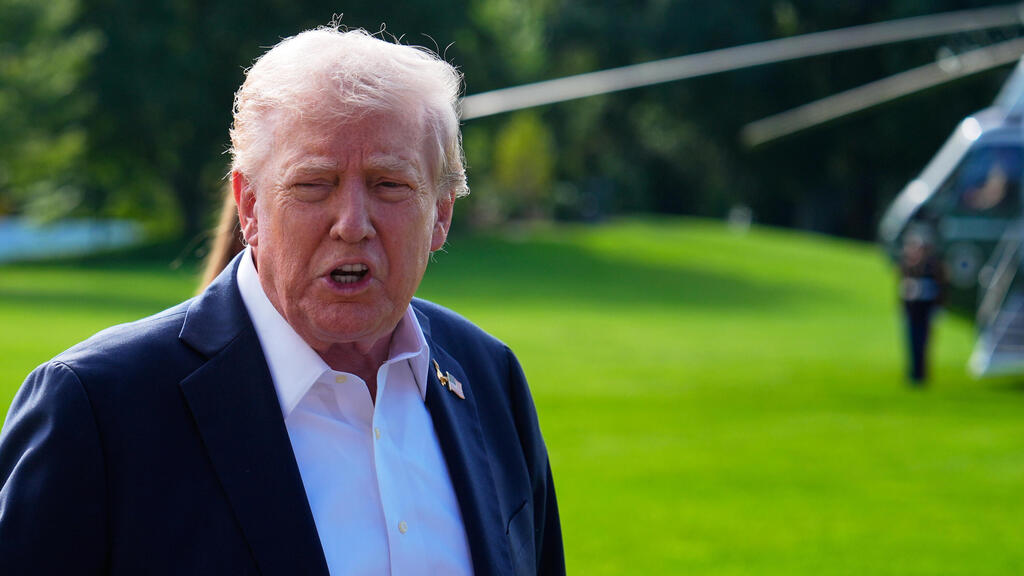
President Donald Trump is optimistic about the new proposal
(Photo:Julia Demaree Nikhinson/AP)
What the initiative includes
The new U.S. plan bundles together elements that were already familiar from previous proposals with new measures aimed not only at ending the war in Gaza but at producing a breakthrough in broader Middle East peacemaking. Trump and his team have presented it as close to implementation and as potentially historic, but recent months suggest such claims should be treated cautiously.
The proposal reportedly calls for the immediate release of all hostages, likely within 48 hours of the start of a ceasefire. It also calls for the removal of Hamas from power and the destruction of all its offensive weapons. Hamas members who commit to “peaceful coexistence” with Israel would be offered amnesty and allowed to leave to destinations of their choice; they would also be given an opening to return to Gaza in the future.
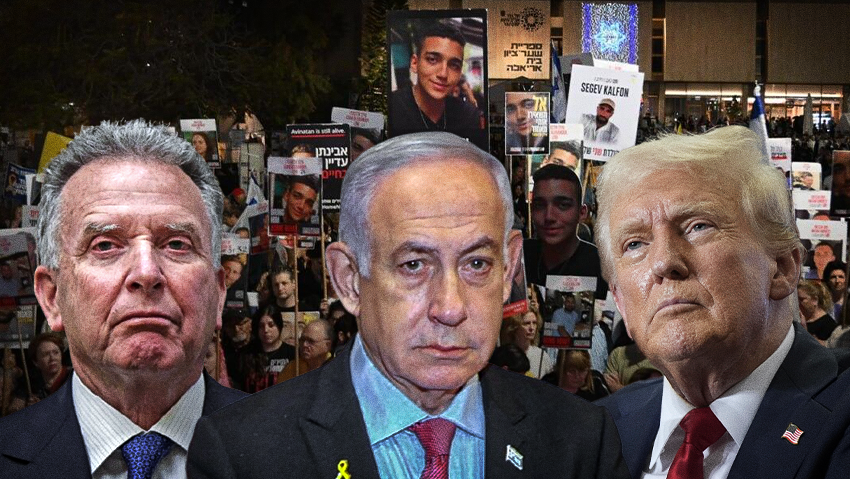
(Photos: Yariv Katz, Evelyn Hockstein/Reuters, Alex Brandon/AP, Paulina Pettimer)
The ceasefire would initially be temporary, likely with explicit guarantees for Hamas, and then transition to a permanent arrangement. An Israeli withdrawal from Gaza would be gradual, and talks would continue to negotiate the stages of implementation.
The plan calls for the establishment of an alternative administration in Gaza that is not affiliated with Hamas and for an international reconstruction framework to rebuild health, education and housing infrastructure. Contrary to some of Trump’s public statements, the plan does not envisage mass displacement; Gazans would be able to remain in the Strip.
Under the proposal, the Palestinian Authority would undertake reforms to strengthen its institutions and ensure governmental transparency. Management authority over Gaza would be transferred to the Palestinian Authority only after it successfully implements reforms, including a de-radicalization program. Until then the plan envisions a “temporary transitional administration” run by international experts led by the United States alongside Palestinian representatives who would handle day-to-day governance.
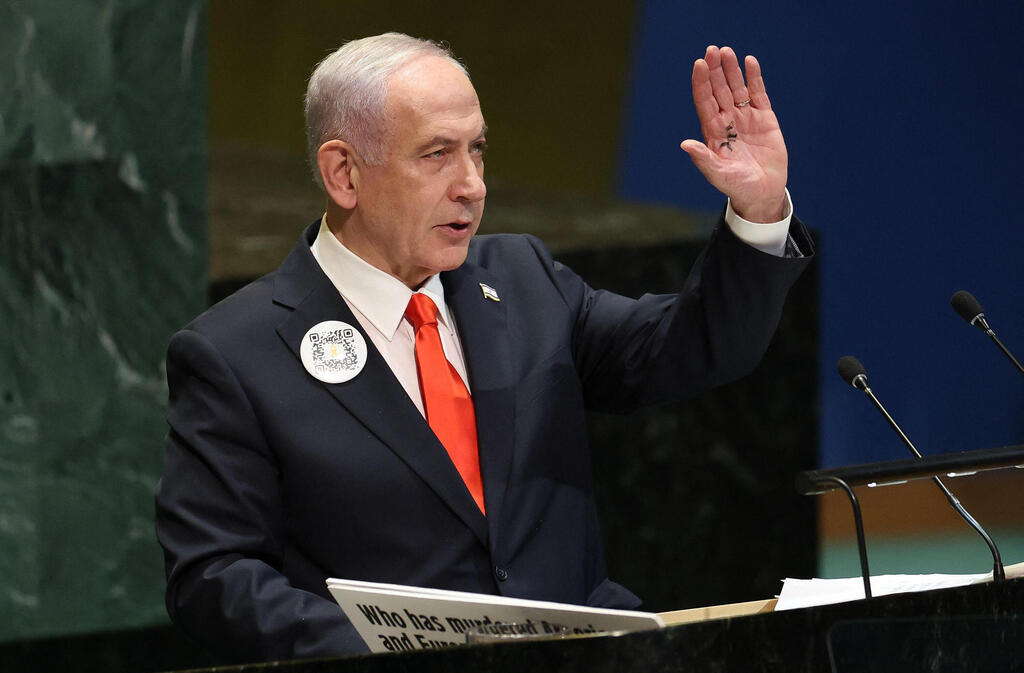
Prime Minister Benjamin Netanyahu speaks, with props, to the United Nations General Assembly
(Photo: Angela Weiss / AFP)
The framework also envisages international security coordination, including a monitoring mechanism made up of moderate Arab and Muslim states. It provides a path to a future Palestinian state that would be conditioned on successful reconstruction and Palestinian reform. The plan also commits Israel to a political horizon and to creating a framework for dialogue with the Palestinians on “peaceful coexistence.”
After the hostages’ release, Israel would free 250 long-term Palestinian prisoners and 1,700 Palestinians arrested after October 7. The United States, as a central mediator, would closely monitor implementation, and humanitarian assistance would be delivered to Gaza fully and without restriction.
These are the parts Netanyahu objects to
Netanyahu, who has been accused by the Hostages and Missing Families Forum of repeatedly sabotaging deals, says he does not believe the Palestinian Authority can make the required reforms to govern Gaza, a point he reiterated in an interview with Fox News in an interview on Sunday. He also contends that the clause calling for Hamas’ disarmament is overly rhetorical and that the definition of “offensive weapons” is too vague.
Netanyahu is also opposed to allowing Hamas members a path to return to Gaza and to a provision that effectively opens a route to a Palestinian state — a clause he views as tantamount to agreeing, in practice, to a two-state solution. He is also reportedly insisting on applying Israeli sovereignty to certain parts of the West Bank, a move Trump has said he will not permit following international pressure.
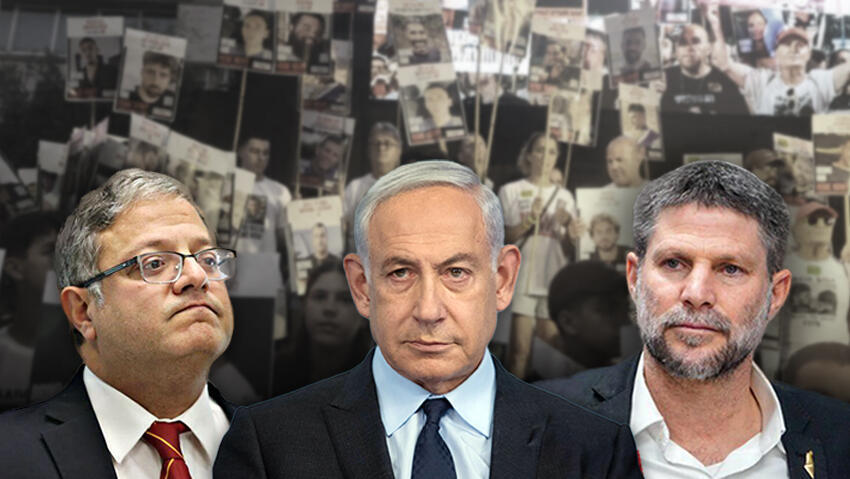
Prime Minister Benjamin Netanyahu is worried that governmetn ministers Itamar Ben-Gvir and Bezalel Smotrich will bolt the government
(Photo: Alex Kolomoisky, Shilo Shalom)
It is not clear whether these issues would scuttle the deal. Since his arrival in the United States, Netanyahu has already held three meetings with U.S. special Mideast envoy Steve Witkoff to try to bridge remaining gaps. “There are disagreements over wording, not every clause is acceptable to us, and we are trying to insert changes," a source familiar with the discussions said.
This is what Hamas objects to
A Hamas source said the organization opposes the disarmament clause as well but, unlike Netanyahu, Hamas views the clause as draconian because it would prevent Palestinians from defending themselves and would allow Israel to continue targeting Hamas leaders. The source said a weapons-surrender clause is likely to face resistance in Gaza and would be a sticking point.
Hamas also says it has no principled objection to participating in a post-war government, provided that the technocrats chosen to run Gaza are acceptable to its leadership. If the interim list is composed solely by the Palestinian Authority and its affiliates, Hamas would not accept it, the source said.
Why a breakthrough might still happen
Trump said he had received “very good responses” to the plan from Israel and Arab states and hopes to finalize details with Netanyahu on Monday at the White House. “Everyone wants to do the deal,” he told Reuters on Sunday. “It’s aimed not only at Gaza, but at the whole Middle East.”
Foreign Minister Gideon Sa’ar has said Israel’s interest is to end the war in Gaza. Members of the ultra-Orthodox parties take a similar line, and Netanyahu likely does as well. But coalition partners Itamar Ben-Gvir and Bezalel Smotrich insist on a different approach: they demand annexation of territory in Gaza if not the whole Strip and full sovereignty in parts of the West Bank. They argue the war must end on terms different from what the international community wants.
Some Israeli officials say Netanyahu is “in a panic” ahead of the Trump meeting, fearing he could be publicly rebuked by the president. They say Trump is highly determined to end the war and will not allow Netanyahu to wreck the plan.
At the same time, Arab states that have accepted Trump’s plan could exert heavy pressure on Hamas to agree, limiting Hamas’ maneuvering room and possibly even pushing it out of Qatar. Given Israel’s operations in Gaza, Hamas leaders may conclude it is time to end the war that began with the deadly October 7 attack.
But this script has played out before: Deals that seemed on the verge of completion have collapsed at the last minute, and that could happen again, particularly while key gaps remain. Contrary to Trump’s public optimism, Israeli officials do not expect a finalized agreement in the coming days, and talks are continuing.