


The enlistment day for ultra-Orthodox tracks in the IDF ended Sunday in disappointment. The IDF had prepared for a significant recruitment cycle for Haredi tracks, but by the end of the day, fewer recruits arrived at enlistment offices than the army had expected.
According to a source familiar with the details, fewer than 100 recruits arrived for the Netzah Yehuda Battalion, despite more than 140 having registered. About 70 arrived for the Hasmonean Brigade, despite expectations of around 100 recruits. There were also enlistments for the Hetz Company, a Haredi paratroopers unit, and other tracks.
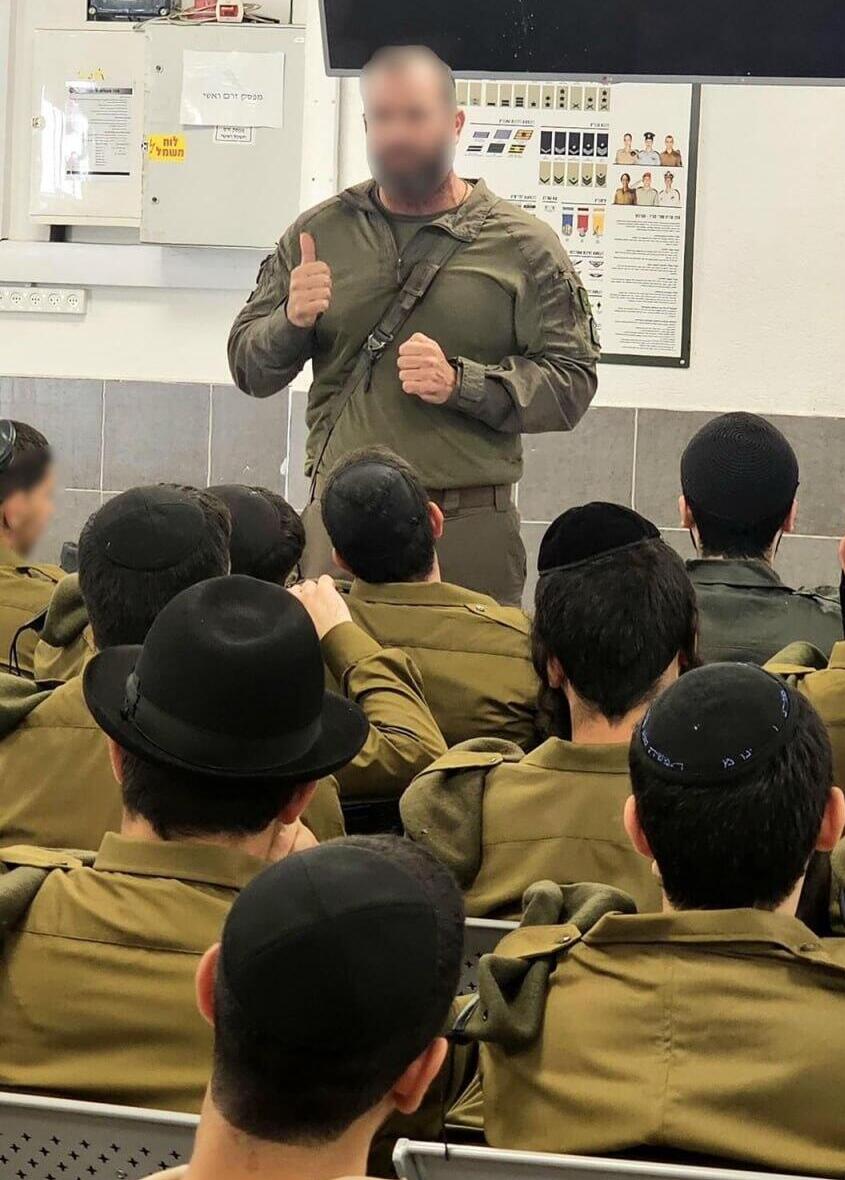
These figures are accurate to 6 p.m. and may rise later because there are supplementary enlistment days. Officials involved in Haredi recruitment said following the release of the figures that “from one enlistment cycle to the next, the army needs to learn how to make it easier for Haredi recruits on their way to the army.”
Maj. Gen. Dado Bar Kalifa, head of the IDF Manpower Directorate, visited the Tel Hashomer enlistment office Sunday, where he met new recruits for the Haredi tracks.
“These are the first steps of pioneers, of trailblazers. This is what people who write history look like,” he told them. “You are coming despite all the challenges before you. You are students of Torah, and soon you will be armed with a sword. I see you in a few months in the various combat arenas, full of purpose and spirit.”
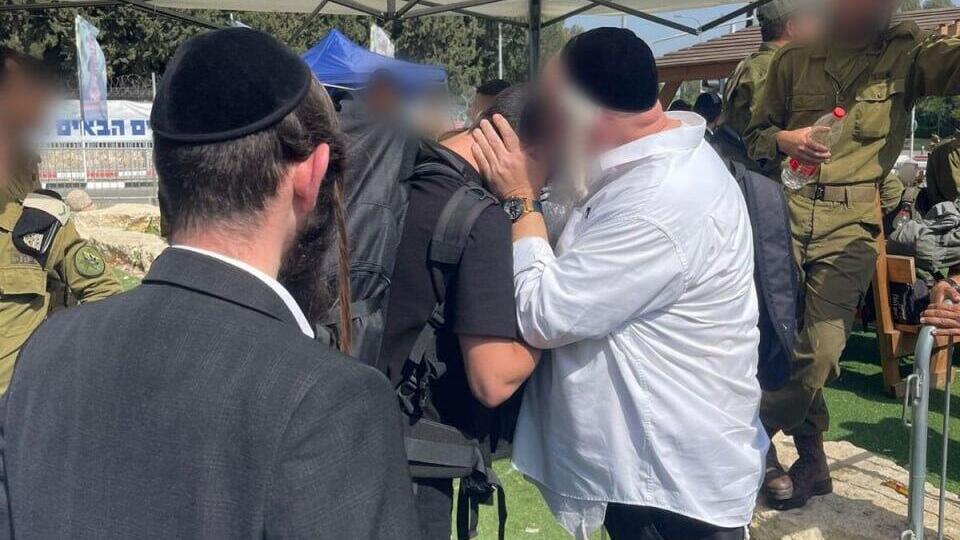
A blessing and a kiss from a father on Haredi draft day
(Photo: IDF Spokesperson's Unit)
Bar Kalifa added: “We, the commanders, will make sure you have all the conditions needed to maintain your way of life while also serving and defending the country. There will be difficulties. At those moments, I want you to remember the depth of the act you are about to do, the meaning of the choice, which is not easy, and to remember the meaning of your actions. You carry an important and great responsibility. I and all the commanders wish you great success during your service. Praiseworthy are you.”
Yossi Levy, CEO of the Shomer Yisrael Association, or Netzah Yehuda, who is currently serving as a reserve battalion commander in the Tulkarm sector, praised the new recruits, “We see here young men who are coming to serve after a significant preparatory process. This is a generation that arrives prepared morally, physically and mentally, and understands the meaning of combat service as part of a personal and national mission," he said. "The revolution we created through the establishment of preparatory academies and hesder yeshivas is already bearing much fruit.”
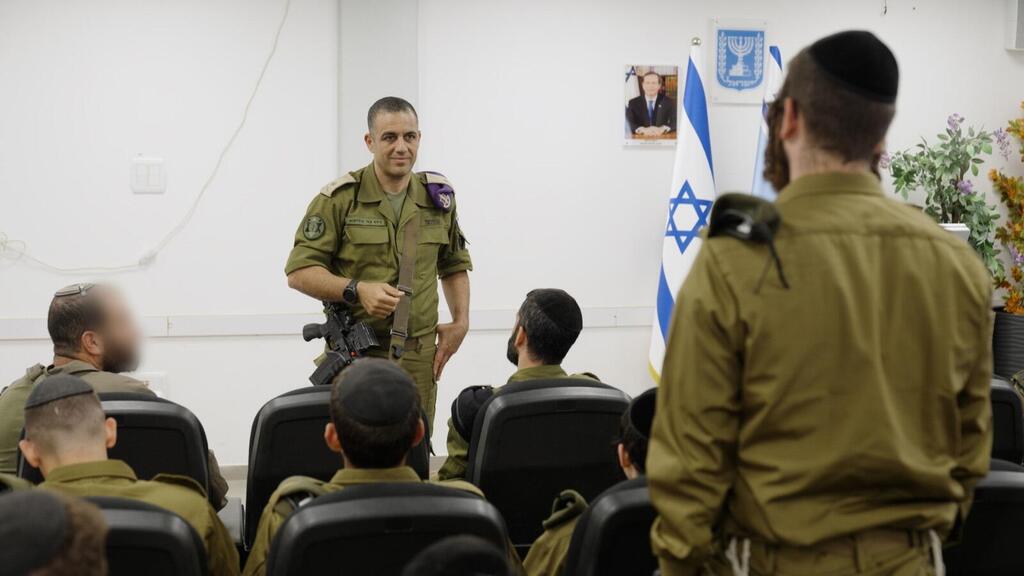
Maj. Gen. Dado Bar Kalifa, head of the IDF Manpower Directorate, meets with some of the new recruits
(Photo: IDF Spokesperson's Unit)
Ahead of the enlistment day, the IDF said the Haredi tracks would allow soldiers to develop within military service into officer and command tracks suited to their way of life. The tracks include the Hasmonean Brigade, the IDF’s first Haredi brigade, which operated during the war in Gaza, Lebanon and Syria; the Netzah Yehuda Battalion, the IDF’s first Haredi battalion, which operated during the war in Gaza and Lebanon; and the Hetz Company, a company of Haredi combat soldiers under the Paratroopers Brigade, which operated during the war in the West Bank, Gaza, Lebanon and Syria.
The enlistment day took place against the backdrop of the acute manpower shortage the IDF has been warning about for some time. There is currently a shortage of about 12,000 soldiers and in January, with the discharge of thousands of regular service soldiers, the shortage is expected to grow to 17,000.

At Haredi draft day
(Photo: IDF Spokesperson's Unit)
The ruling government coalition’s “Bismuth Law,” which would effectively grant mass exemptions to yeshiva students, is awaiting the agreement of the Haredi parties. Lithuanian Haredi leader Rabbi Moshe Hillel Hirsch is inclined to oppose it, after the attorney general’s office ordered the inclusion of tougher sanctions, recruitment targets and oversight mechanisms.
Shas faction chairman and Foreign Affairs and Defense Committee member Knesset lawmaker Yinon Azulai told Natan Meshi on the main news program on the Haredi radio station Kol Barama on Sunday evening: “The current law was brought before the great Torah sages, and they instructed us to continue. Everything, including the delay we are now in, is with the approval of the great Torah sages. In the coming days, we will need to decide whether to move forward with the law or wait.”