

Signs posted in recent days on the doors of Taïm felafel restaurant locations in New York left little room for interpretation: “The property has been seized for nonpayment of taxes and is now in the possession of the State of New York.” On social media, however, some users managed to attach a very different meaning to the official and explicit notice. Under posts reporting the collapse of the veteran Israeli-founded food chain, comments began appearing such as “BDS is working,” alongside accusations of “appropriating Palestinian food” and even “ethnic cleansing.” Another user wrote: “They’re stolen recipes anyway. Karma.”
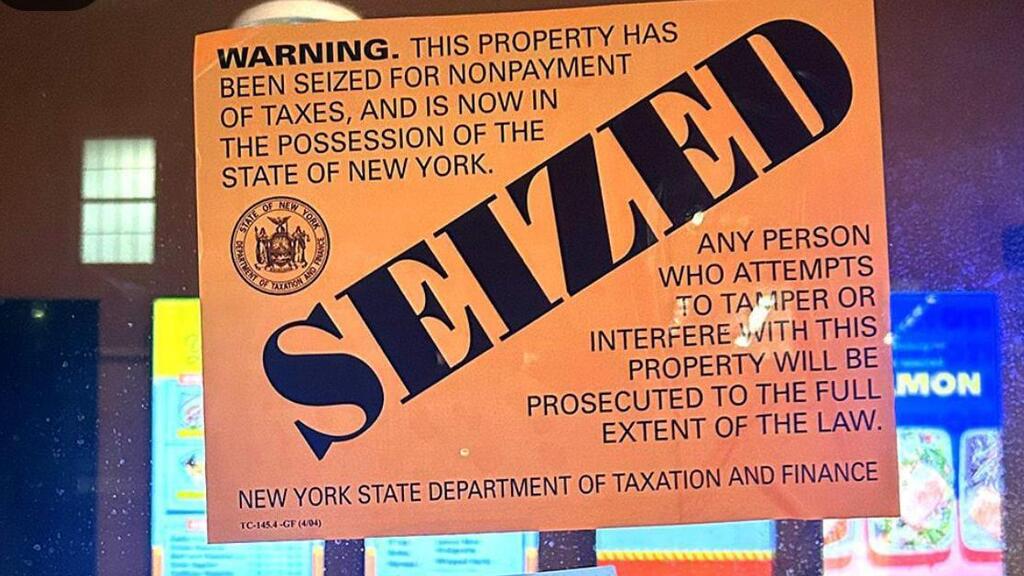
For some supporters of the boycott of Israel, another falafel shop with a lock on the door instantly became a victory image. But the real story is far less ideological: Taïm, one of the pioneers of Israeli food in America, was not shut down by BDS activists but by New York state tax collectors.
Taïm’s locations were closed after tax authorities issued a series of warrants over debts accumulated by companies operating the chain. In New York state’s official records, Gregg Majewski, CEO of Craveworthy Brands, which currently owns Taïm, is listed as the person responsible for 12 tax warrants linked to companies operating the chain’s locations. Their combined value reaches $1.35 million. Other reports cited a figure of $632,000 stemming from a separate lawsuit between the previous owners and the current owners over who is responsible for paying past debts.
The real story is far less ideological: Taïm, one of the pioneers of Israeli food in America, was not shut down by BDS activists but by New York state tax collectors
Either way, the result on the ground is the same. The New York locations have been locked, phone calls are going unanswered and online ordering has stopped. All four city locations are marked temporarily closed on Google, the chain’s Goldbelly store has disappeared and its Instagram account has not been updated since July 22. Its last Washington, D.C., location also closed in July. Another sign came from Craveworthy’s own website: Taïm no longer appears on the group’s list of brands.
Rapid downfall
The fall has been especially swift. Just four months ago, Craveworthy issued a celebratory announcement about Taïm’s first franchise deal in New York, for a Park Slope location, calling it a “pivotal moment in the brand’s growth trajectory.” The company also said it was seeking new franchisees in New York, New Jersey, Pennsylvania, Illinois, Maryland, Washington and additional states along the East Coast and in the Midwest. As recently as July, the chain was giving away free falafel as part of a promotion. By August, the state had replaced the cash register with a padlock.
For longtime New Yorkers, and especially for the city’s Jewish community, this may mark the end of a small institution that long predated the wave of Israeli restaurants that later swept across America. Israeli chef Einat Admony opened the first location in the West Village in 2005, in a tiny space that became a hit almost immediately. Taïm served green falafel, spicy harissa falafel, sabich, hummus, salads and smoothies long before Mediterranean bowls became an entire category in the American fast-casual market. Zagat and New York Magazine lavished praise on the restaurant, and lines stretched out the door.

(Photo: Screenshot from Instagram)
In 2018, investors led by Phil Petrilli, a former senior executive at fast-food giant Chipotle, entered the picture, and the neighborhood falafel shop began operating like a chain. In the years that followed, it expanded beyond New York and at its peak had 14 locations, with operations in Washington, D.C., Austin, Seattle, San Francisco, Miami, Orlando and other cities. The chain’s sales reached $18.7 million in 2025. In 2024, Craveworthy acquired the company as part of a broader deal to purchase restaurant platform Untamed Brands. Admony herself had not been involved in managing Taïm since 2022, and a representative for her said this week that she could not comment on the chain’s current situation.
Along with Taïm, Craveworthy also acquired Hot Chicken Takeover, another chain that later reached the end of the road and closed its locations. Longtime Taïm customers had argued even before the shutdown that the brand had lost something on the way from its tiny West Village beginnings to a national model. “They killed the soul of the place when they changed the menu and turned it into just another big fast-casual chain,” one user wrote. Another summed it up: “The place had been going downhill for years. I’m not surprised.”
It had been targeted by pro-Palestinian groups
Taïm was born as an unmistakably Israeli restaurant and never hid that identity, but today it is owned by a Chicago-based restaurant corporation and brands itself as “Mediterranean cuisine.” After October 7, however, it still appeared on boycott lists and was repeatedly described online as an “Israeli” business, even though its current owner is not Israeli.

Israeli chef Einat Admony opened the first location in the West Village in 2005
(Photo: Avigail Uzi)
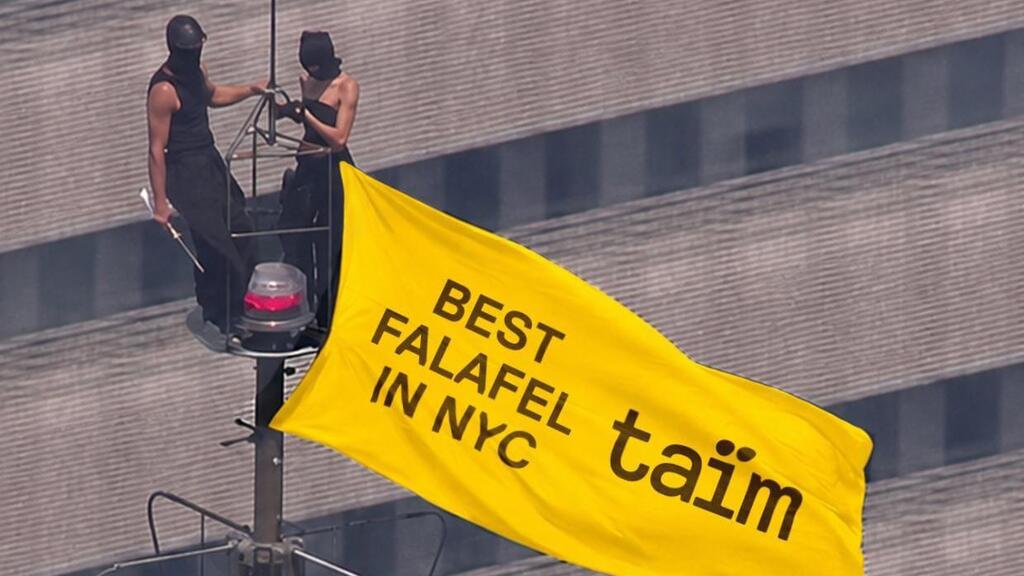
One pro-Palestinian post described it as “an Israeli chain disguising itself as Mediterranean food with stolen recipes,” alongside an accusation of “ethnocultural theft of indigenous Palestinian cuisine.”
After the last Washington location closed in July, boycott activists published a post under the headline “BOYCOTTS WORK” and counted Taïm among their latest “successes.” At the time, they still had to add in parentheses: “still in New York.” Now even that qualification is no longer necessary. Another post carried the slogan, “The BDS diet will help your diet this summer,” alongside a list of brands and restaurants targeted for boycott.
But there is no evidence that the boycott campaign caused the locations to close. The available documents point to a far more mundane explanation: unpaid taxes, business problems and a legal dispute over who is responsible for paying the bill.
(Photo: Screenshot from Instagram)
Petrilli, who ran the company before its sale to Craveworthy, is now suing Majewski and argues that under the acquisition agreement, responsibility for debts accumulated by Taïm was transferred to the new owners. Majewski, who ranks 79th on New York state’s list of the 100 individual taxpayers with the largest outstanding debts, has not commented on the reports.
It is still too early to know whether Taïm itself has reached the end of the road or whether this is a temporary collapse that will end in a settlement with the state. But in the online war surrounding Israel, the verdict has already been delivered: A chain that began 21 years ago in a small West Village shop and helped make falafel and hummus part of New York’s everyday food landscape ran into trouble with U.S. tax authorities. Within hours, that bill too was charged to Israel.