

A first-of-its-kind conference was held Wednesday at the ynet offices in Rishon Lezion titled, “From Israel to the World – How to Communicate the Israeli Story on the International Stage.” The event, organized in collaboration with Taboola, monday.com and Ifat Media, brought together media executives, tech leaders, public relations professionals and content creators to examine the challenges of communicating Israel’s story globally.
ynet Global Meet Up
(Video: Yael Feldman Shavit)


Hosted by ynet studio anchors Sharon Kidon and Alexandra Lukash, the conference featured keynote addresses from Sharon Shalmon Esman, CEO of ynet Global, and editor-in-chief Karen Shemesh, who offered a behind-the-scenes look at operating in the international media arena. Panels addressed public diplomacy, foreign media relations, message management, artificial intelligence tools and the broader challenge of telling an authentic Israeli story in a digital world.
Gallery
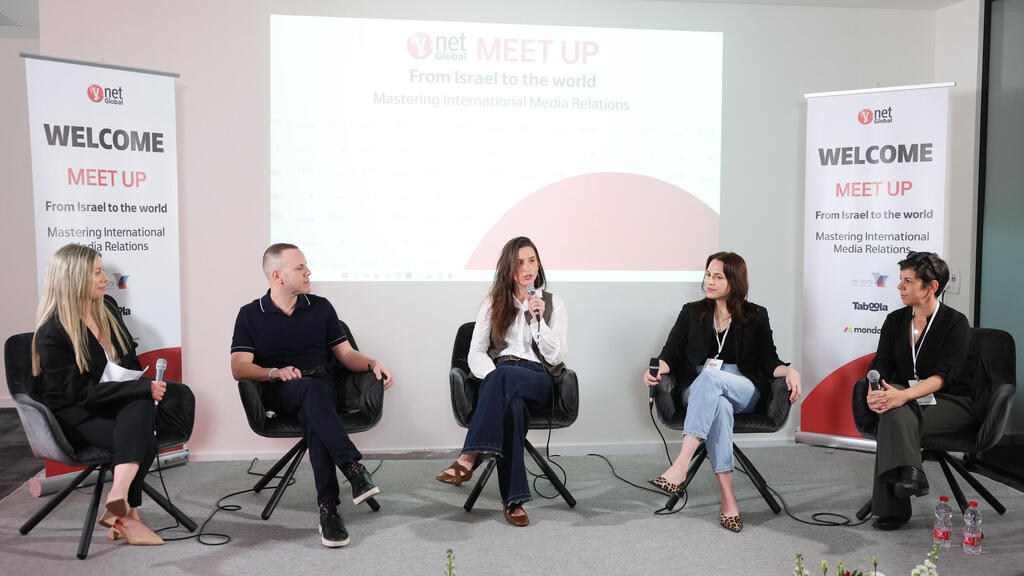
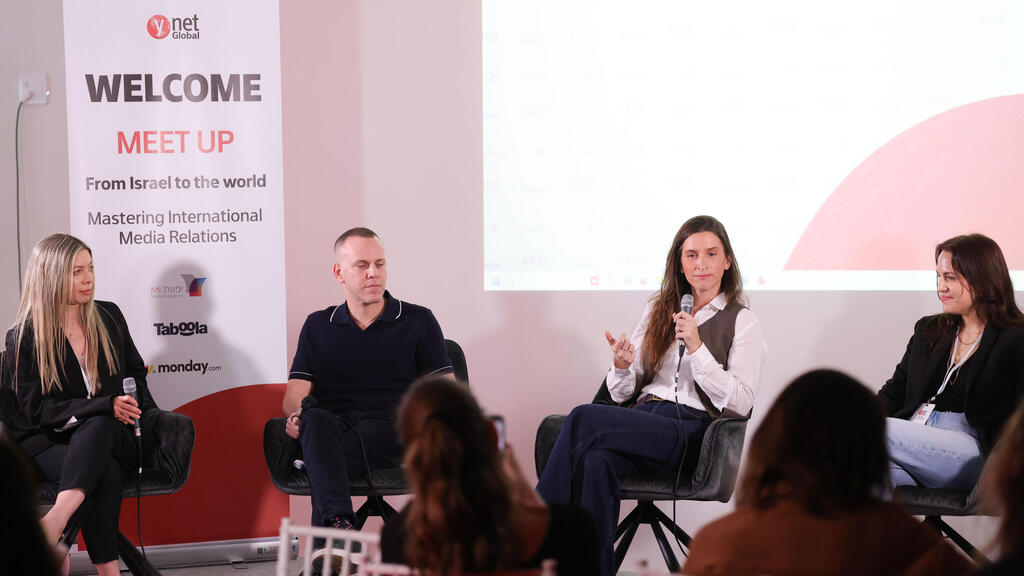
A panel focused on the tech and marketing perspective, moderated by Alexandra Lukash
(Photo: Oz Moalem)
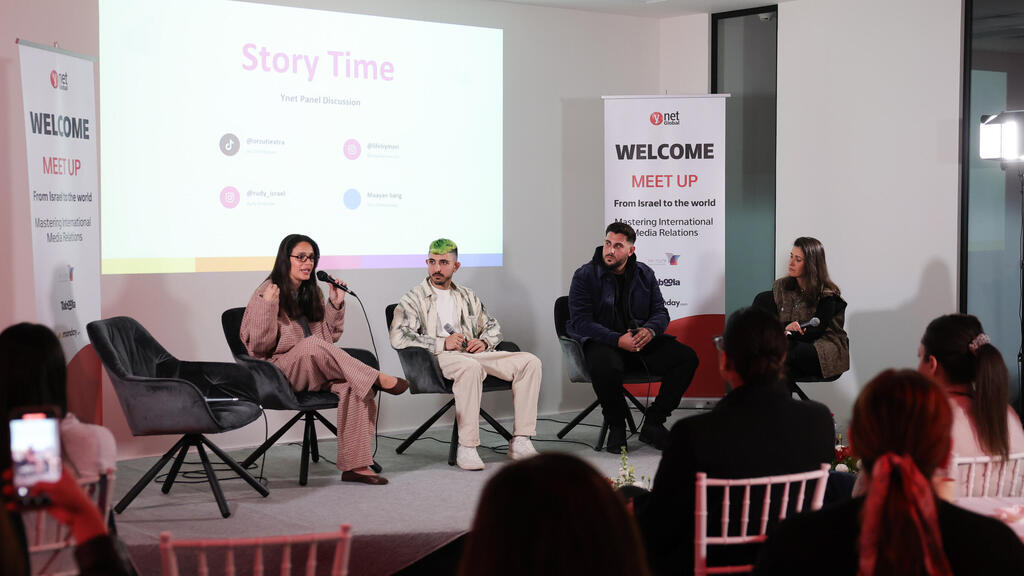
A panel on influencers and young audiences, moderated by Maayan Sarig
(Photo: Oz Moalem)
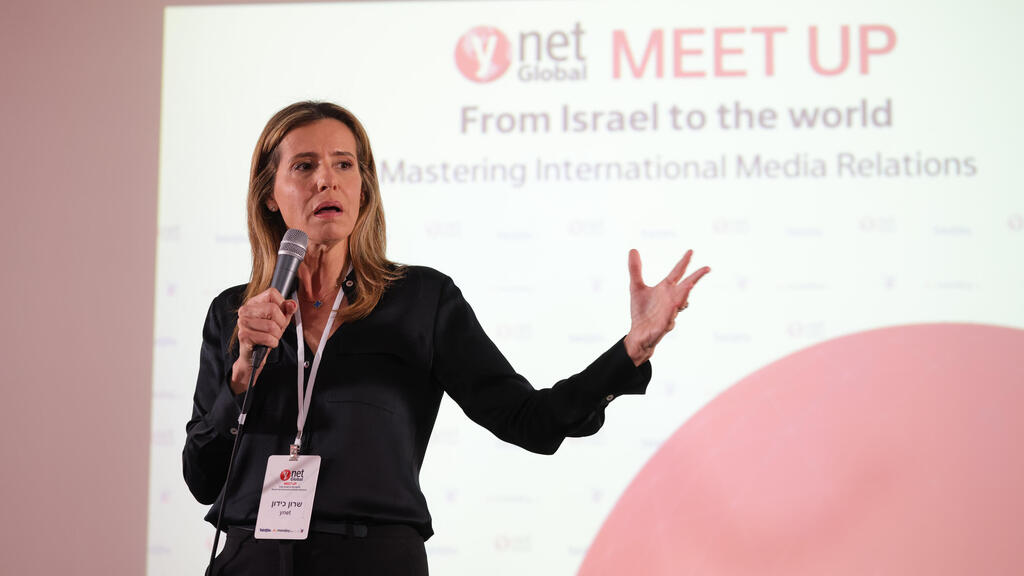
ynet studio anchor Sharon Kidon
(Photo: Oz Moalem)
From innovation to narrative
The panel moderated by Lukash examined the issue from a technological and marketing perspective. Participants included Asaf Azulay, partner and chief marketing officer at Team8; Hilla Bakshi, founder of the HaMeetupistiot community for women in high tech; Dana Raz, acquisition and venture capital lead at TikTok Israel; and Dana Zax, a marketing consultant for international brands.
“Israel and innovation are almost synonymous,” Lukash said. “But how do you translate that innovation — that Startup Nation mentality — from ‘Israeli,’ which isn’t even Hebrew but a language of its own, to a global audience?”
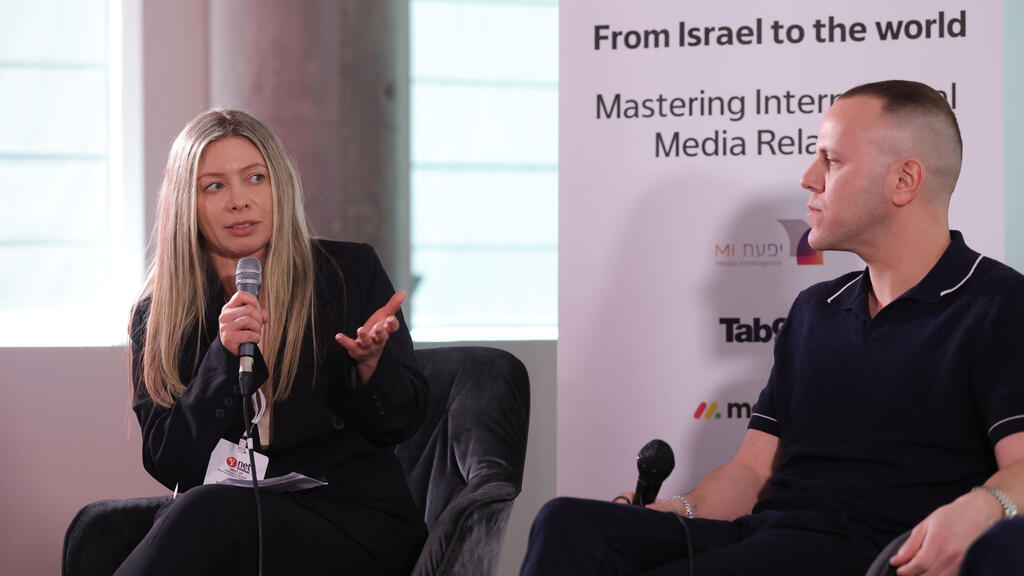
ynet studio anchor Alexandra Lukash
(Photo: Oz Moalem)
Azulay described a moment of upheaval in venture capital and marketing.
“We’re in a period of almost perfect chaos,” he said. “We talk about AI constantly, but we don’t fully grasp how dramatically it’s transforming marketing and investment.”
He noted that capital is increasingly concentrated in a smaller number of companies. “Investors are looking for the very best founders and the strongest funds. It’s harder to raise money today if you’re not truly innovative.”
At Team8, artificial intelligence is integrated into the company-building process from the outset. “We’re using AI to predict how future customers — chief security officers, enterprise decision-makers — will think. It’s part of how we build companies from day one,” he said.
But technology alone is not enough. “At the end of the day, you’re building a story, not just a company.”
Marketing in the age of authenticity
Raz pointed to a fundamental shift in consumer behavior, accelerated by platforms such as TikTok.
“Before, companies started with the product and only then thought about the audience,” she said. “Today, you have to understand your audience first.”
She encouraged founders to view social platforms as real-time focus groups. “There’s authentic conversation happening from the bottom up. Companies once paid huge sums for research to understand what people were thinking. Now that dialogue is right in front of you.”
Differentiation, however, has become more challenging. “Users immediately recognize inauthenticity,” she said. “They don’t want you to interrupt them. They want you to integrate into their experience — to offer real value before asking for anything in return.”
In this environment, she added, attention has become more valuable than clicks — a reflection of what she described as a broader revolution in consumer behavior.
Speaking global, thinking local
Zax emphasized that Israeli brands now operate in a flattened, borderless media environment.
“The world is flat,” she said. “Brands aren’t competing only with other brands anymore. They’re competing with every content creator.”
Understanding platform language and cultural nuance is critical, she said. “You can’t just hire a native English speaker and assume it will work. You need someone who understands the cultural language of the platform.”
She recounted working with the Jerusalem-based company Lightricks on a collaboration with influencer Charli D’Amelio. While the concept was strong, a small detail undermined its credibility. “The dollar sign was placed on the wrong side of the number,” she said. “For an American audience, that immediately signals that you don’t understand them.”
The lesson: global storytelling must account for local detail.
(Photo: Oz Moalem)
Community, emotion and credibility
Bakshi framed marketing as fundamentally human.
“We’re not products. We’re people,” she said.
She cited the recent $32 billion sale of Israeli cybersecurity company Wiz as an example of a story that resonated internationally not only because of its scale but because of the emotion it generated.
“We’re still human. We’re not robots — at least not yet. You have to connect to emotion.”
Trust, she said, is the foundation of any community. “I won’t promote anything in my community that I haven’t tried myself. If I push something I don’t fully stand behind, it simply won’t sell.”
Communities provide a direct channel to consumers, she added — but only if credibility is preserved.
The panel returned repeatedly to artificial intelligence. While Zax argued that “anyone who doesn’t know how to use AI properly in their work is falling behind,” she cautioned against overreliance and what she called “AI slop” — generic, personality-free content that erodes trust.
“If your content, without a logo, doesn’t clearly reflect who you are, you don’t have a brand,” she said.
Youth, influencers and responsibility
Another central panel, moderated by Maayan Sarig, head of communications at Meta Israel, focused on influencers and young audiences. Participants included content creators Rudy Rochman, Or Elkayam and Moriya Ben Harush.
The discussion examined how young people and teenagers consume news and the challenge of building trust with a generation that questions nearly every source of information. According to data presented during the conference, 94% of young people consume digital content daily, with visual platforms and short-form video dominating.
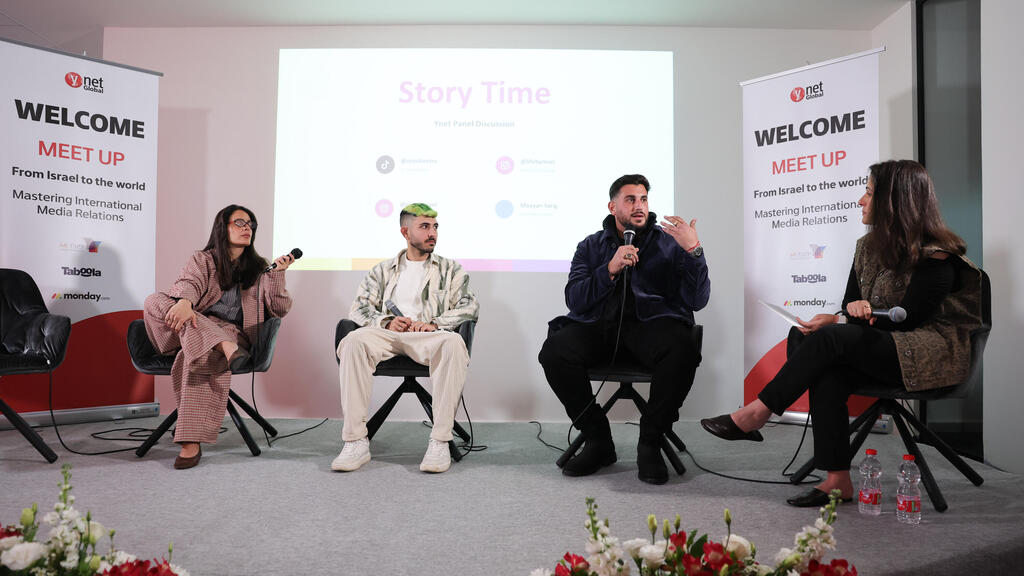
A panel on influencers, moderated by Maayan Sarig
(Photo: Oz Moalem)
Elkayam, who began creating content during the COVID-19 lockdowns, described how his audience has grown alongside him. “I was stuck at home with my mom, making videos for fun,” he said. “Suddenly people started recognizing me.”
Over time, he said, followers have connected with milestones in his personal life. “They’ve grown with me — through my marriage, my life changes. Now some of them tell me, ‘We grew up on you.’”
Ben Harush emphasized that younger audiences are highly attuned to authenticity. “Young audiences today are sharp. You can’t fool them. If you don’t activate emotion, they’ll scroll,” she said, adding that creators must provide meaning, not just marketing.
Rochman, whose activism is rooted in childhood experiences of antisemitism in London, argued that younger generations respond to a different narrative framework.
“Older generations focus on facts and achievements,” he said. “Younger generations care about human stories that make the world better.”
He suggested that Israel advocacy must move beyond highlighting technological success and articulate a deeper historical and moral narrative.
The panel also addressed the tension between virality and responsibility. Elkayam recalled intervening in a case of online bullying, saying he came to understand the weight of his influence. “I didn’t realize at first that I had that kind of responsibility,” he said. “But when I showed up for one girl facing harassment, it changed everything.”
A shared challenge
Across panels — from public diplomacy and media strategy to venture capital and influencer culture — a consistent message emerged: Israel’s global story cannot rely solely on translation or technological achievement.
Whether communicating national narratives, promoting international technology brands or building online communities, speakers stressed the need for cultural fluency, emotional resonance and credibility.
Innovation may be one of Israel’s defining strengths. But at a time when the country’s narrative is examined under a global magnifying glass, how that innovation — and the broader Israeli story — is told may matter just as much.
First published: 19:46, 02.12.26