

Eighty of Israel’s most senior economists warned Monday that a full-scale invasion and military occupation of Gaza would cause unprecedented economic harm to the country, deepening an already severe crisis caused by the ongoing war.
In a letter obtained by Ynet, the economists said the government’s plan to capture Gaza City and displace about one million people in a months-long military operation would lead to an exodus of young professionals, long-term damage to Israel’s international standing, and devastating effects on its economy and society.
Gallery

Omer Moav, Manuel Trajtenberg, Yoel Naveh, Avi Ben-Bassat, Avia Spivak
(Photo: Guy Assayag, Abigail Uzi, Dar Bon/Finance Ministry Spokesperson’s Office, Courtesy)
“This is a severe warning of a potential economic catastrophe unlike anything Israel has ever experienced, if there is no drastic change to the country’s worsening political and security situation,” the letter said.
The signatories include former senior officials from the Bank of Israel, the Finance Ministry and major universities. Among them are Omer Moav, Manuel Trajtenberg, Yoel Naveh, Avi Ben-Bassat, Avia Spivak, Zvi Eckstein and David Boaz. Former university presidents Avishay Braverman of Ben-Gurion University, Haim Ben-Shahar of Tel Aviv University, Rafi Melnick of Reichman University and Kobi Metzer of the Open University also signed.
The letter’s initiators — professors Eran Yashiv, Itay Ater and Benny Bental — said an occupation would saddle Israel with massive direct costs for reserve duty, ammunition and equipment, adding tens of billions of shekels to the defense budget.
They noted that under international law, Israel would become the governing authority in Gaza, responsible for food and water supplies, health care, education and infrastructure such as electricity, sewage and transportation. The economists estimated those costs at around 60 billion shekels ($16 billion), roughly equivalent to the annual budget of Israel’s Health Ministry.
The letter also warned of potential sanctions from European nations and other Western partners, jeopardizing trade with Israel’s main economic allies. They said such a development would accelerate the departure of skilled workers, reduce productivity and lower the standard of living.
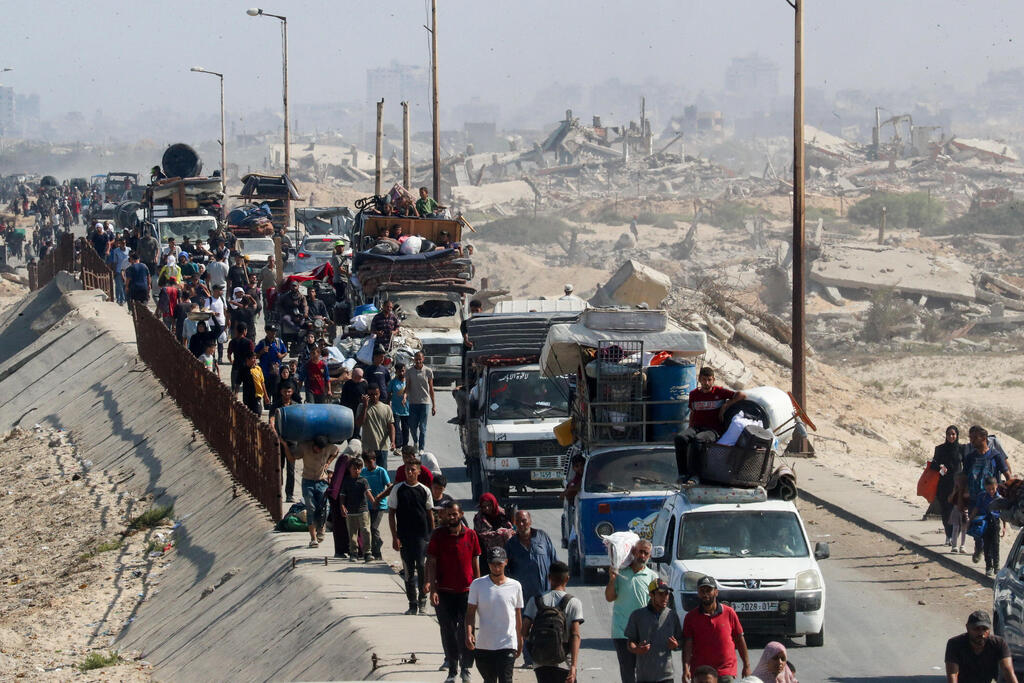
Gaza City residents fleeing south
(Photo: REUTERS/Mahmoud Issa)
Falling output and the erosion of strong economic sectors would likely force the government to raise taxes and cut services in education, health and welfare, they said. Combined with soaring costs and slower growth, that would drive up Israel’s debt, risk further credit downgrades and raise borrowing costs.
“The deterioration would further harm investment, growth and output,” the economists wrote.
They added that the long-term costs would include treatment for wounded soldiers and civilians, support for those suffering psychological trauma, and lost career and education opportunities for reservists and their families.
The group concluded that conquering Gaza would “threaten the security and economic resilience of the State of Israel and risk distancing it from the group of developed nations.”
Prime Minister Benjamin Netanyahu and Finance Minister Bezalel Smotrich, who have overseen Israel’s war policy and economic response, did not immediately respond to the economists’ warning.