

Israel's defense budget is breaking historic records, confronting the country's economy with one of the most complex challenges in its history. Before the war, annual defense spending stood at approximately 70-80 billion shekels ($22.4–25.6 billion). Today, the 2026 budget has already reached 158 billion ($50.56 billion), following two increases since March 2026, a dramatic jump from the original target of just 111 billion shekels ($35.5 billion).
Yet there is now little doubt, even among Finance Ministry professionals who initially opposed further increases, that the spending surge is far from over. Just one week before the elections, Prime Minister Benjamin Netanyahu met with Defense Minister Israel Katz and Finance Minister Bezalel Smotrich to discuss an urgent additional allocation of 25 billion shekels (about $8 billion) for the defense establishment immediately after the vote.
The immediate challenge is securing the parliamentary approval urgently requested by the defense establishment. Given the political timetable, passing the measure before the new Knesset convenes in approximately two weeks could prove difficult. Coalition negotiations are expected to be prolonged following the inconclusive election results.
In the anticipated dispute between Katz and Smotrich, Netanyahu will once again have to make the final decision, probably before a new government is formed. Israel could also find itself governed by a caretaker administration for as long as six months.
Three fronts, an Iran threat and a growing manpower crisis
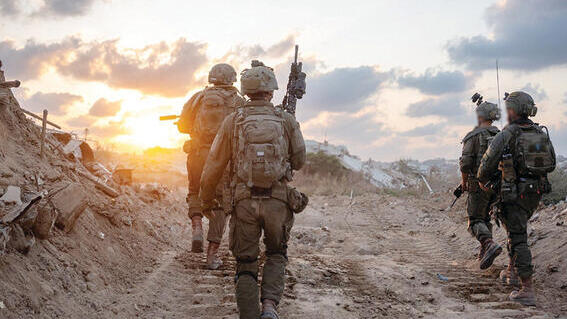
The extraordinary increase in defense spending stems directly from Israel's complex operational reality. The IDF is currently deployed on three fronts simultaneously, maintaining security zones in Lebanon, Syria and the Gaza Strip at an enormous cost of more than 2 billion shekels per week.
Beyond its ongoing operations in those areas, the defense establishment is maintaining a high level of readiness for another military confrontation with Iran. The situation requires urgent weapons procurement and increased operational preparedness beyond Israel's borders over the coming months, alongside adjustments to military planning for a scenario in which direct fighting resumes with Iran and Hezbollah, which could also renew its missile attacks on the Israeli home front.
All of this is unfolding against the backdrop of a severe manpower crisis. The military faces a shortage of approximately 15,000 to 20,000 soldiers, while groups of ultra-Orthodox protesters continue to demonstrate in large numbers under the slogan "We will die rather than enlist." As a result, the defense establishment remains heavily dependent on mobilizing tens of thousands of reservists.
Beyond the social burden, maintaining reserve forces on such a scale over an extended period imposes an astronomical economic cost, both through direct payments and lost working days that reduce national output. Bank of Israel Governor Professor Amir Yaron has repeatedly warned about these consequences.

Will there be a budget showdown? Defense Minister Israel Katz, Finance Minister Bezalel Smotrich
(Photos: Noam Moshkowitz, Avihu Shapira)
Estimates in financial markets and government ministries suggest that next year's defense budget could soar to 200 billion shekels, a record that few could have imagined even a year or two ago. Spending is expected to remain at similarly elevated levels through at least 2027 and 2028.
For comparison, the expanded defense budget in 2025 reached NIS 166 billion. Current spending levels amount to approximately 7.8% of gross domestic product, while the proposed additional allocation could push the figure to around 8.3% of GDP, an extraordinary level by international standards, significantly higher than those typically seen in Western democracies and nondemocratic countries alike.
VAT at 19%? The taxes Israelis could face in 2027
The economic implications of these figures are clear: Increasing the defense budget will require particularly painful cuts to other government spending, while new taxes may be necessary at the beginning of 2027 to close the widening fiscal gap.
Among the measures under consideration at the Finance Ministry are:
- Raising VAT from 18% to 19%: A one-percentage-point increase would generate approximately 8.5 billion shekels in revenue. It is a relatively straightforward measure and could ultimately be implemented.
- Introducing a tax on vacant land: Ultra-Orthodox parties have opposed the measure, but their political influence has weakened significantly following the elections, making approval appear more feasible.
- Eliminating existing tax exemptions: Proposals include removing the VAT exemption on tourism services, ending Eilat's VAT exemption and imposing VAT on fruits and vegetables. Under the current political circumstances, however, the likelihood of these exemptions being abolished remains relatively low.
Meanwhile, recommendations made by the Nagel Committee, the public committee established to examine Israel's defense budget, have effectively become obsolete.
The committee had attempted to establish a balanced, long-term framework for military spending, recommending an annual increase of 9 billion shekels. The scale of current defense requirements has rendered those recommendations almost entirely irrelevant.
Bank of Israel governor warns of the economic consequences
At the same time, Bank of Israel Governor Amir Yaron, increasingly regarded as a voice of fiscal responsibility amid the current uncertainty, continues to issue clear warnings.
Yaron has repeatedly cautioned against uncontrolled increases in the defense budget, emphasizing that additional military spending will inevitably come at the expense of civilian services provided by government ministries, many of which have already suffered significant damage from previous cuts.
Further reductions would directly affect essential public services, including education, health care and social welfare. Diverting additional resources to defense would also delay critical national infrastructure and transportation projects, potentially undermining the Israeli economy's growth prospects for years to come.
Israel now faces a historic choice between its immediate security requirements and the economic and social resilience of its citizens. That decision must be made amid political uncertainty, with the possibility that the instability will intensify in the coming months.