

Two years after October 7, Israel faces a tipping point. Will we allow the collective trauma to become a multi-billion-dollar drain on our economy, or will we make a strategic investment in our people to turn this crisis into an engine for growth?
Last week, Israel’s Ministry of Defense released staggering new data: Since the war began, some 20,000 soldiers have been recognized as wounded, the majority suffering from psychological injuries. A full 56% of patients in the ministry's rehabilitation department are dealing with acute mental health conditions, with forecasts predicting tens of thousands of new cases by 2028. This isn't a one-time shock; it's a rolling crisis poised to overwhelm our society and our economy.
The actual cost is becoming clear. The trauma is seeping into every home. Families are fracturing, couples are separating, and children are battling anxiety. Veterans are struggling to reintegrate into the workforce. A study in The Lancet revealed that rates of PTSD, depression, and anxiety have nearly doubled across the Israeli population. Current models estimate that 5.3% of all citizens will develop PTSD, a figure that includes thousands of combat soldiers.
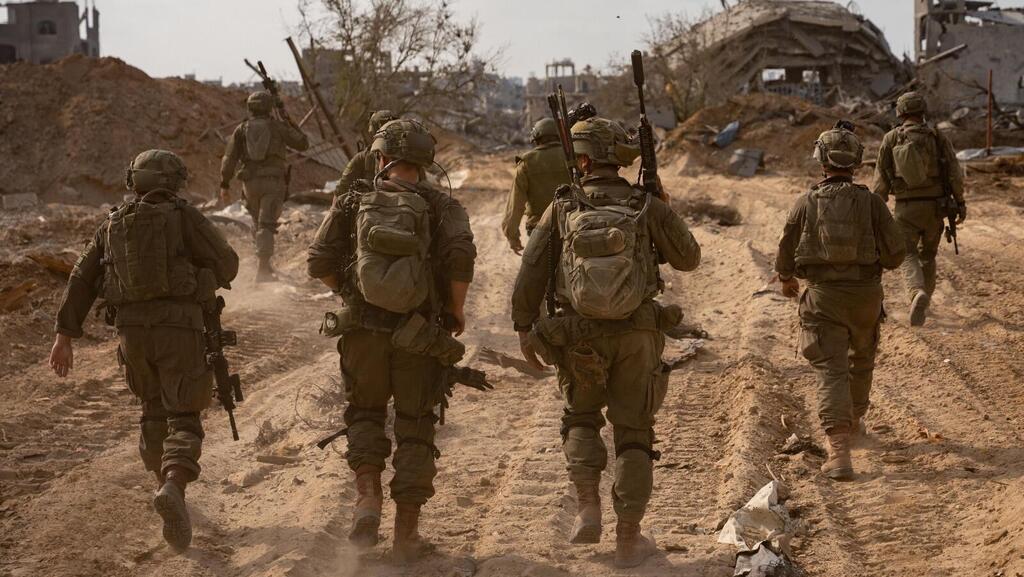
IDF soldiers operate in Gaza
(Photo: IDF Spokesperson's Unit)
This crisis carries a severe, multi-layered price. Veterans struggling with mental distress face outbursts of anger, emotional detachment and sleep disorders, which lead to broken relationships and family instability. In the workplace, they experience higher absenteeism and struggle with concentration and maintaining long-term employment. The result is a massive, economy-wide loss in productivity. At the same time, our health care system is buckling. Untreated trauma manifests physically as hypertension, heart disease, diabetes and autoimmune disorders. Tragically, it also leads to suicide. Over 40 soldiers have taken their own lives since the war began—16 in the last year alone. This is just the tip of the iceberg. Thousands more are deteriorating in silence, holding down jobs but slowly disconnecting from their families and living dysfunctional lives.
This is no longer just a social crisis; it is an economic one. A study by Social Finance Israel projected that the national burden of PTSD from the war could cost the Israeli economy $50 billion over the next five years. The breakdown is telling. Each case of PTSD costs the economy an estimated NIS 1.8–2.2 million (approx. $500,000–$600,000) over a lifetime. Crucially, 74% of that cost is not due to treatment but to lost productivity and employment. People are unable to function and contribute. The remainder is split between direct healthcare costs (18%) and secondary issues, such as addiction (8%).
But there is another path. The well-documented phenomenon of Post-Traumatic Growth (PTG) demonstrates that immense adversity can also catalyze profound positive change. Research dating back to the 1990s by psychologists Richard Tedeschi and Lawrence Calhoun found that trauma survivors often report a renewed appreciation for life, deeper relationships, greater personal resilience, and a new sense of purpose. We are already seeing the green shoots of this in Israel. Veterans are launching social initiatives, communities are rebuilding with a powerful sense of solidarity, and families are forging stronger bonds. In economic terms, this represents a vast, untapped resource. Employees who return to work with newfound resilience, a sense of mission, and proven leadership skills are a powerful engine for innovation and growth.
 Shauli Hertzik PazPhoto: Courtesy
To harness this potential, Israel must launch a National Resilience Project. This shouldn't be a patchwork of solutions but a coordinated strategy with key pillars: structured support for every veteran; targeted occupational rehabilitation; nationwide resilience education in schools and workplaces; integrated mind-body healthcare; and a central, data-driven coordinating body to oversee the national effort. Every shekel spent on this initiative is not an expense; it is a high-return investment in Israel's human capital. It is the difference between writing off a generation to trauma and empowering them to lead.
Two years on, Israel is at a crossroads. We can passively accept a future of spiraling health care costs, broken families, and lost productivity. Or, we can choose to build a national framework that transforms our veterans and victims from a source of pain into an engine of resilience, leadership, and innovation. If we make the right choice, the "October 7th Generation" will be remembered not for their trauma, but for their growth.
The author is the CEO of the IMPA Association, which utilizes the InHeal method to treat post-trauma.