

The war with Iran is having ripple effects beyond rising oil and fuel prices, hitting the agricultural sector as well, with a significant wave of price increases expected for fresh produce and food. The main drivers are a combination of higher shipping costs and a global fertilizer shortage, partly due to damage to production facilities and infrastructure in the United Arab Emirates, responsible for about 30% of global consumption of potassium nitrate and phosphorus fertilizers.
Ynet has learned that fertilizer prices in Israel have already surged by 180%. Since fertilizers account for about 10% of agricultural production costs, this represents a direct hit to consumers’ pockets. The increase is compounded by a spike in plastic prices, a byproduct of oil: packaging manufacturers in Israel have already notified food companies of price hikes of up to 35%. This affects not only consumer packaging, but also farmers’ infrastructure costs, from greenhouse plastic sheeting to irrigation systems.
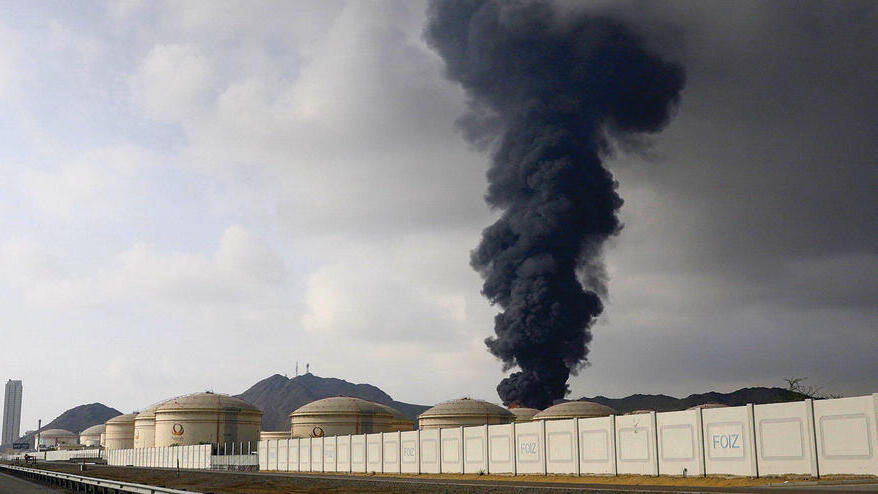
Attack on oil industry infrastructure in the United Arab Emirate
(Photo: Amr Alfiky/Reuters)
Danny Siso, chairman of SHEFFA by Deshen Hatzafon in Beit She’an, which produces and markets fertilizers, told they Yedioth financial pages, Mamon, that “there is enormous complexity in imports and in maritime shipping, which has become more expensive. In terms of inventory, we are stocked for the coming month, but if we fail to bring in additional shipments, a shortage could develop as early as May.”
Golan Argaman, CEO of Deshen Hatzafon, said the situation is more severe than the COVID-19 crisis or the war in Ukraine. “Infrastructure in the Gulf region has been damaged, and it will take time to rebuild. This is the first time since World War II that factories have been hit on this scale. It is a dramatic event, occurring just as Israel enters peak planting and fertilization season between April and October,” he explained.
According to Argaman, global fertilizer prices have risen by as much as 300%, while increases in Israel have so far been more moderate. “The fortunate thing is that Israel has secured alternative supply sources from Eastern Europe, Egypt and the Balkans. In addition, some fertilizers are produced locally from domestic raw materials, such as potash from the Dead Sea Works and potassium nitrate from Haifa Chemicals, but for other components we are entirely dependent on imports.”
'The situation is very serious'
Fatih Birol, head of the International Energy Agency (IEA), said Monday that 40 energy facilities in the Middle East have been damaged or destroyed as a result of the ongoing fighting. “The situation is very serious,” Birol said. “It will take time to return to the normal conditions that existed before the war.”
“As of now, we are losing 11 million barrels per day — more than the two largest oil crises combined," he added, "The crisis is also affecting the natural gas market on an unprecedented scale.”
Oil prices remain volatile. On Monday, following a statement by U.S. President Donald Trump, oil fell below $100 a barrel. Investors drew optimism after Trump said the United States and Iran had held “good talks regarding a complete solution.” Prices dropped to around $97 per barrel for Brent crude and $86 for WTI.