


The day a major deal to sell a high-tech company is signed is usually packed with excitement and celebrations. After weeks or months of late-night negotiations, debates over deal structure and future cooperation, and often difficult talks with investors and shareholders, the moment arrives. Champagne is opened, employees are informed, interviews are given, and the deal is celebrated.
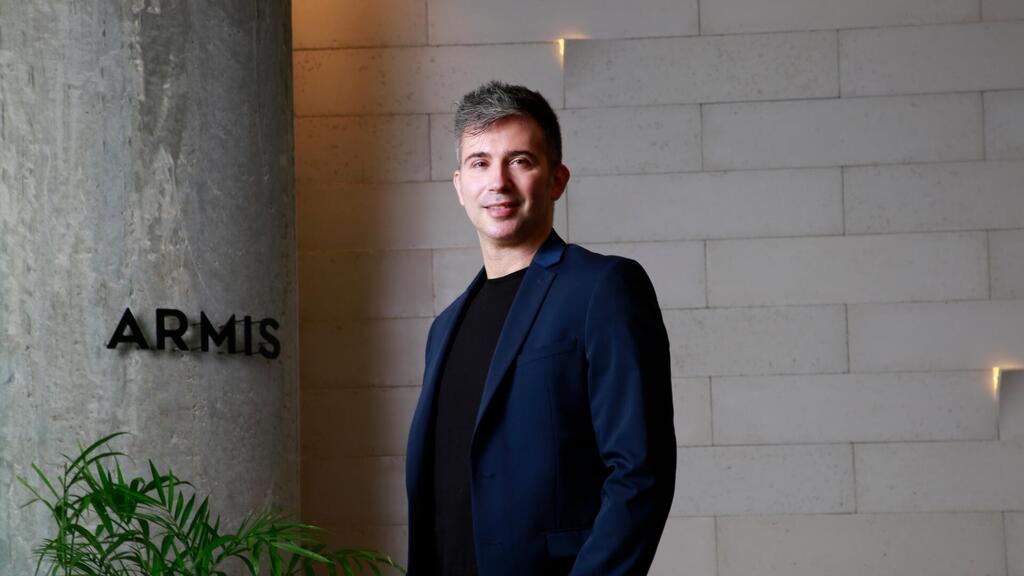
For Evgeny Dibrov, co-founder of Armis, which was sold this week to U.S.-based ServiceNow for $7.75 billion, it was not quite so simple. On the evening the deal was announced, he found himself caring for his toddler daughter, who had fallen ill with the flu. Meetings were postponed, a planned trip abroad was canceled. His daughter’s health, without question, took precedence over a nearly $8 billion transaction.
I hope your daughter is OK. It’s incredible this happened on the most important day of your professional life.
“Not yet, it’s probably the flu. You know, it’s going around, everyone’s sick. That’s life,” Dibrov said.
The episode illustrates something of Dibrov’s character. The son of immigrants from the former Soviet Union, he grew up in the Sha’arayim neighborhood of Rehovot and has not forgotten where he came from or how he built his success. “It’s all about working extremely hard, always staying humble, always staying hungry, doing more and achieving more,” he said in a special interview with ynet.
Armis’ journey reflects that ethos. Founded in 2015, the company raised relatively modest funding rounds in its early years until U.S. venture capital firms discovered it and began pouring in capital. In 2020, it achieved a kind of exit when Insight Partners acquired control of the company at a valuation that made it a unicorn. From there, Armis took off, raising large rounds as its valuation climbed rapidly to $2 billion, then $3.4 billion and higher. Over the course of 2025, its valuation nearly doubled again, culminating in the sale to ServiceNow.
At $7.75 billion, the deal ranks as the fourth-largest exit in Israel’s history. Considering only startup sales, it is the second-largest after Wiz. The other record holders, Mobileye and CyberArk, were sold as publicly traded companies. The deal also includes $500 million in employee retention bonuses and is expected to close in the coming months, subject to regulatory approvals.
How much will the founders make when the deal is final?
As in most pre-IPO exits, the biggest winners are the major investors. In Armis’ case, the largest beneficiary is U.S.-based Insight Partners, which has controlled the company since 2020 and is expected to make more than $4.2 billion. Other funds with smaller stakes will earn hundreds of millions of dollars. Founders Evgeny Dibrov and Nadir Izrael retained a combined 12% stake, meaning each is expected to receive about $465 million once the deal is completed.
Founded by Dibrov and Izrael, Armis’ technology was quickly adopted by major corporations in the U.S. and beyond. The company develops cybersecurity solutions focused primarily on protecting operational technology (OT) and physical infrastructure rather than traditional IT systems.
Internet of Things (IoT) components and electronic controllers in manufacturing equipment, pumps, medical devices and even nuclear fuel centrifuges are under constant cyberattack, and Armis provides protection in this space. Its customers include industrial, medical, infrastructure and government organizations, among them 35% of the Fortune 100 companies in the U.S.
Why ServiceNow wanted Armis
ServiceNow is best known for its software platform for managing and automating enterprise workflows and is valued at around $180 billion on the stock market. Less widely known is its cybersecurity business, which in recent years has become one of its key revenue drivers. Over the past year, the company has undergone a broad reorganization in which cybersecurity is set to become a leading pillar, and Armis’ technology fits squarely into that strategy, alongside other recent acquisitions.

Pablo Stern, ServiceNow’s vice president and head of technology security products
(Photo: David Martinez)
“Cybersecurity is one of the top concerns of CEOs and boards,” said Pablo Stern, ServiceNow’s vice president and head of technology security products. “We believe that in the age of artificial intelligence, the threat landscape is going to grow rapidly and become critical. Our strength is in managing security workflows, and with Evgeny and the Armis team we see an incredible opportunity to advance and expand security operations.”
How did the connection between ServiceNow and Armis begin?
“Many of our interactions were at shared customers,” Stern said. “It all started with customers asking us to work together. The relationship really flourished over the past two years. Evgeny and I came to know each other not just as company leaders but as teammates and partners. There’s a very strong cultural and organizational fit between our teams.”
‘We saw an opportunity to build what we wanted much faster’
While American executives often say they are “excited” about new products or partnerships, Dibrov appears genuinely so. “Yesterday was definitely an exciting day for Armis,” he said. “We’ve been growing more than 50% year over year, crossed $340 million in ARR, we protect the largest companies, seven out of the Fortune 10, and we laid all the foundations to become a public company. But over the past two years, working closely with ServiceNow, we felt the synergies. When ServiceNow’s CEO and president called and said, ‘Evgeny, we have an amazing opportunity to do things together,’ they truly believed in our vision. That made us very excited. There were many long nights of discussions, but in the end the chemistry, the vision and the opportunity made it happen. And this is just the beginning. We’re going to build an incredible cybersecurity company.”
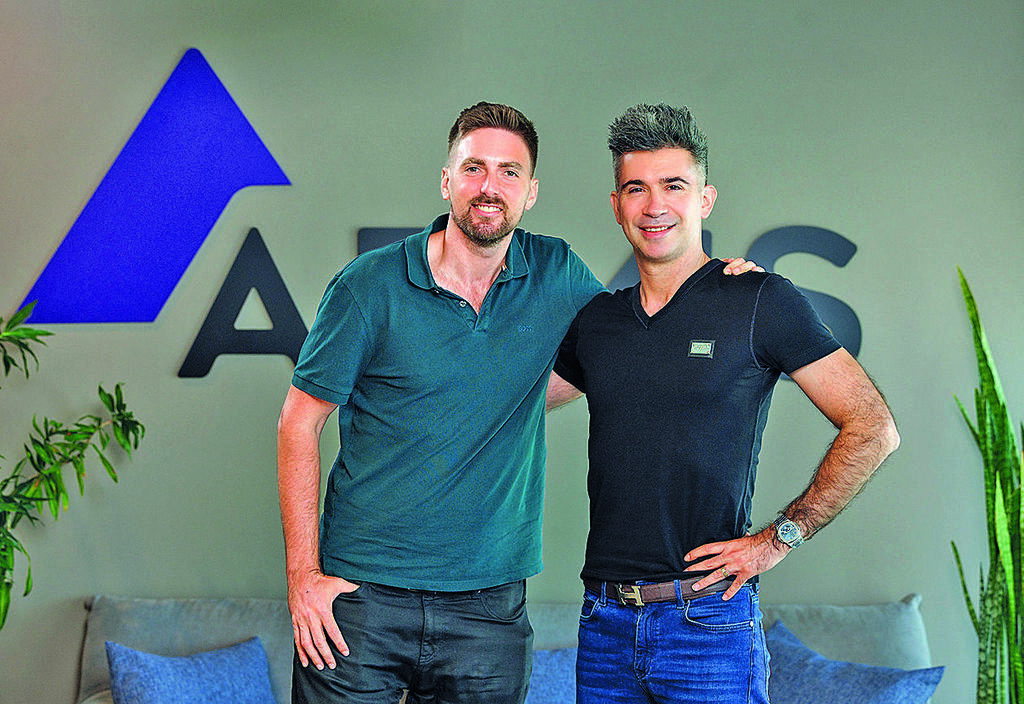
Armis c0-founders Evgeny Dibrov and Nadir Izrael
(Photo: Courtesy of Armis)
Until a few months ago, Dibrov said Armis would remain independent, aiming for $1 billion in annual revenue and a Nasdaq IPO. What changed?
“Yes, that was absolutely the plan, and we built the company accordingly,” he said. “We’re starting the first quarter with a platform of seven products, excellent customer retention metrics, strong financials. We were ready to go public. But ultimately, I always want what’s best for the company and shareholders. Here, I saw an opportunity to build what we wanted much faster with ServiceNow, with more resources and by leveraging ServiceNow’s incredible presence among the Global 2000 and Fortune 500. We felt we could grow to $1 billion, $2 billion and many more billions much faster than if Armis stayed independent.”
The deal follows Google’s $32 billion acquisition of Wiz and Palo Alto Networks’ $25 billion purchase of CyberArk. What is happening in the Israeli market?
Stern said: “We’ve been operating in Israel for about a decade following several acquisitions, and they’ve been tremendous successes thanks to the talent there. Israel is a global cybersecurity hub. Given our plans to expand cybersecurity offerings for customers, we’re committed to continuing to invest and grow in Israel. This only proves the capabilities of Israel’s amazing cybersecurity companies.”
Dibrov added: “What exists in Israel is incredible. On one hand, there’s world-class R&D talent, the best teams in the world. On the other hand, there’s execution capability. The teams at Wiz and CyberArk are doing phenomenal work. At Armis we’re building a cyber exposure management platform, Wiz is doing something similar in cloud security, and CyberArk is doing great things too. These are global-leading businesses, and that’s fantastic for Israel’s economy and entrepreneurship.”
What comes next?
After the deal closes, what happens to employees and management?
“Our goal is to ensure Evgeny and the team continue to move fast and drive growth,” Stern said. “Not just to meet Evgeny’s original goals but to accelerate them. We’ll also work on an integration roadmap that adds value for customers. As for employees, we’re committed to strengthening our presence in Israel, continuing to invest there and integrating the teams. This is a great opportunity to bring the community together.”
Will the Armis brand remain?
“Armis has an amazing brand, and we want continuity,” Stern said. “We’ll decide exactly how to leverage Armis’ presence and expertise alongside the ServiceNow brand as we approach closing. But we’re fully committed to customers and to building on the brand Evgeny and the team created.”
Yevgeny, how do you see the future and in what role?
“Nadir, my co-founder, and I are here to build something truly big with ServiceNow,” Dibrov said. “For now, I’ll serve as general manager of the Armis business unit. The Armis brand is significant, and with ServiceNow we’re moving incredibly fast toward even larger numbers. I’m very excited about this journey.”
‘We came from the Soviet Union with nothing’
Dibrov, 36, has a different background from many in Israel’s cybersecurity world. Born in Ukraine, he immigrated to Israel at age four. His parents divorced, and he never knew his father. He grew up in Sha’arayim with his mother and grandparents, educated professionals who worked manual jobs in Israel. Still, he lacked nothing as a child: books, extracurricular activities. He says he remains deeply grateful.
He attended De Shalit High School in Rehovot, served in the elite Unit 81 of Israeli military intelligence, studied electrical engineering and computer science at the Technion, and later became VP of R&D at Adallom, founded by Assaf Rappaport and partners. After Microsoft acquired Adallom, Rappaport founded Wiz, while Dibrov and Izrael founded Armis. Each invested in the other’s company, benefiting from both exits.
You grew up in difficult circumstances. How do you view your journey?
“We came from the Soviet Union with nothing,” Dibrov said. “The best example I had was my mom and my grandparents. The message was: never complain, work hard. We didn’t have much, and everything went into my education. For me, it’s all about working extremely hard, staying humble, staying hungry, doing more and achieving more, and building huge companies that create opportunities for so many people and families.”
What are employees saying about joining ServiceNow?
“I was in the office yesterday and today, and there was a lot of excitement about what they’ll do as part of ServiceNow,” he said. “I’m getting a lot of messages. The most important thing they tell me is: you have to stay humble to be number one and succeed. We have so many goals. This is just the beginning. And the way to get there is to stay humble, work extremely hard and truly do everything we can.”