


As October 7 approaches, ALL CAPS turned its attention to a question that extends beyond remembrance itself: how the events of that day will be documented, understood and preserved for the future.
Episode 29 of ynet Global’s weekly current affairs program, led by attorney Nitsana Darshan-Leitner alongside regular panelists Sarai Givaty and Titi Ayanaw, centered on Emmy-winning filmmaker Yariv Mozer, director of We Will Dance Again, the documentary that reconstructs the massacre at the Nova music festival through survivor testimony and footage from the attack.
all caps ep 29


The episode also examined contemporary antisemitism, the way hatred of Jews can connect otherwise opposing extremist ideologies, and the challenges Israelis face abroad, before ending on a lighter note with the growing international profiles of Israeli model Daniela Halfon and pop star Noa Kirel.
But at the heart of the conversation was Mozer’s attempt to ensure that what happened at Nova does not fade as October 7 moves further into history. “I think the main thing that we wanted to achieve in this film is an undeniable truth and evidence to what happened on October 7th at the Nova Music Festival,” Mozer told the panel.
His goal, he explained, was to create something that would retain its value long after the immediate aftermath of the massacre. “Whoever will see the film today, in five years, in 10 years, will completely have a full picture and an understanding of what the partygoers, the survivors, the victims had to go through in that horrific day,” he said.
Turning testimony into a historical record
Mozer recalled watching the events unfold on television on October 7 without yet understanding their full scale. As a documentary filmmaker, his instinct was to take a camera and head south, but with roads closed and the area still a war zone, that was initially impossible.
Gallery

Nitsana Darshan-Leitner alongside regular panelists Sarai Givaty and Titi Ayanaw (RTL)
(Photo: Screenshot)
Two days later, he arrived at the Nova festival site with a cameraman. What he encountered convinced him that documentary work would eventually become part of the historical record. “I thought that there is an importance and significance for a documentary film to come out,” he said. “This will be what will be part of history eventually.”
From there, the project developed into an effort to reconstruct the massacre through those who had experienced it firsthand. Working with researchers and producers, Mozer and his colleagues located survivors through social networks, personal contacts and extensive research. Fifteen testimonies ultimately formed the backbone of We Will Dance Again.
Each survivor could recount only what he or she had personally witnessed, Mozer explained, but together those accounts allowed the filmmakers to build a wider picture of how the attack unfolded. The challenge was especially significant in the early aftermath of October 7. Mozer said there was no single investigation or report available to filmmakers that could provide a complete chronology of what had happened at the festival.
Instead, the team had to piece it together through testimony. The resulting documentary follows the festivalgoers as the morning changes minute by minute, allowing viewers to experience the progression of the attack through the people who survived it. “The film is very immersive,” Mozer said. “You follow it step by step, minute by minute as this terror attack evolved.”
Rewatching October 7 every day
Creating that record also meant repeatedly confronting some of the most disturbing material from the massacre. Mozer said the team spent roughly a year immersed in October 7 during the editing process, returning to the footage day after day.
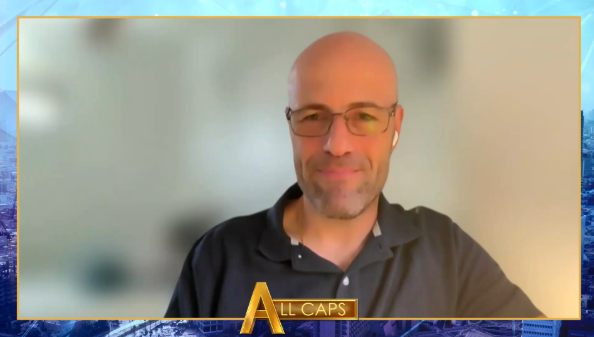
Yariv Mozer, Emmy-winning director of documentary ‘We Will Dance Again’
(Photo: Screenshot)
The filmmakers collected videos recorded by survivors as well as footage taken by Hamas terrorists using GoPro cameras. Mozer said he insisted on obtaining as much of that material as possible, even though much of it would never appear in the finished documentary. Each new piece of footage had to be reviewed. “It is something that you witness and you need to re-witness and rewatch,” he said.
Mozer stressed that the emotional burden carried by the filmmakers could not be compared with what the survivors themselves had endured. For him, the work became a mission to examine the available evidence, understand the sequence of events and ensure that the finished documentary preserved the voices of those who were there.
The survivors later became an important source of strength for him as well. Mozer said he remains in contact with many of them, some of whom have become friends, and has watched as they worked to rebuild their lives after the massacre. “I admire them,” he said. “I can see what they had to go through to return back to life as normal people, and it gives me a lot of strength and a lot of hope.”
The film’s international recognition eventually culminated in an Emmy, which Mozer described as one of the most emotional moments of his life. Survivors featured in the documentary joined the team for the ceremony, along with the mother of Keshet Casarotti, a Nova victim whose portrait became one of the film’s defining images and appeared on its poster.
But for Mozer, the significance of We Will Dance Again extends beyond awards. The panel asked whether more footage from October 7 should be made available to international audiences and whether images from the massacre can still change perceptions nearly three years later.
Mozer strongly supported making the material available, while also distancing himself from the idea that his documentary work should simply be viewed as advocacy. “I’m an artist. I’m a filmmaker. I’m doing documentary films,” he said.
At the same time, he acknowledged the enormous power filmmakers possess when deciding how an event is presented. Documentary directors choose what viewers see, what context surrounds those images and which perspectives ultimately become part of the finished story.
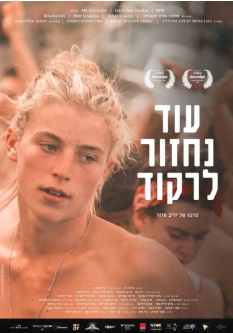
Keshet Casarotti, a Nova victim whose portrait became one of the film’s defining images and appeared on its poster
(Photo: Screenshot)
Those choices become even more consequential when documenting events that will eventually pass from living memory into history.
Antisemitism across ideological lines
That question of how narratives are formed carried into another major discussion in Episode 29, as the panel examined antisemitism and the way hostility toward Jews can cross ideological boundaries.
A video featured Mubin Shaikh, a former Muslim extremist, and Arno Michaelis, a former white supremacist, who described how antisemitism had served as common ground between people whose broader ideologies might otherwise have placed them on opposite sides. Both men now work against extremism. The discussion prompted the panel to reflect on how longstanding antisemitic stereotypes continue to appear in contemporary political movements and public discourse.
Earlier in the episode, the panel also addressed an incident involving a woman who said she had lost her job after being confronted at a gym over her support for the Palestinian cause. Separate footage shown on the program captured her referring to another gymgoer as a “Zionist pig,” fueling a broader discussion among the panelists about where political criticism ends and antisemitism begins.
The program also looked at the experience of Israelis working internationally. Model Daniela Halfon, 23, was highlighted after landing a Maybelline campaign set to appear in more than 110 countries. The panel contrasted her growing international career with an incident Halfon previously described in Italy, where she said a photographer’s assistant confronted her over Israel’s actions in Gaza.
The episode then turned to Noa Kirel, whose international career is expanding with a Spanish-language musical series aimed at audiences in Latin America. The cultural stories provided a lighter ending to an episode dominated by much heavier questions about memory, antisemitism and the way Israel is represented abroad.
But Mozer’s conversation remained its central thread. As another October 7 anniversary approaches, We Will Dance Again is not presented simply as a way of returning to the events of that morning. Mozer sees the documentary as something intended to remain after the anniversary itself has passed: testimony, evidence and a record for audiences who were not there.
Years from now, he said, people should still be able to watch the film and understand what happened at Nova through the voices of those who experienced it.
Watch the full episode of ALL CAPS featuring Nitsana Darshan-Leitner, Sarai Givaty and India Naftali for more unfiltered conversations, exclusive interviews and analysis of the stories shaping Israel and the Jewish world.
To learn more about Shurat HaDin's efforts to fight terrorism and defend Israel through legal action, visit Shurat HaDin – Israel Law Center.