

This week I attended the memorial service for the child of family friends. A gentle desert afternoon breeze drifted through the small cemetery in the Negev, carrying fragments of eulogies and shards of memories, but it could not move the grief even a millimeter. Toward the end of the ceremony, a medley of songs about farewell and longing began to play. I held myself together until Pink Floyd’s Wish You Were Here came on — a song about pain and loneliness, about the inability to choose the good in life and about lost, trapped souls searching for hope but stumbling into familiar fears, left in the end with a single wish: I wish you were here.
I have heard that song a hundred trillion times, always as a song of longing from those who remain for the one who has gone. This week, in that small desert cemetery, I heard it differently: the child who will never grow up writing to those still living and telling them that the dead miss us too. A song that touches the sublime.
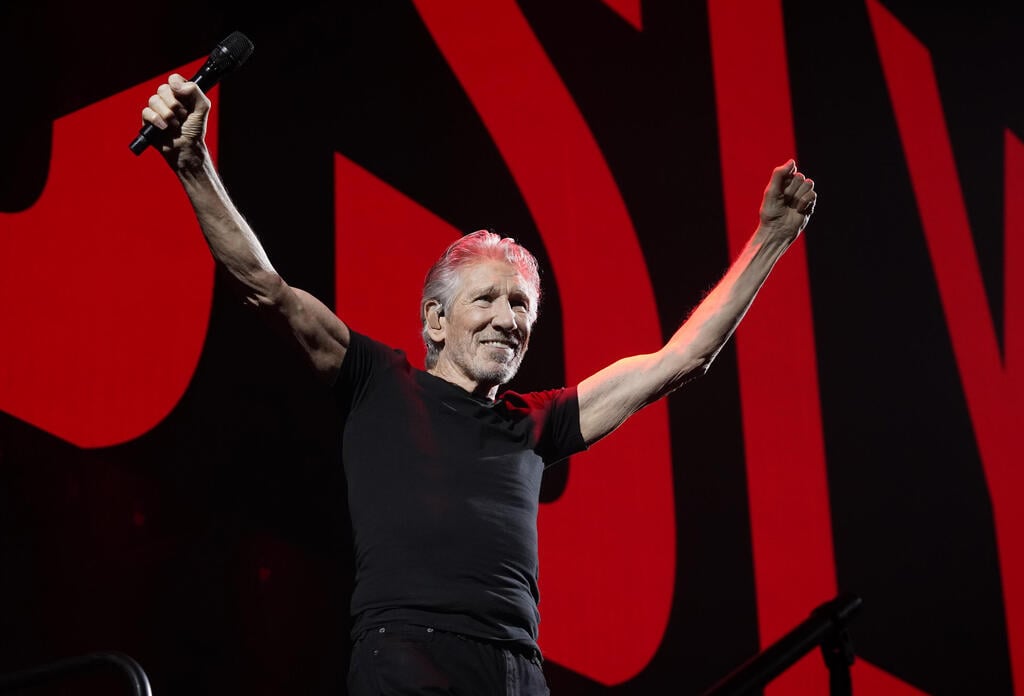
Roger Waters is probably the most hated artist — perhaps even the most hated person — in Israel. Waters earned the controversial title through his own words and actions. For 15 years, he has been among the loudest and harshest voices against Israeli policy — and, some argue, against the state itself — with accusations that he is antisemitic to the core: denying Hamas’ acts of rape and the murder of babies on October 7, antisemitic remarks about Jewish financial control of the world, portraying all Israelis as fascists, using Nazi imagery in performances, inflating a giant pig-shaped balloon emblazoned with a Star of David, campaigning for a boycott of Israel, pressuring nearly every artist who performed or planned to perform in Israel to cancel, making what critics call bizarre accusations — such as claiming after the murder of George Floyd that Israeli experts taught American police how to suppress Black Americans — and even urging FIFA and UEFA to suspend Israeli football teams from international competitions.
Yes, Israelis have very good reasons to hate Roger Waters. It may be one of the few things left and right can still agree on. Yet there are plenty of antisemites in the world and no shortage of artists whose support for Israel resembles Waters’ hostility. Eric Clapton painted his guitar in Palestinian flag colors. Brian Eno compared Israel to the Ku Klux Klan. Hundreds of artists signed petitions and removed their music from streaming services available in Israel. But none received even a fraction of the anger, hatred and sense of betrayal directed at Waters. They even made a film about him — Roger Waters: Wish You Weren’t Here. So why do Israelis hate him this much?
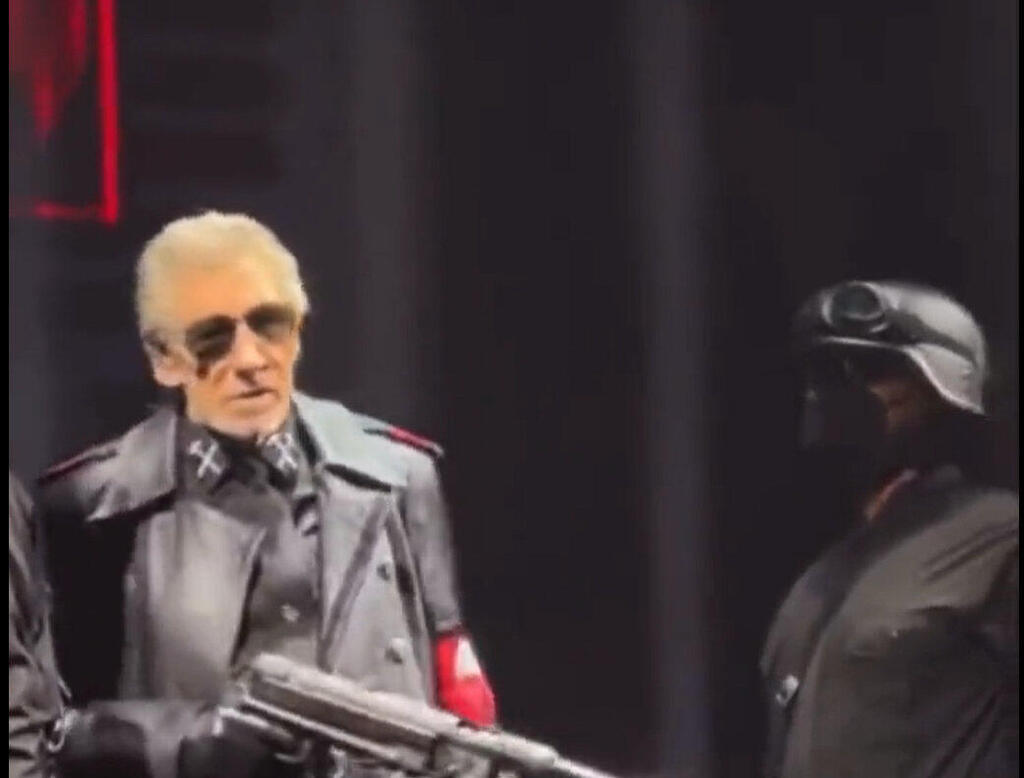
Roger Waters dressed as a Nazi at a concert in Munich, 2023
(Photo: From X social media)
Simple: because, in the end, the strongest reason to hate someone with such intensity is that, deep down, you truly loved them. Pink Floyd has always been one of the most beloved, played, sold and influential bands in Israel.
The peak of that love story — the moment everything began to fall apart — was Roger Waters’ first, only and, unless hell freezes over, probably last concert in Israel: 20 years ago in a chickpea field near the Jewish-Arab village of Neve Shalom, close to Latrun.
I was there. To this day, it remains one of the most electrifying musical experiences of my life.
I remember that dreamlike day clearly: the sense of ceremony, the feeling of crushed clods beneath our shoes as we crossed the enormous chickpea field — about 600 dunams flattened for the show — the long hours under the blazing sun, the largest stage ever built in Israel at the time, nearly a kilometer long and around 1,500 square meters in size, the fireworks, the animation, the shiver that ran down my spine when the opening notes of In the Flesh from The Wall rang out: “So ya thought ya might like to go to the show / To feel the warm thrill of confusion…”
I remember the most moving live rendition of Wish You Were Here I had heard until this week, even though it was playback — in fact, Waters probably hardly sang himself — the complete live performance of Dark Side of the Moon from beginning to end. Who does not remember the cash register in Money? And then the closing section from The Wall. Looking back at the previews and reviews published before and after the concert, every outlet agreed: this was a dream performance.
Producer Shuki Weiss was the man who brought Waters to Israel. Weiss repeatedly described himself as a devoted fan of Waters and Pink Floyd and framed the concert as the fulfillment of a dream and the peak of his career. And like any great dream, he moved mountains — literally, in Waters’ case.
In the years that followed, host and guest exchanged open letters and public insults. Weiss repeatedly tried to initiate dialogue, but Waters, whom he describes as ungrateful and rude, dismissed him more than once. At one point, Weiss invited him back to Israel — not to perform, only to talk.
“Never,” Waters replied. “I will not legitimize the government’s actions for any amount of money. I am part of the boycott movement.”
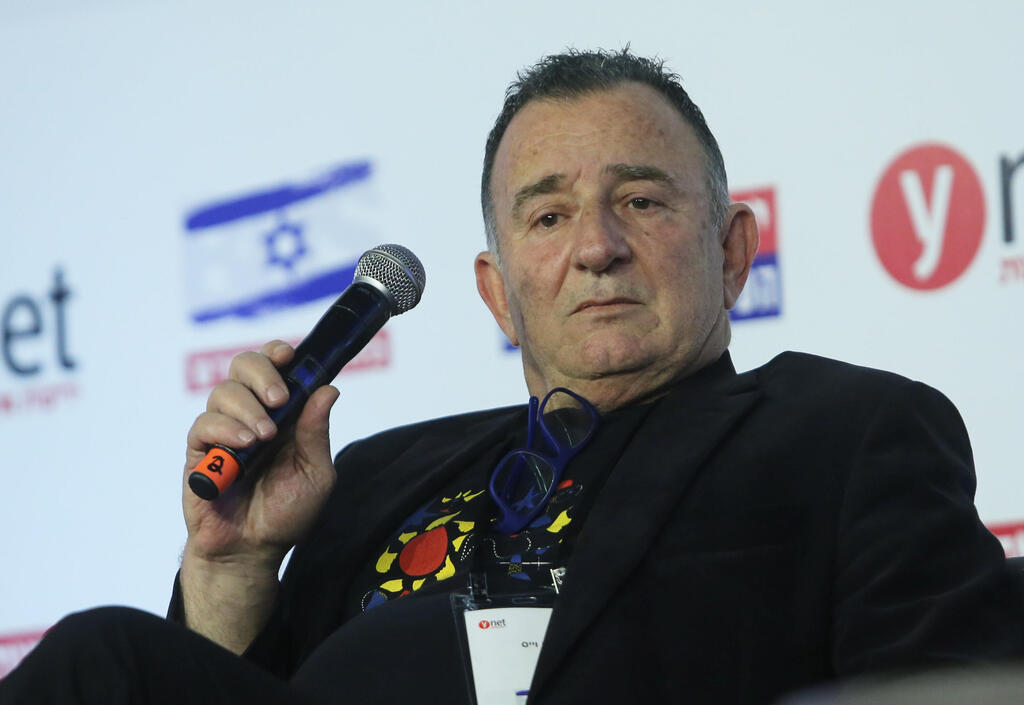
Producer Shuki Weiss was the man who brought Waters to Israel
(Photo: Alex Kolomoisky)
Since then, Weiss has avoided speaking publicly about Waters — until now. He is still furious, as if not two days but no time at all had passed, especially about what he calls Waters’ repeated lies.
One of them concerns moving the concert from Yarkon Park to Neve Shalom. Waters has repeatedly claimed that he himself asked to relocate the show there “as a gesture of solidarity with the voices of reason among Israelis and Palestinians seeking a nonviolent path to a just peace.”
“Absolute nonsense. It was my idea,” Weiss says. “Waters didn’t know what a chickpea field was. He didn’t know what Neve Shalom was. Unlike other artists who came here and wanted to meet people and understand reality in Israel, Waters did not spend a minute trying to learn, meet people or travel around. Nothing interested him. Not the occupation, nothing. On his first day in Israel he went to a luxury restaurant. On the second day he skipped a ceremonial tree planting organized in his honor in Neve Shalom. Crowds of Jews and Arabs waited there excitedly and he didn’t show up. They said it was security concerns, but at the same time he was shopping in Kikar Hamedina.”
Singer-songwriter Micha Shitrit, who was among Waters’ opening acts, remembers the day vividly.
“Twelve years earlier I wrote the line, ‘Pink Floyd will never perform on the wall in Jerusalem,’” Shitrit recalls. “But apparently they could perform in a chickpea field.”
“I remember the frenzy, crossing the field through the crowd, seeing the biggest stage I had ever played on — a stage like in the movies. I was incredibly excited. We grew up on Pink Floyd. To me, the smokestacks on the cover of Animals were the Haifa oil refineries.”
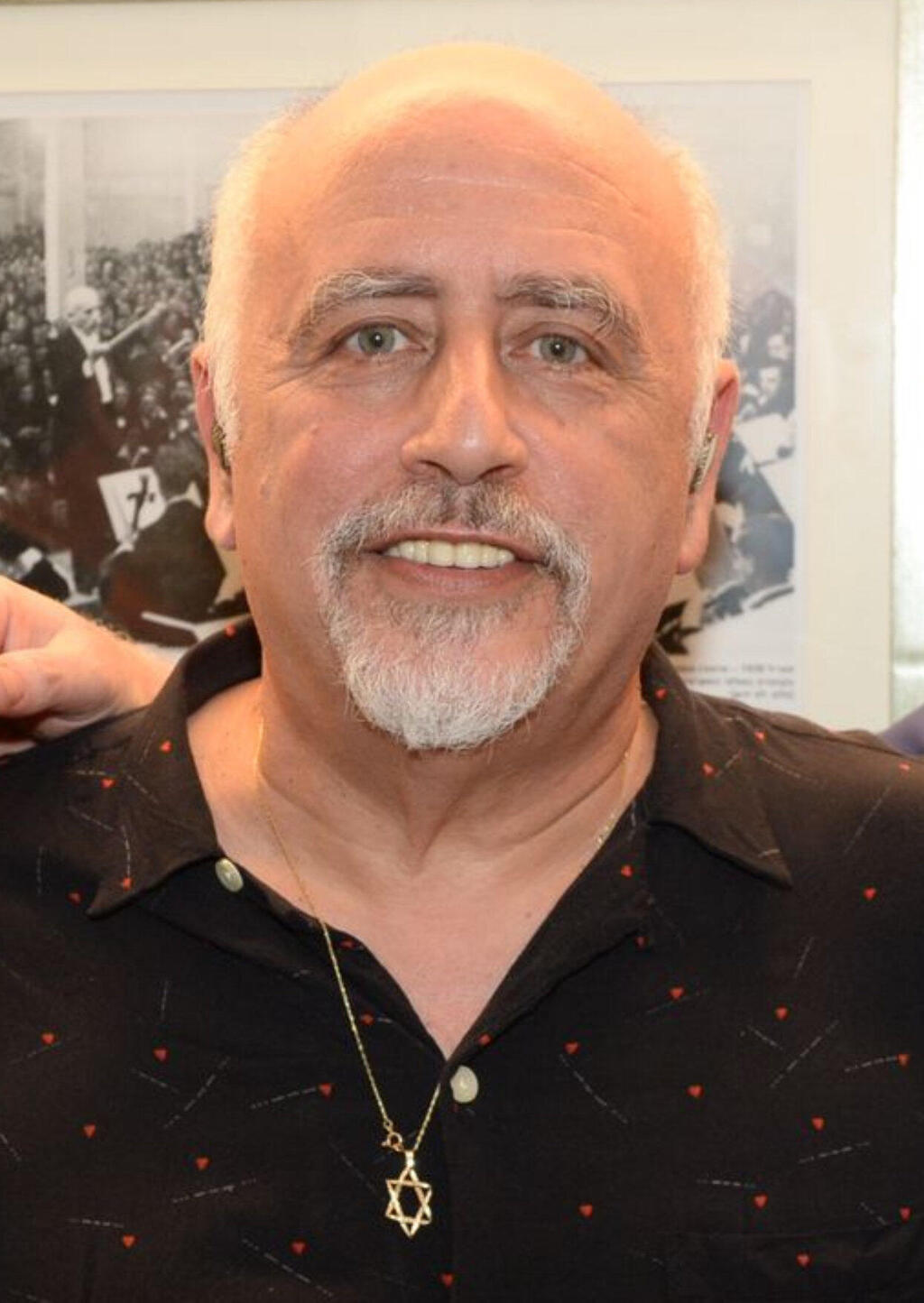
Singer-songwriter Micha Shitrit, who was among Waters’ opening acts
(Photo: Kobi Koeneks)
“When he started with his political agenda,” Shitrit says, “I disconnected from him. Waters chose a side — the side standing opposite me. That’s where love ends. But the music remains. In the end, when I suddenly hear one of their great tracks, all the politics leave my head. It’s genius.”
Twenty years. Strange, today, to talk about one major rock concert that took place two decades ago. Israel then was not a pariah state facing boycotts like it is today — not even close. There had been major concerts in the late 1980s and early 1990s — Bob Dylan, Guns N’ Roses, Michael Jackson, Madonna and others — but by the late 1990s, everything faded. Waters’ 2006 concert, of all things, ended a drought of international performances and canceled shows.
Waters arrived in Israel during a peculiar window — a brief lull between disasters. Israel was enjoying what now seems like a tiny stretch of relative calm between the Gaza disengagement and the Second Lebanon War. After Waters’ concert, it felt possible to imagine artists returning to Israel.
Reality had other plans.
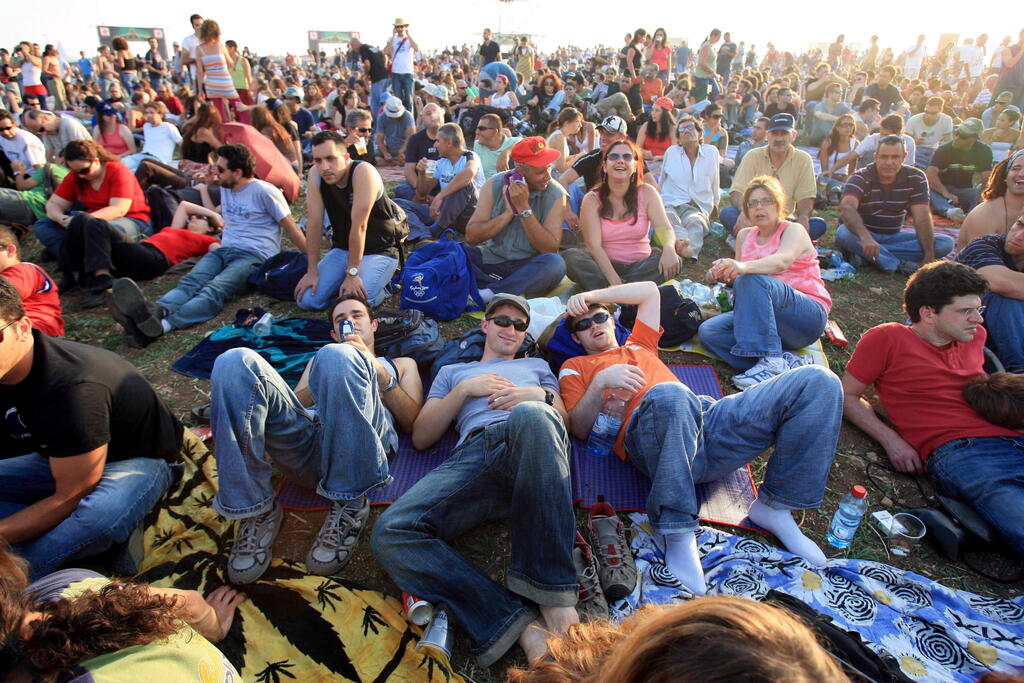
People at Roger Waters’ first, only and, probably last concert in Israel: 20 years ago in a chickpea field near the Jewish-Arab village of Neve Shalom
(Photo: Michael Kramer)
Three days after the concert at Latrun, on June 25, 2006, Gilad Shalit was kidnapped. Less than three weeks later, on Wednesday, July 12, Hezbollah bombarded northern Israeli communities as a diversion while a squad crossed into Israel and abducted reserve soldiers Ehud Goldwasser and Eldad Regev. The Second Lebanon War began.
The guns thundered, foreign artists canceled their visits — but at the time, that was one of our smallest problems.