


The reboot of the DC cinematic universe (the DCU) under James Gunn and Peter Safran began on a relatively solid note. “Superman” (2025) offered an optimistic, lighter vision—even if somewhat overcrowded. Gunn declared that no superhero film under his watch enters production until its script is finalised, understanding that the superhero industry’s core problem is undercooked scripts that lead to frantic reshoots and ultimately confused, wasteful final products.
But “Supergirl,” the second feature initiated by Gunn in the DCU and directed by Craig Gillespie, proves that the promise of script perfection was empty. The film is the result of a troubled production: ten test screenings, three different endings considered, three different composers hired, and an expanded cameo role for David Corenswet’s Superman in a desperate attempt to fix things. None of it helped. The result is a film that mangles one of the most acclaimed comic adaptations of recent years and casts a heavy shadow over the future of Gunn’s DCU.
The main responsibility for this disaster lies with the screenplay, written by Ana Nogueira. This is her first feature film; her entire prior screenwriting experience amounts to a single 12-minute comedy made eight years ago. A state commission of inquiry may still investigate why she was given the keys to such a flagship project. Unsurprisingly, “Supergirl” has one of the weakest scripts ever produced in the genre. It takes Tom King and Bilquis Evely’s acclaimed comic series Supergirl: Woman of Tomorrow (2021–2022)—a reflective story about heroism, the emotional cost of revenge, and moral endurance in the face of absolute evil—and reduces it to a string of clichés and awkward “feminist” dialogue. Nogueira is also slated to write future adaptations of “Wonder Woman” and the Teen Titans. If Gunn doesn’t fire her (and I’d bet she won’t survive this inevitable failure), the DCU is heading straight into a wall.
Instead of a deeply inspiring superhero narrative, Nogueira and Gillespie present Kara Zor-El (Milly Alcock) as a tired cliché of the “cool, messed-up girl.” Alcock, who showed strong talent as Rhaenyra Targaryen in House of the Dragon, is miscast here—especially given the poorly constructed character. To escape the destruction of Krypton and the trauma of losing her world and parents (David Krumholtz and Emily Beecham), Kara goes on a bar-hopping spree across distant planets: drunkenness, bar fights, and hanging around grim clubs. She has almost no connection to anyone, human or alien, except for her loyal companion Krypto, her beloved and unruly super-dog.
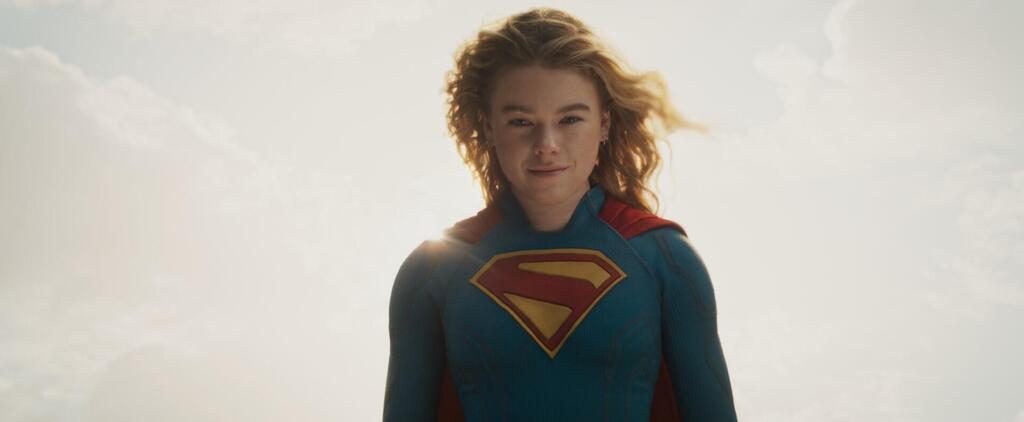
Kara Zor-El (Milly Alcock): a tired cliché of the 'cool, messed-up girl'
(Photo: Courtesy of Tulip Entertainment)
Her drunken journey is built around visiting planets lit by red suns, which strip her of her powers so she can get intoxicated like an ordinary mortal. The idea quickly becomes repetitive and exhausting: Kara loses her powers, regains them, loses them again—over and over throughout the film’s 108 minutes. Each planet is introduced with a caption noting the sun’s color, emphasizing how shallow and overused the gimmick is. The viewer’s guide: yellow = superpowers, red = no powers, green = Supergirl is in serious trouble.
She eventually ends her drinking cycle when she teams up with a young girl named Ruthye Marye Knoll (Eve Ridley), a survivor of a massacre of her family by a ruthless space pirate named Krem of the Yellow Hills (Matthias Schoenaerts). Ruthye seeks revenge and tries to recruit Kara for her mission. The selfish Kara refuses—an unheroic choice—and only agrees after Krem shoots a poisoned arrow at Krypto, leaving her 72 hours to find an antidote. If this sounds like a young girl on a revenge journey with a skilled warrior reminiscent of True Grit, or a dog-triggered revenge plot like John Wick—you’ve probably seen the same films as the screenwriter.
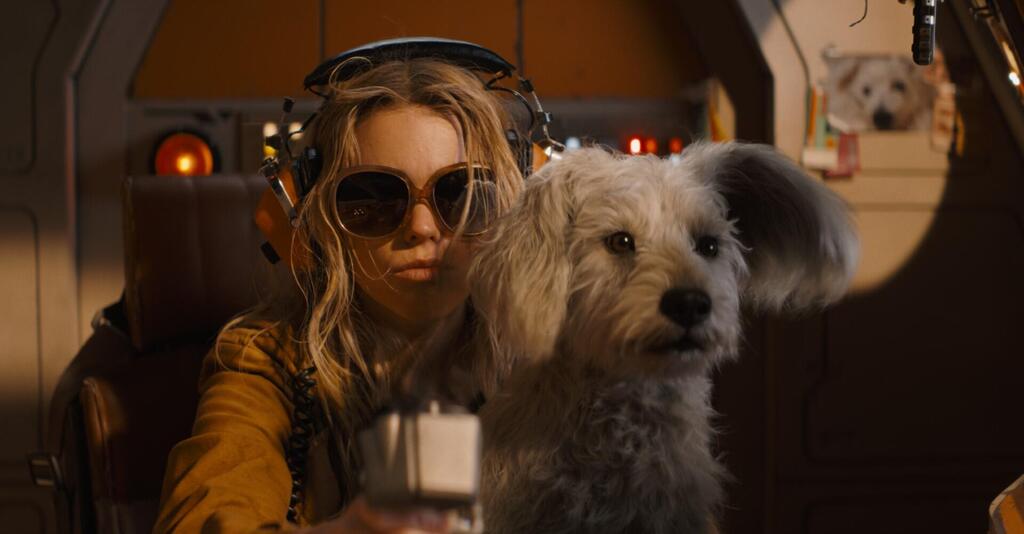
Kara eventually ends her drinking cycle
(Photo: Courtesy of Tulip Entertainment)
Schoenaerts, usually an excellent Belgian actor, is wasted here as a ridiculous villain: a shaved head, odd braid, and ugly piercings that look like a mix between Pinhead from Hellraiser and a refugee from Mad Max. The character is flat and forgettable. The influence of Mad Max: Fury Road (2015) is not subtle—it borders on outright imitation: from the raider costumes to the desert, mud, and gray planets that all look the same, to the central idea of abducting young women in white dresses (“brides”) for reproduction and species survival.
While George Miller created a visual, kinetic masterpiece with strong feminist subtext, Gillespie fails completely. He lacks Miller’s directing precision and eye for action choreography, and the feminist themes are reduced to hollow slogans. The abduction of women here feels exploitative and empty, with no catharsis or meaningful statement.
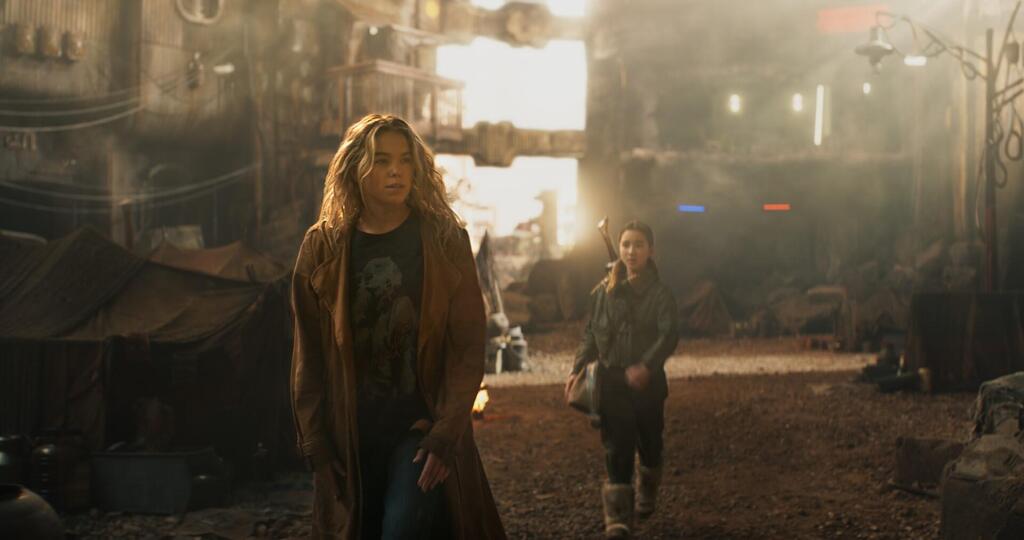
The influence of Mad Max: Fury Road (2015) is not subtle—it borders on outright imitation
(Photo: Courtesy of Tulip Entertainment)
A notable attraction for DC fans is Jason Momoa’s Lobo. Lobo is an intergalactic bounty hunter, a mad space biker, a violent and cynical antihero parodying 1990s tough-guy characters. For non-comic readers, he will likely feel like an incomprehensible figure: face paint like KISS, cigar, flying motorcycle, appearing and disappearing arbitrarily from the plot. His presence only underscores the film’s identity crisis—shifting between Kara Zor-El’s trauma drama and a chaotic, comedic space adventure in the style of James Gunn’s Guardians of the Galaxy.
The failure extends to the visual design as well. The planets are generic and repetitive, making it hard to distinguish one from another. Worse, the film is shot in dim, murky lighting, often making it difficult to see what is happening during action scenes. The viewer is trapped in a muddy mix of failed CGI effects populated by creatures that feel like rejected extras from Mos Eisley in Star Wars (and that is not a compliment).
Craig Gillespie, who previously handled flawed female protagonists effectively in I, Tonya and especially Cruella, seems here to have abandoned—or been forced to abandon—his distinctive voice. The result is a desperate, forced attempt to replicate the Guardians of the Galaxy formula. Kara Zor-El becomes a pale imitation of Star Lord: sarcastic, isolated, and listening to an old Walkman. But what worked in Gunn’s films feels here like a poor proxy version of James Gunn’s style.
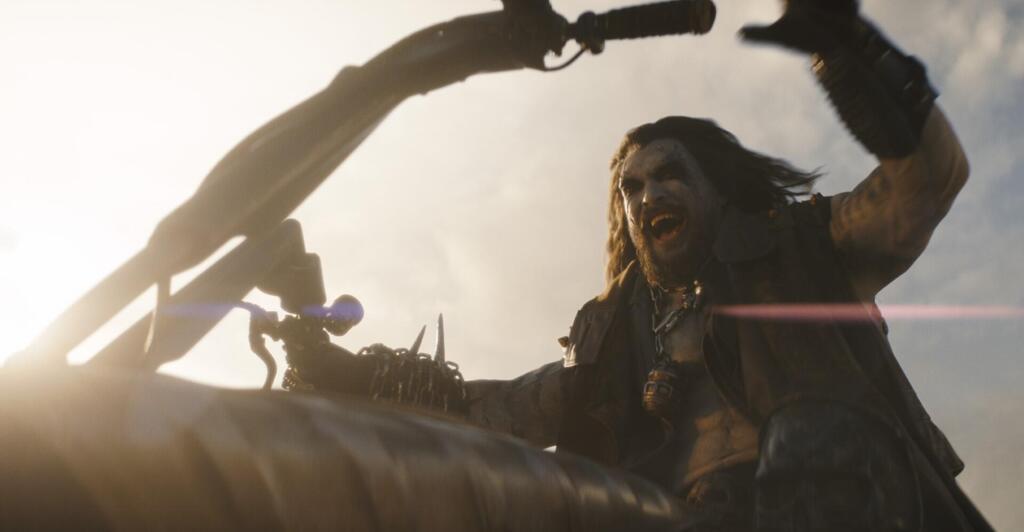
Jason Momoa’s Lobo
(Photo: Courtesy of Tulip Entertainment)
The likely failure of “Supergirl” may signal a bleak future for Gunn’s ambitious DC vision. “Superman” posted modest box office results, around $620 million worldwide (a figure that leaves little margin after marketing and production costs). Now “Supergirl” is headed toward a catastrophic box office collapse: weak opening projections placing it near “The Marvels” and “Black Adam,” with estimated losses potentially reaching $200 million.
The cloud hanging over the DCU reboot grows darker still amid reports of David Ellison, the new head of Skydance/Paramount-Universal, entering the Warner Bros. picture. In interviews, Safran and Gunn try to project business as usual, claiming Ellison is “fairly open” to their plans, but his tone appears far less enthusiastic. He may well see Gunn’s future slate as too risky and expensive. If “Supergirl” does collapse as predicted, the second film under their leadership could mark the beginning of the end for the rebooted universe.