

If there is no last-minute surprise, fuel prices will rise Tuesday night to an all-time high of 8.25 shekels per liter (about $10.45 per gallon) of 95-octane gasoline, matching the price 14 years ago, in September 2012.
There is still a chance of a last-minute surprise that could prevent the increase, as Finance Minister Bezalel Smotrich has already announced his intention to lower the tax on fuel in an effort to limit the rise, in what many see as a classic election-economics move. But the seemingly endless struggle between Iran and the United States over freedom of navigation in the Strait of Hormuz is likely to lead to further increases down the road.
Gallery
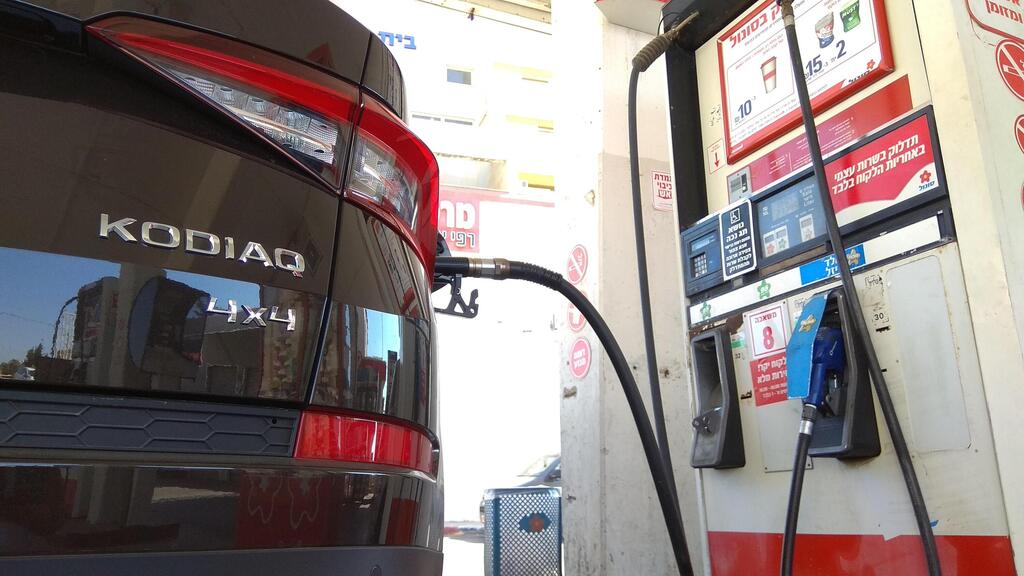
Fuel prices will rise Tuesday night to an all-time high of 8.25 shekels per liter
(Photo: Noam Rhein)
The most effective way to deal with soaring gasoline prices is, of course, to break free of dependence on gasoline and switch to an electric vehicle. The cost of electricity for home charging currently stands at about 10 agorot per kilometer (about 5 cents per mile), compared with nearly 70 agorot per kilometer (about 38 cents per mile) for an average gasoline-powered car or 40 agorot per kilometer (about 21 cents per mile) for an especially fuel-efficient hybrid.
And because electric vehicle prices have been declining for quite some time despite reduced tax incentives, while threats to impose a mileage tax have been with us for decades without any concrete steps, this is undoubtedly the most effective way to save on driving costs. That is, as long as you have access to charging at home or at work.
What about plug-in hybrids, the hot trend in the auto market in 2026? Well, although they ostensibly combine "the best of both worlds," eliminating range anxiety while keeping costs low, they generally combine the disadvantages of both technologies.
If you have a home charging station, you will usually get a car with particularly limited electric capability, traveling without gasoline for only a few dozen kilometers in real-world conditions before becoming a conventional hybrid that is not particularly economical, since it carries a battery weighing hundreds of kilograms.
If you don't have a private charging station, you will quickly discover that the promise of particularly low fuel consumption — officially reaching 200 kilometers per liter (about 470 mpg) and even 250 kilometers per liter (about 588 mpg) in some models, and exceeding 50 kilometers per liter (about 118 mpg) in almost all of them — has little connection to real-world driving. That figure is determined according to testing standards that in no way reflect actual driving.
For this review, we therefore chose to exclude plug-in hybrids and focused on cars that boast especially low fuel consumption without being plugged into an outlet, priced up to 200,000 shekels (about $67,000). The figures presented here are the manufacturers' figures, measured under standardized laboratory conditions. They provide a fair basis for comparison between the cars, but only for that purpose. In practice, consumption will generally be higher, depending on driving style and use.
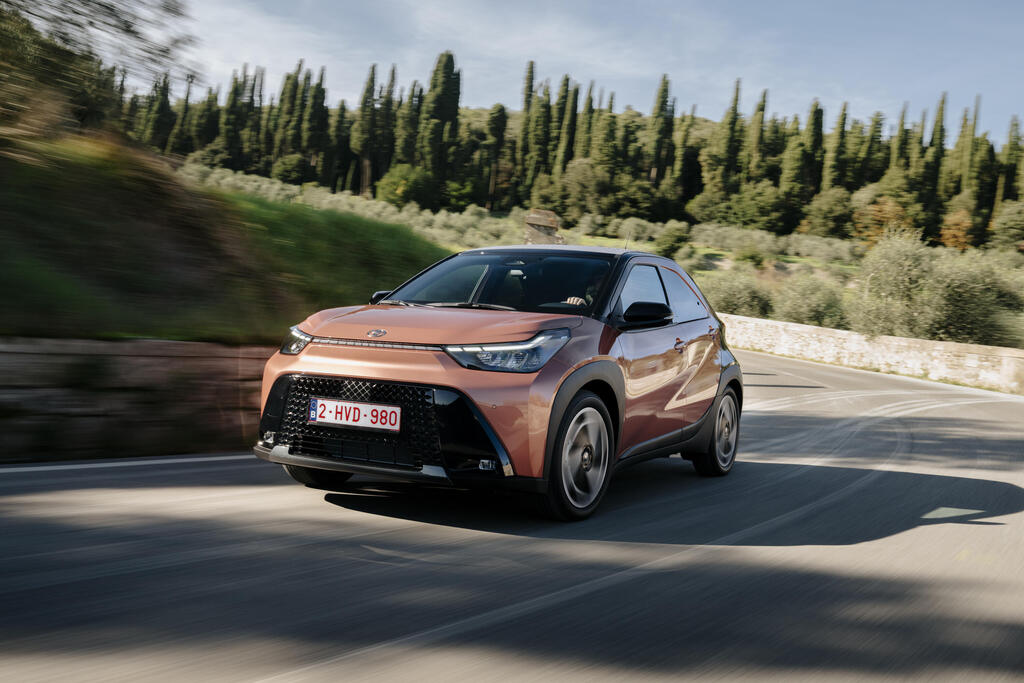
First place: Toyota Aygo X
Official fuel consumption: 27 km per liter (about 63.5 mpg)
The simple and logical combination of a small, lightweight car and a hybrid powertrain taken directly from the Yaris produces exceptional fuel-economy figures — while also delivering a significant improvement in performance over the outgoing model, which made do with a tiny gasoline engine. The downside is the relatively high price of 124,000 shekels (about $41,500), similar to that of supermini cars. But compared with them, the Aygo is much more cramped, with room for only four passengers and a tiny trunk. Still, none will be as economical as the Aygo.
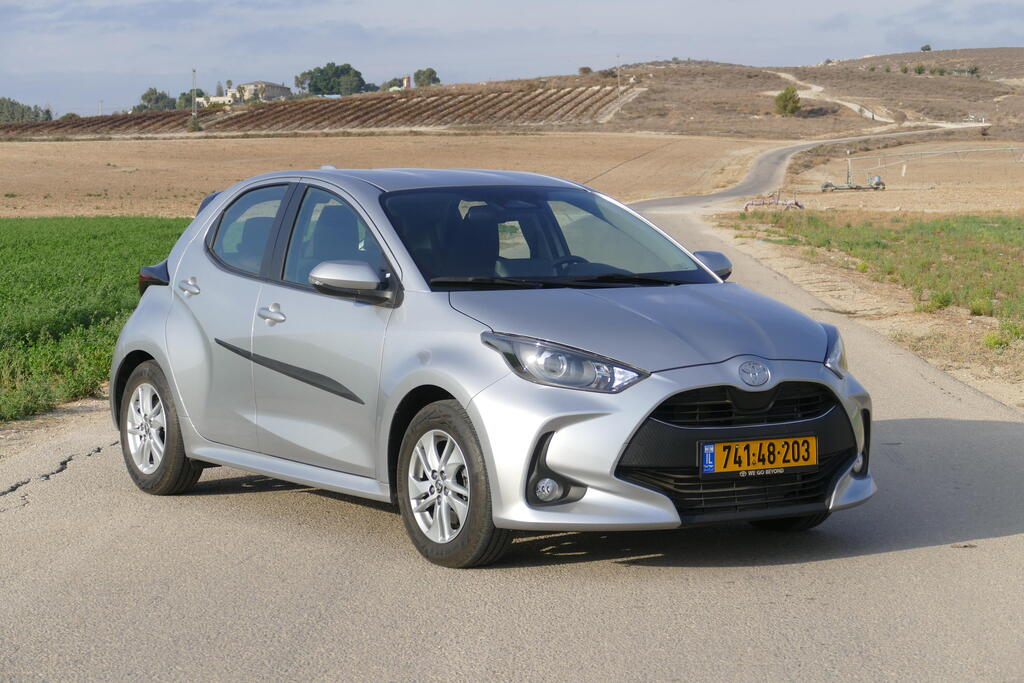
Second place: Toyota Yaris
Official fuel consumption: 26.3 km per liter (about 61.9 mpg)
The same powertrain, in a slightly larger and heavier car — by 25 kilograms (about 55 pounds) — is still responsible for excellent fuel economy. Here too, the price isn't cheap: 141,000 shekels (about $47,200) for the base version, while the more highly equipped version is also less economical. But the Yaris' excellent reputation ensures very strong resale value, so it may be a worthwhile deal despite its high purchase price. Still prefer a cheaper supermini? There's one waiting in the next section.
(Photo: Nir Ben Zaken)
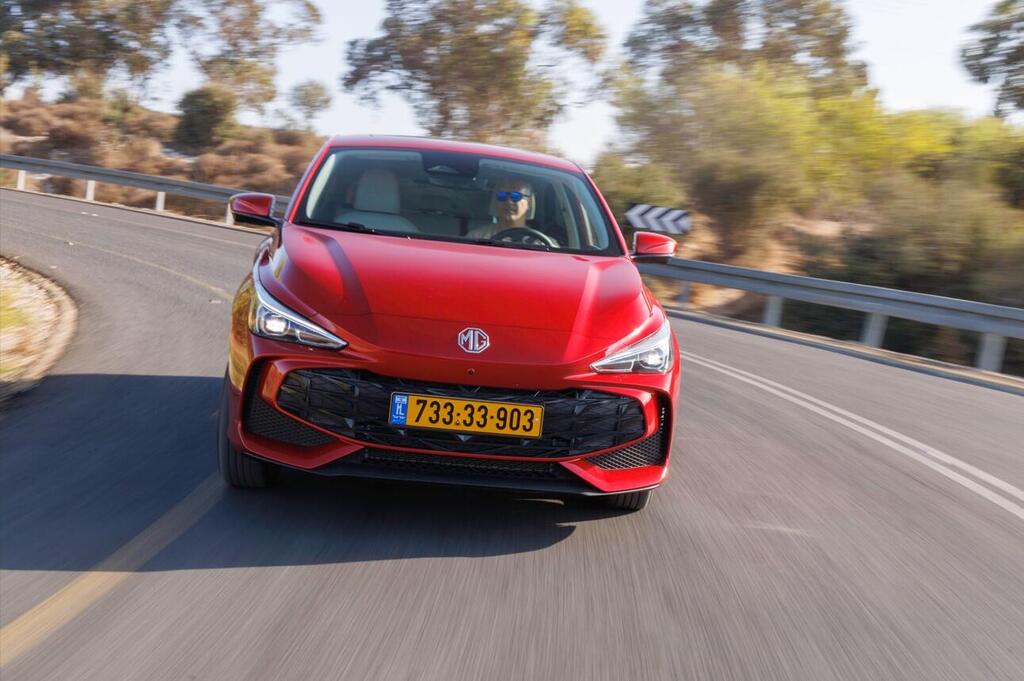
Third place: MG3, Hyundai Elantra, Renault Symbioz
Official fuel consumption: 22.7 km per liter (about 53.4 mpg)
Three cars from different categories share third place on the list, all with identical fuel-consumption figures. MG's small hatchback is also one of the cheapest cars on this list, with a starting price of 127,000 shekels (about $42,500), and the only Chinese model. The family-sized Elantra will cost 170,000 shekels (about $56,900), while Renault's new crossover, which arrived here just a few weeks ago, sells for 160,000 shekels (about $53,500). As a result, the Symbioz is also the most fuel-efficient crossover in Israel.
(Photo: Ronen Topelberg)
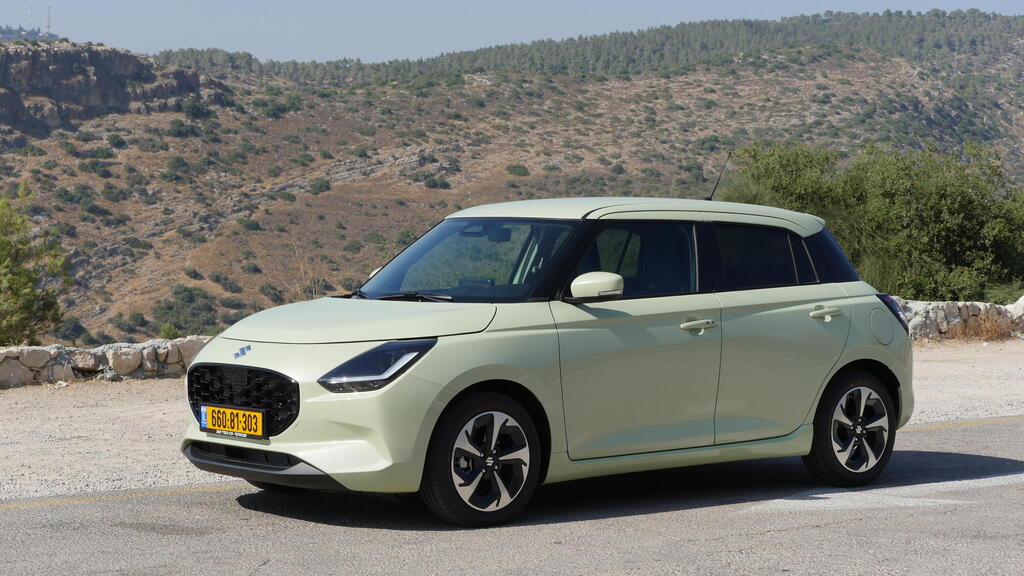
Fourth place: Toyota Yaris Cross, Nissan Qashqai, Peugeot 208, Suzuki Swift (manual)
Official fuel consumption: 22.2 km per liter (about 52.2 mpg)
Four different models are tied for fourth place, two in the crossover category and two in the supermini category. The Peugeot and Suzuki achieve their impressive fuel economy without a full hybrid powertrain, instead relying on a mild-hybrid system. In the Swift's case, the lower fuel consumption is achieved by the manual version, while the automatic is slightly less economical.
(Photo: Noam Rhein)
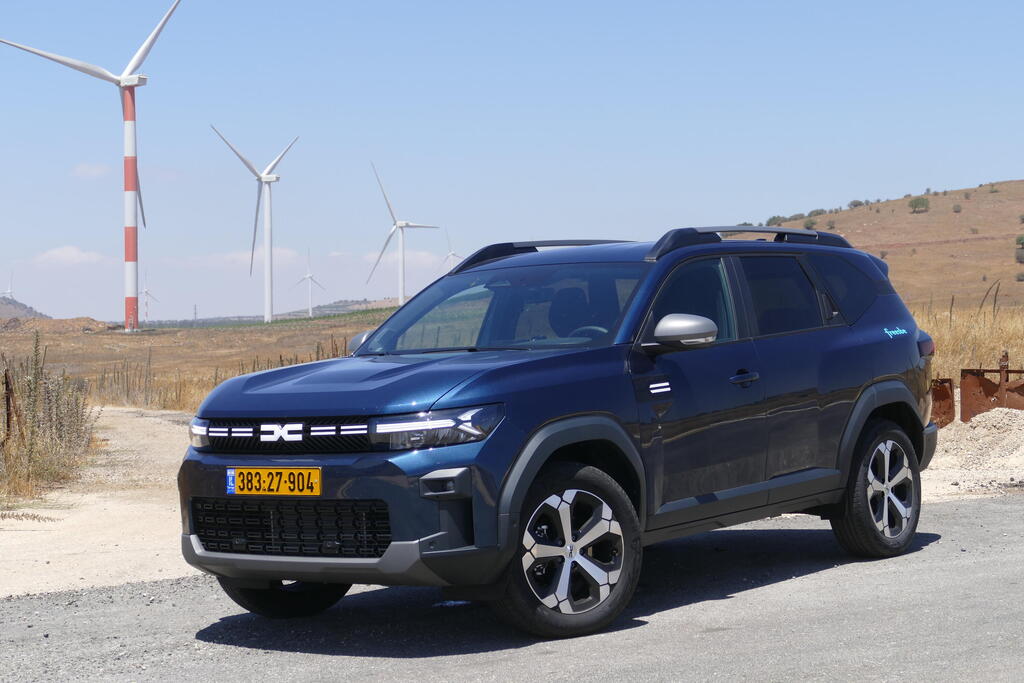
Fifth place: Kia Niro, Dacia Bigster
Official fuel consumption: 21.7 km per liter (about 51.1 mpg)
Rounding out the list are two more hybrid crossovers. The Niro has the same powertrain as the Hyundai Elantra, while the Bigster has the same powertrain as the Renault Symbioz, with the differences stemming mainly from variations in weight and aerodynamics. And there is a surprise: The Bigster is slightly more fuel-efficient than its smaller sibling, the Dacia Duster, although the difference is fairly negligible.
(Photo: Nir Ben Zaken)