

At first glance, it is a small piece of cardboard with a picture of Pikachu on it. In February, a particularly rare example sold for $16.492 million.
The Pikachu Illustrator card had belonged to YouTuber and WWE star Logan Paul, who acquired it in a 2021 deal valued at $5.275 million and famously wore it around his neck on a diamond-encrusted chain at WrestleMania. The card, awarded as a prize in Japanese illustration contests in the 1990s, is the only known example to receive a perfect PSA 10 grade from Professional Sports Authenticator. Its 2026 sale set a record for any trading card sold at auction.
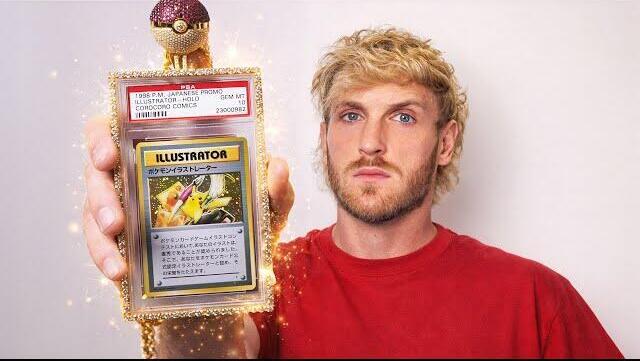
The staggering price poses a deceptively simple question: How can a piece of cardboard be worth more than a mansion?
For Bar Gindy, host of the Israeli podcast “People and Collectors,” the answer lies at the heart of a cultural shift that has transformed collecting from a hobby often pursued privately into an increasingly visible part of mainstream pop culture.
“Ultimately, it’s all supply and demand,” Gindy told ynet Global. “If enough people think and believe that something has value, it has value. If they don’t, it doesn’t.”
Across the world, adults are buying Pokémon and sports cards, LEGO sets, sneakers, watches, action figures and countless other objects once dismissed as toys or niche hobbies. Collections that might once have remained behind closed doors are now displayed to millions on Instagram, TikTok and YouTube. Unboxing a pack of cards has itself become entertainment, while coveted items can change hands for hundreds of thousands or even millions of dollars.
The numbers suggest something larger than a passing internet craze. Collectibles sales in major global toy markets surged 32% in 2025 and accounted for nearly 19% of all toy spending, according to market research company Circana. Licensed products represented 37% of the global toy market. In the United States, adults were the fastest-growing toy-buying demographic in early 2025, spending $1.8 billion in the first quarter alone.
And Pokémon, which is celebrating its 30th anniversary this year, sits near the center of the boom. The franchise generated $2.5 billion in toy sales in the U.S. in 2025, an 87% increase from the previous year, according to Circana.
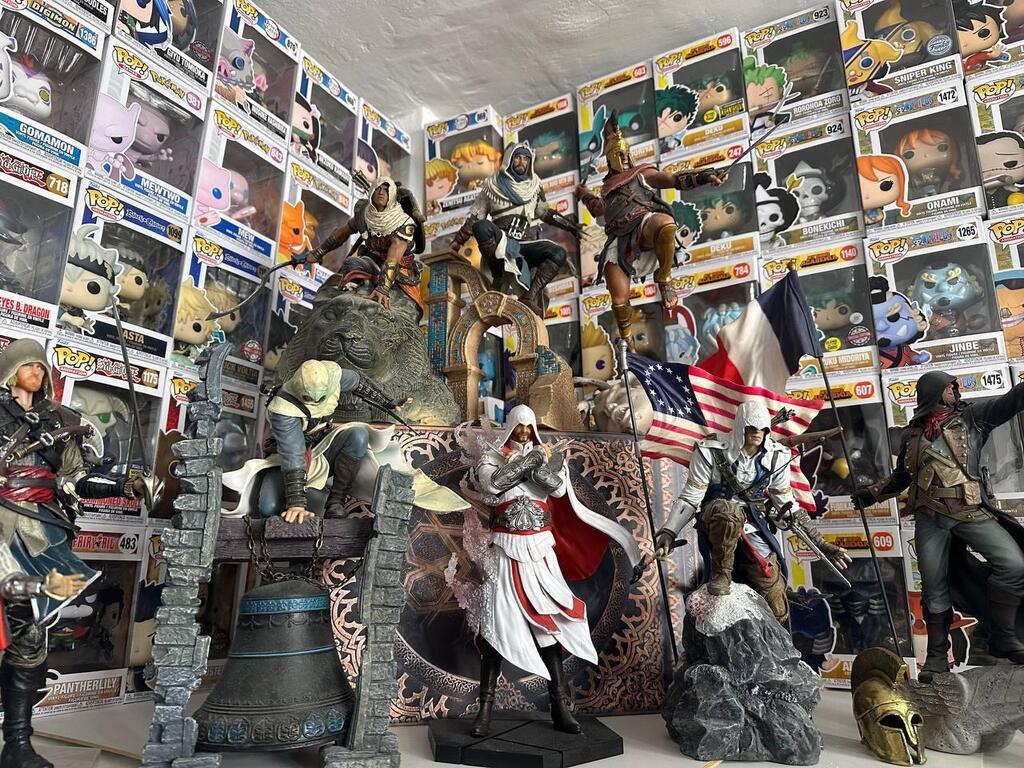
Statues from the Assassin’s Creed franchise form a dramatic centerpiece in a private collection, surrounded by dozens of Pop! figures
(Photo: Bar Gindy)
Gindy believes one of the strongest forces driving the phenomenon is also one of the simplest: nostalgia.
A child who wanted a Power Rangers toy but could not have one may encounter it again decades later, this time with an adult salary and nobody telling him he cannot buy it.
“You say, ‘I remember when I was little. I had one or two Power Rangers toys. Maybe my parents were poor and I didn’t have any, but my friends did,’” Gindy said. “Today I’m 30 or 40, and suddenly I experience it again. I see it in a store, I see a movie or a series, and I create a kind of compensation mechanism for myself.”
“Now I have money,” he said. “Now I’ll compensate that little kid who didn’t get one. So I’ll buy 10. I’ll buy 20. I’ll spend a lot of money.”
The adults buying back their childhoods
The phenomenon is particularly visible in Pokémon. The original games debuted in Japan in 1996, meaning many of the children who first encountered Pikachu, Charizard and their companions are now in their 30s and 40s, with far more disposable income than they had on the playground.
Pokémon is leaning heavily into that history for its 30th anniversary. Its new commemorative trading-card expansion includes more than 150 cards, 30 different collectible Pikachu cards and reissues of iconic cards from earlier generations.
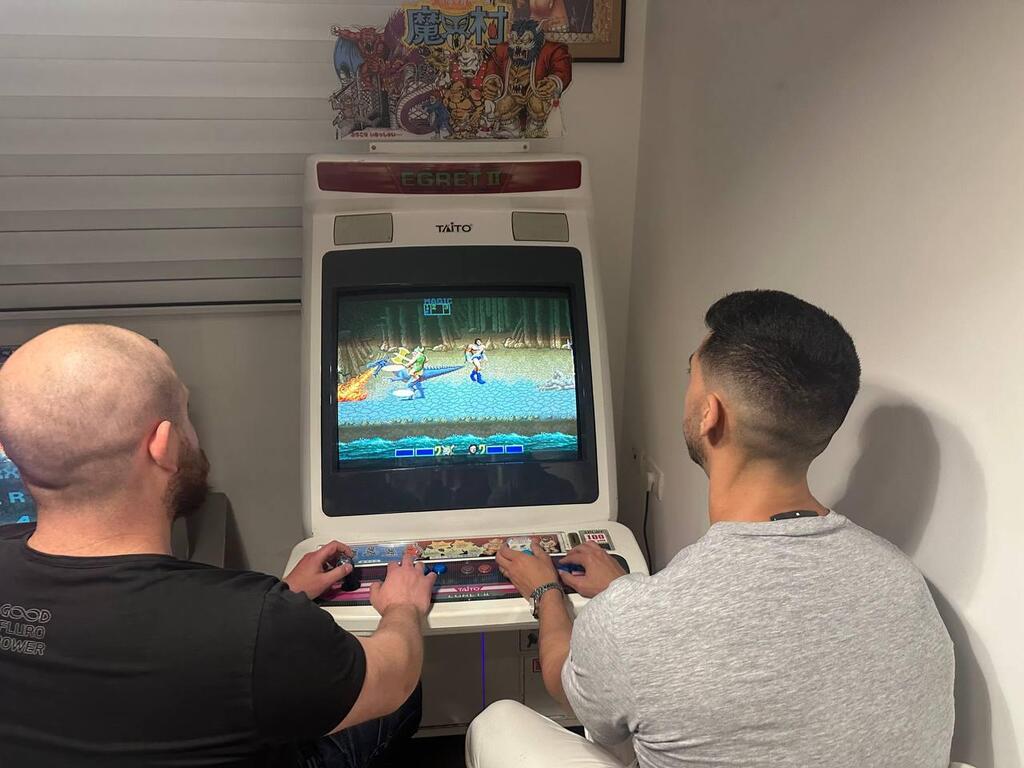
Bar Gindy, host of the 'People and Collectors' podcast, left, and vintage game console collector Or play on a Taito Egret II Japanese arcade cabinet in Or’s gaming room in Hadera
(Photo: Bar Gindy)
“Nostalgia comes first,” Gindy said. “It’s a compensation mechanism.”
But nostalgia, he argues, explains only part of the appeal. For some collectors, physical objects offer relief from a world dominated by screens, notifications and a constant search for the next digital stimulus.
“A lot of collectors I talk to tell me, ‘A collectible — whether it’s a Transformer, a Pokémon card or LEGO — calms me down,’” Gindy said. “I’m very stressed by life, by screens all the time and all the dopamine, and suddenly I’m touching and looking at something stationary, something relatively simple.”
That may also help explain a curious feature of technology collecting. People collect old computers, vintage game consoles and obsolete electronics far more readily than rows of identical new smartphones.
“You don’t see someone collecting 20 new iPhones,” Gindy said. “They collect things that are old, more basic, simpler.”
Collectors have repeatedly described entering the room where their collection is kept and feeling themselves relax, he said.
 Bar Gindy Photo: Courtesy
“I come into the room with my collection and I calm down from the day,” Gindy said collectors have told him. “Suddenly I enter another reality.”
Then there is community. Nearly every collectible niche now has its own ecosystem of Facebook and WhatsApp groups, conventions, dealers, experts and meetups. Gindy said even seemingly narrow hobbies can connect thousands of people. Israel, for example, has a community of several thousand Barbie collectors, he said.
Someone who previously felt isolated can suddenly have hundreds of people with whom to trade, buy, sell, debate and obsess over minute details.
“Collecting connects people,” Gindy said. “It doesn’t matter what religion, age, race or gender.”
The Instagram effect
Collecting itself is hardly new. What has changed is its visibility. In previous generations, someone might have amassed stamps, coins or model cars and shown them primarily to visitors. Today, a collector can display a prized acquisition instantly to millions of strangers.
“If you suddenly see some crazy collection in New York, you think, ‘I want a collection like that too. I want to build myself a cave,’” Gindy said.
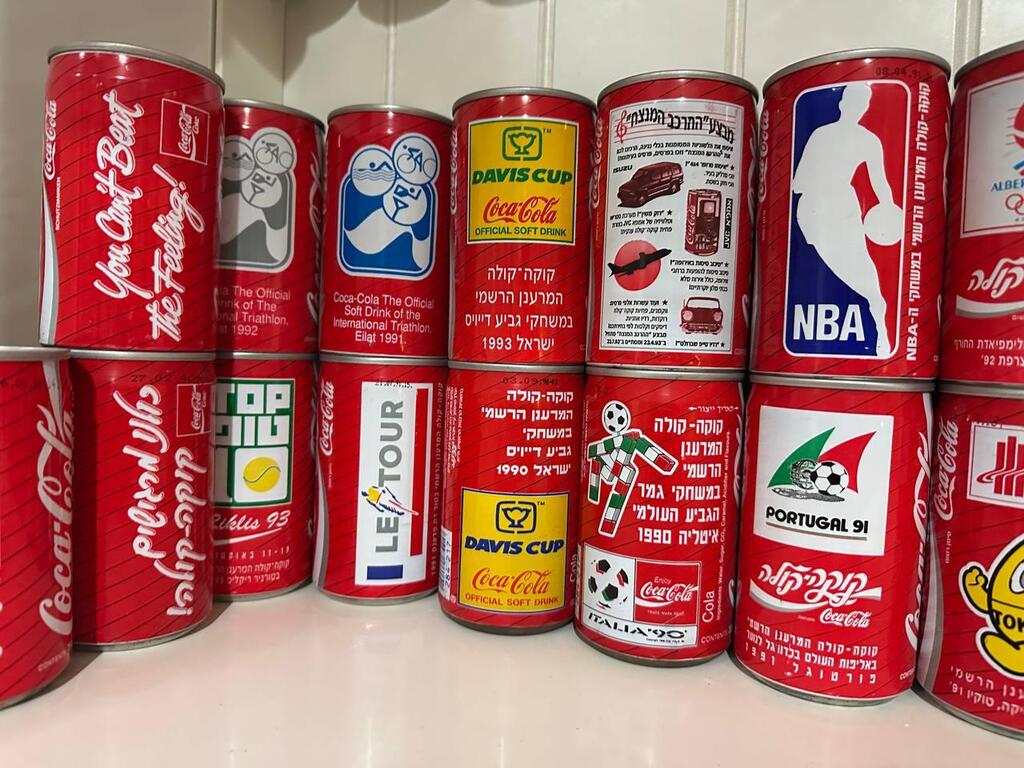
Commemorative Coca-Cola cans are displayed at the home of Israeli collector Ophir in Kibbutz Tzora. The collection focuses on limited-edition cans produced for sports tournaments, cultural events and advertising campaigns, mostly prior to the year 2000
(Photo: Bar Gindy)
And when the collector is a celebrity, the effect is magnified. “You can see your favorite soccer player upload a story showing his collection live,” he said. “It’s very accessible.”
There is also an element collectors may be less eager to admit. “There’s a lot of ego in collecting,” Gindy said. “People like showing what they have.”
Social media can turn that impulse into competition: If another collector has 100 items, someone else wants 200. If another person owns a rare card, the hunt begins for something rarer.
The objects change as trends come and go. Sneakers have had their moment, as have stamps, watches, classic cars and various trading-card games. Right now, Gindy said, Pokémon is helping lift the broader card market, alongside franchises such as One Piece and Dragon Ball.
With money comes another, darker industry: counterfeiting. PSA, one of the best-known authentication and grading companies in the collectibles business, said it intercepted more than $200 million in projected fraudulent collectibles in 2025 and warned that counterfeits were becoming more frequent and sophisticated.
Why is cardboard worth millions?
The Logan Paul card represents the collecting economy at its most extreme. The Pikachu Illustrator was never an ordinary retail card. It was awarded to winners of Japanese illustration contests and only a small number were produced. Paul’s copy was the only one to achieve PSA’s highest condition grade. But rarity alone does not explain $16.5 million.
Gindy compares today's most prized cards to artworks. “If enough people believe something has value, it has value,” he said. “Today, people treat these as the artworks of the new era. Once, you bought a Picasso. Today, you buy an artwork that is a Pokémon card.”
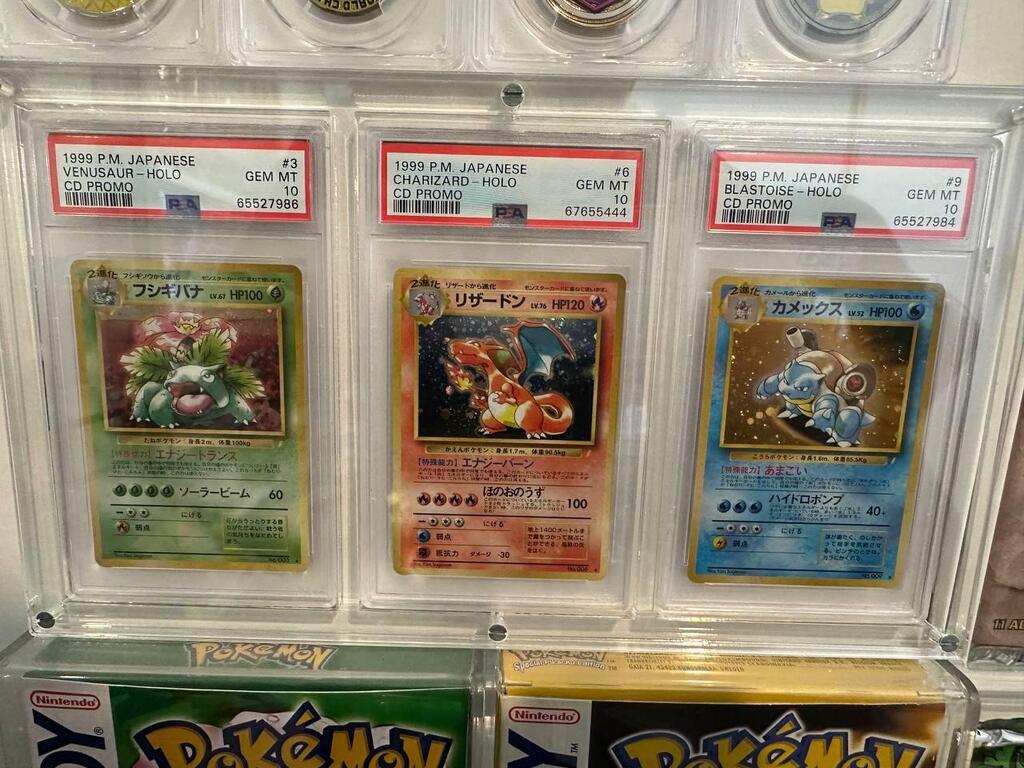
A close-up of three graded 1999 Japanese holographic Pokémon cards—Venusaur, Charizard and Blastoise—each graded GEM MT 10 by PSA
(Photo: Bar Gindy)
The raw material, he argues, is almost irrelevant. “Who said gold is worth more than paper?” Gindy said. “That’s what you think today. If tomorrow paper is worth more than gold, then it’s worth however much you’re willing to pay for it.”
There is an unusually fitting comparison from the traditional art world. In 2024, Maurizio Cattelan’s “Comedian” — a banana attached to a wall with duct tape — sold at Sotheby’s for $6.24 million. The buyer was not acquiring a uniquely irreplaceable banana; the work derives its value from the artist, its provenance, its concept and the market willing to pay for it.
Collectibles can operate according to a similar logic. Take an ordinary pair of shoes and they may be worth $50. Establish that Elvis Presley wore them and their value changes. Establish that Michael Jordan wore a pair during an iconic basketball moment and they can enter an entirely different financial universe.
“It’s all the story,” Gindy said. “It’s sentimental value. His sweat isn’t actually going to help you, but the sentimental, emotional value is what matters.”
And celebrity ownership can itself add another chapter to that story. Paul did not merely own his Pikachu card. He turned it into part of his public persona, displaying it to millions of followers and wearing it to WrestleMania. When he eventually sold it, the card was not merely an exceptionally rare Pikachu Illustrator. It was also Logan Paul’s Pikachu Illustrator.
“He gave it incredible marketing,” Gindy said. “He made that card very famous. Even if he had bought a shoe and sold it, its value would have gone up too”
Collecting or gambling?
One of the most contentious corners of the new collecting culture begins before the collector even knows what he has bought.
Trading-card packs, mystery boxes and “blind boxes” conceal their contents until they are opened. Livestreamers have turned the reveal into a spectator event, with viewers watching creators tear through packaging in search of an exceptionally rare card.

(Illustration: EA Sports)
The mechanics are obvious: anticipation, uncertainty, disappointment and, occasionally, a jackpot.
Gindy acknowledges the resemblance to gambling. “A pack — you don’t know what you’re going to get. It’s a type of gamble,” he said.
He believes some regulation will eventually be necessary, particularly where potentially addictive mechanisms are involved.
But he also cautions against treating all card collecting as gambling. Many collectors never open packs at all. Someone who wants a particular card — perhaps a rookie card of Israeli NBA player Deni Avdija — can simply buy that individual card on the secondary market.
For many others, opening packs is entertainment rather than an investment strategy. “The expected return is much lower,” Gindy said. “It’s like going bowling. You spend an hour there. Here, they spend an hour, put in a certain amount of money, enjoy themselves and get excited. Opening cards is entertainment.”
That distinction becomes more complicated when individual cards can be worth life-changing sums. Pokémon’s surge has spawned a vast ecosystem of livestream sellers and “rip-and-ship” operations in which customers pay for packs that are opened for them live online. The rising values have even made card stores targets for high-value thefts and armed robberies.
Collector, investor or dealer?
The explosion in prices has also blurred another boundary: the one between collecting and investing. Gindy divides participants into three categories — collectors, investors and dealers.
A dealer looks for what is hot, buys inventory and tries to resell it at a profit. An investor deliberately buys items expected to appreciate. A collector, by contrast, generally does not want to sell at all. “A collector usually sells only if he has to financially,” Gindy said.
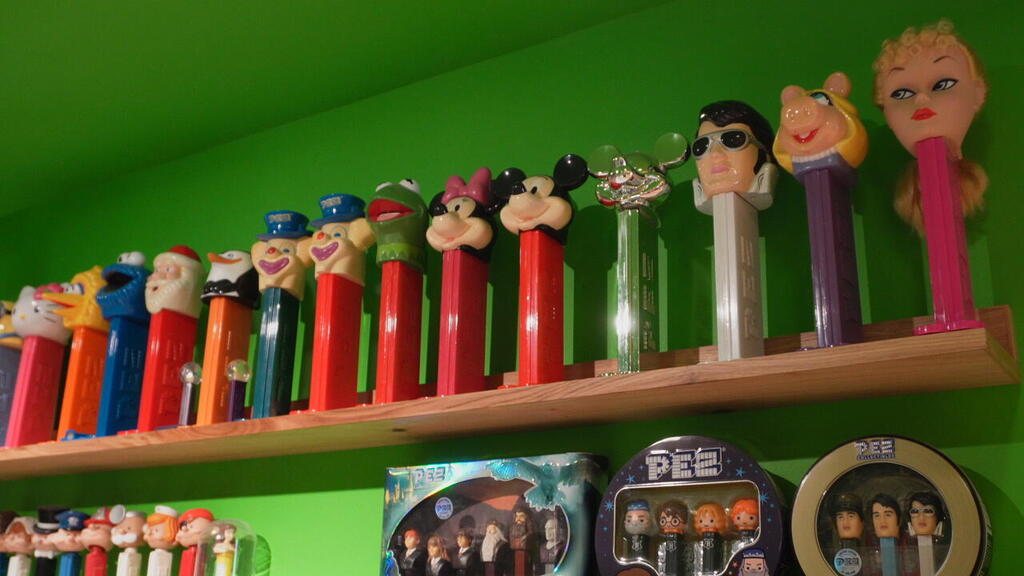
Rows of vintage PEZ dispensers, part of Yaron Minkowski’s extensive collection, are displayed at his Toy & Nostalgia Museum in Jaffa
(Photo: Bar Gindy)
There are hybrids. Some collectors buy two, three or four examples of the same item, hoping its value will rise enough that they can later trade the extras for something else they want.
Retired LEGO sets provide one example. Once a set is no longer manufactured, scarcity can drive prices higher, prompting collectors to speculate about which current sets might appreciate after production ends.
But Gindy strongly rejects treating collectibles as the equivalent of a conventional investment portfolio.
“Collecting is not an investment channel,” he said. “Collecting is a hobby. It’s not the stock market, it’s not stocks and it’s not real estate. It’s a hobby.”
“I buy a card because I enjoy looking at it now,” he added. “Most cards don’t go up in price.”
If prices across an entire category rise indiscriminately, he cautioned, they can also fall — leaving someone holding an expensive object for which the next buyer is willing to pay far less.
When collectors become historians
Not every collection is colorful or rooted in nostalgia. As host of “People and Collectors,” which is currently crowdfunding an international English-language edition, Gindy has been approached about collections he ultimately chose not to feature.
Among the most difficult were private collections of Holocaust-era objects, including clothing and forms of currency.

A vintage advertising sign for Electro cookware and pressure cookers, one of the many preserved items in Vital’s growing archive of everyday Israeli life. The sign, made of wood and tin, captures the era’s design and marketing language
(Photo: Bar Gindy)
“It’s a controversial subject — whether to collect it or not, whether it should only be in museums, whether a private collector should be able to collect it,” he said.
For some families touched by the Holocaust, preserving such material can have deeply personal meaning. But Gindy said the subject was too difficult for him to tackle on his podcast.
He is similarly uninterested in collections of taxidermy. “I interview people whose collections interest me and where I enjoy being,” he said. “I like colorful things, intriguing things, interesting things.”
But even the most eccentric collections can perform another function: preserving knowledge. A person who has spent decades collecting one model of car may know its production history, obscure variations, mechanical changes and individual stories at a level few outsiders could match.
“If you go to a Mustang collector, he’s an expert on Mustangs,” Gindy said. “Collectors are really history teachers in whatever field they deal with. They love going into the nitty-gritty.”
That may be one reason collecting persists even as the objects being collected change. Stamps give way to sneakers. Coins give way to Pokémon. Yesterday’s children's toy becomes tomorrow’s auction-house centerpiece. An object acquires a history, a community develops around it and scarcity does the rest.
Gindy believes some of today’s overlooked Israeli objects could follow the same trajectory. Old Israeli banknotes, coins, posters and documents bearing the signatures of figures such as Israel’s founding prime minister, David Ben-Gurion, are among the objects he thinks future collectors could value more highly as surviving examples become scarcer.
He is careful to add the caveat he repeats whenever the conversation drifts toward potential profits: This is not financial advice.
Instead, he recommends beginning with something far simpler than trying to predict the next $16 million Pikachu.
Choose something you actually find interesting. Research it. Find the people who care about it. Go to a convention. Hold the objects, learn their histories and see whether the obsession takes hold.
“If everyone were collectors, the world would be much simpler,” Gindy said. “People would be busy trading and bartering.”
And perhaps, somewhere in a child's bedroom or an adult's forgotten drawer, there is already an object that will make absolutely no sense to anyone when it sells for millions 30 years from now.