

Israel is still processing the drama that unfolded Wednesday morning aboard a Flydubai flight traveling from Dubai to Tel Aviv. During the flight, one passenger heard shouting about a stabbing in the cockpit and alerted others. Four passengers then sprang into action, subduing the attacker, helping save the plane and assisting the captain, who had been stabbed by the Omani co-pilot.
But one thing quickly became clear: Once again, television may have helped save the day. Well, perhaps that is overstating it, but it certainly played a role. Yaniv Hayun, one of the four men credited with helping save the flight, told Prime Minister Benjamin Netanyahu that he managed to stabilize the aircraft thanks to watching the documentary series “Air Crash Investigation,” which reconstructs major aviation disasters to understand what went wrong and what can be learned from them.

And it turns out that heroic airborne rescues are far from the only useful skills people can pick up from the small screen. From spotting scams to surviving in the wilderness to becoming a MacGyver — a skill worthy of its own category — here are several shows that can teach practical lessons for real life.
Scam Interceptors
What we learned: How to spot scams and avoid being conned
The BBC’s popular “Scam Interceptors” is genuinely useful as a life guide. It exposes real scams and fraud schemes in real time in a world increasingly run by technology.
One example is how to deal with phone calls using artificial intelligence to clone a person’s voice. Scammers may need only a few seconds of recorded speech to create a convincing digital copy of a voice and use it to authorize transactions or deceive family members.
One tip from the show’s experts is known as the “rule of silence”: If you receive an unexpected call from an official body, simply stay quiet. Scammers may be waiting for you to say “hello,” and that could be enough for them.
Another tip from the program: Do not install remote-access applications such as AnyDesk or TeamViewer at someone else’s request.
“Scam Interceptors,” a BAFTA-winning series, has exposed a wide range of fraud schemes. One involved a lonely elderly woman who met a man on social media claiming to be a U.S. military officer stationed in the Middle East. Within weeks, she had fallen completely for the supposedly brave soldier. When he asked her for emergency funds — naturally in cryptocurrency — she was too emotionally invested to see what was happening.
With the help of hackers, the show’s hosts proved to her that she was being deceived. Her heart was broken, but at least her bank account was spared.
One of the show’s key tips in such cases is to insist on a video call. Romance scammers will often find excuses for why their camera is broken, why they have no signal on the oil rig where they supposedly work or why military rules prevent them from appearing on camera. If someone who claims to love you consistently refuses a normal video call, there is a good chance something is wrong.
Alone
What we learned: How to survive in the wilderness
The History Channel reality series “Alone” may be one of the toughest shows on television. It sends 10 survival experts into remote and dangerous wilderness areas, from the Arctic Circle to the deserts of South Africa, and leaves them there alone.
There is no camera crew and no director. Contestants see no one else. They are given cameras and must film themselves and their daily lives.
They are also placed far apart from one another, with no visual contact and no information about how many competitors remain. They may not know whether nine others are still out there or whether they are the last one standing.
Each participant may choose exactly 10 survival items from a predetermined list — such as an ax, sleeping bag, cooking pot or fishing gear — and food is generally not allowed, apart from limited rations that can count toward the 10 items. To eat, contestants must hunt, fish, trap and forage. Beyond that, they enter with the clothes they are wearing, a small first-aid kit and a satellite phone for emergencies only.
The chances of most viewers ever finding themselves in such conditions are slim, but “Alone” offers psychological and practical insights that can change the way people think about resilience, decision-making and resource management.
For example, it is often the physically strongest, military-minded men who quit first. Their bodies require more calories and they may struggle more with silence and isolation. It turns out that the ability to sit quietly with your own thoughts and maintain a positive inner dialogue can be a survival skill in itself.
Calorie management also emerges as an important principle, and not just in relation to dieting. On the show, every action is measured by its calorie cost versus its return. Sometimes good enough is better than perfection if perfection consumes all your energy.
To avoid unraveling from isolation and hunger, the most successful contestants divide their days into small, clear tasks. After a few weeks, many discover that all they truly need is a dry shelter, a cup of hot water and some warmth from a fire. Suddenly, toilet paper feels like pure luxury.
How It’s Made
What we learned: How to be a smarter consumer
The Canadian documentary series “How It’s Made,” which originally aired from 2001 to 2019 on Discovery and Science, offered a fascinating look behind the scenes at how everyday objects and complex products are manufactured.

From 'How It's Made'
(Photo: Screengrab)
The series covered everything from simple items such as paper clips and rubber bands to high-tech products, sports cars, musical instruments and satellites.
It teaches viewers, for example, what to look for when buying a product and how to distinguish between items that require intricate handcraftsmanship and those produced on automated assembly lines.
The series also breaks complex devices down into basic stages of assembly, explains how different materials respond to heat, moisture, pressure and chemicals, and encourages engineering-style thinking and problem-solving — down to how to free a stuck lock, which turns out not to work the way many people think.
Medical dramas
What we learned: How to help in a medical emergency
Actress Amy Adams recently described how she helped save a man who had been stabbed in the neck, thanks to medical advice she remembered from a failed television series she appeared in early in her career.
In 2004, Adams played a registered nurse in a series called “Dr. Vegas,” which was canceled after just five episodes. For the role, she underwent basic training and completed a short internship.
Years later, while leaving a restaurant in Los Angeles, she saw a commotion around a young man who had been stabbed in the neck and was bleeding heavily. Adams immediately slipped into her TV-nurse mode, grabbed beach towels and applied pressure to the neck wound to slow the bleeding.
The panicked victim struggled and thrashed, and Adams remembered a line from the “Dr. Vegas” script: “The more you fight, the faster your blood pumps. Just lie down and relax.”
He stopped struggling, which slowed his heart rate, helped prevent catastrophic blood loss and kept him alive until paramedics arrived. A year later, she ran into the man on the street.
It sounds implausible enough to come from a Hollywood script, but it actually happened.
American television is, of course, full of medical shows. Most are not reliable enough to be treated as sources of medical advice, but they can still teach viewers some basic concepts, such as CPR or how an airway is opened.
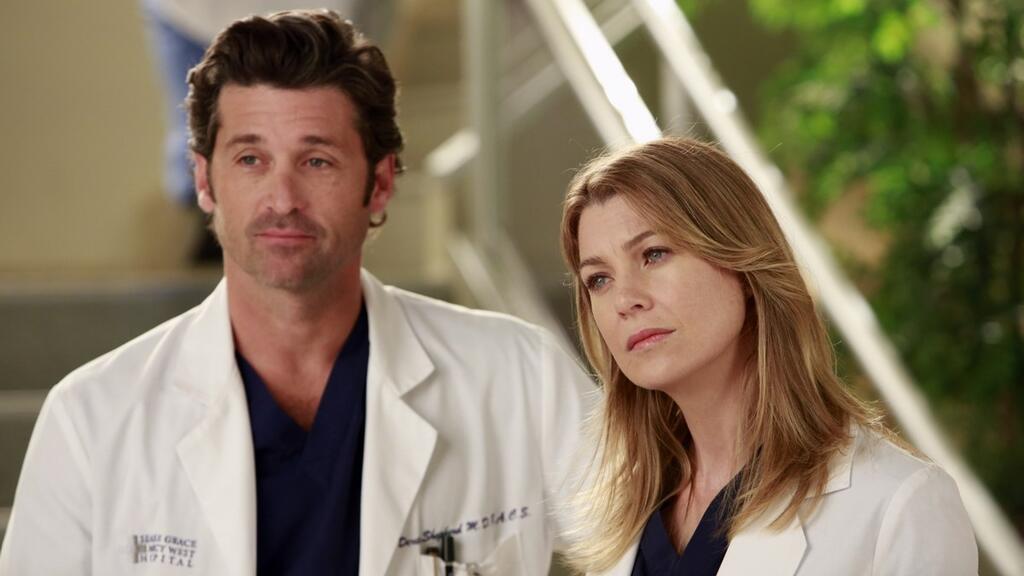
From 'Grey’s Anatomy'
(Photo: ABC)
In 2011, Madison Castle, a 10-year-old girl from Wisconsin, saw her mother suffer a severe asthma attack, collapse and stop breathing. The girl, who for some reason was already watching “Grey’s Anatomy” at her tender age, remembered something she had seen on television and began giving mouth-to-mouth resuscitation.
She called 911 and said, “I’m doing CPR like I learned on TV.”
Paramedics later said the girl’s quick action helped maintain oxygen flow to her mother’s brain and saved her life.
In another case, in 2013, a registered nurse named Ryan Reade was watching the popular home-renovation show “Flip or Flop” when she noticed a small, suspicious lump on host Tarek El Moussa’s neck.
She emailed the production and wrote that the host needed to have the lump checked immediately because it looked like a tumor.
El Moussa followed up and was diagnosed with thyroid cancer. He underwent surgery and treatment that saved his life, and later publicly thanked Reade in a special segment.
For ordinary viewers who want to learn a little more, the best recommendations are “The Pitt” and “ER,” both of which strive for an unusually high degree of medical accuracy for scripted dramas.
MacGyver
What we learned: Improvised solutions for just about anything
Nearly 40 years after it first aired, the series about the endlessly resourceful secret agent remains one of television’s best guides to solving problems with whatever happens to be available.
That includes plugging a hole in a radiator with an egg, stopping a deadly acid leak with chocolate, lifting a heavy object with air pressure, estimating the time until sunset using only your hand, producing clean drinking water in an arid environment and, of course, the classic trick of opening a lock with a plastic card.
MacGyver also found himself in plenty of dangerous situations aboard airplanes. But even he never stormed a cockpit and prevented a crash.