


Netflix has poured hundreds of millions in recent years into failed attempts to mimic Hollywood blockbusters. Just The Gray Man (2022) and The Electric State (2025), both by the Russo brothers, reportedly cost the platform $520 million. So it’s a rare surprise when the algorithm takes a break from blockbuster simulations and tosses a few crumbs toward “arthouse simulations.” Ballad of a Small Player is one such offering.
Adapted from the well-regarded 2014 novel by British author Lawrence Osborne, the film was directed by Oscar winner Edward Berger (All Quiet on the Western Front, Conclave) and written by Rowan Joffe (son of director Roland Joffe). Berger, known for literary adaptations, brought his frequent collaborators: Oscar-winning composer Volker Bertelmann, cinematographer James Friend and editor Nick Emerson.
Ballad of a Small Player - Trailer
(Courtesy of Netflix)


On paper, the ingredients are all there: a prestige director, a major star (Colin Farrell) and a compelling setup involving a gambler living under an assumed identity. But the final result is frustratingly hollow. While the film checks all the boxes for “serious cinema,” it’s unlikely to satisfy Netflix viewers seeking high-end drama. The problem isn’t the quality of craft — it’s the film’s split identity: half character study, half clumsy Buddhist allegory. Neither half fully delivers.
We’re plunged into a kind of cyclical nightmare. A British gambler going by the alias “Lord Doyle” (Farrell) wakes up in a messy hotel suite in Macau. The neon city lights pour into the room; the tables are stacked with untouched food, signaling his compulsive excess. He sits on the bed, dazed and muttering “fuck” as if resigned to yet another night of self-inflicted hell. Bertelmann’s dramatic score plays over sweeping shots of the city, evoking a new low in a long descent.
From Ballad of a Small Player
(Photo: Courtesy of Netflix)
The feeling is of a time loop — Groundhog Day without humor, and with only a flicker of hope. Berger and Friend lean heavily into stylized visuals: the casino district glows in rich, artificial color, evoking the hyper-stylized look of Nicolas Winding Refn’s Only God Forgives (2013). When the story shifts to natural light outside the city, the tonal shift is unmistakably intentional.
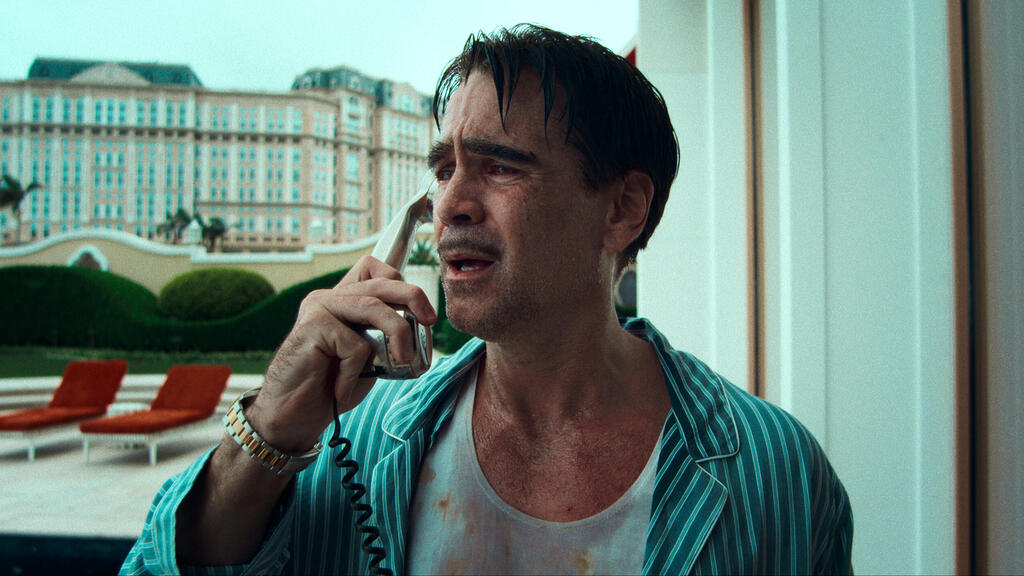
Doyle, of course, isn’t really a lord. He’s a disgraced British expat who fled the UK and now gambles at baccarat tables in Macau’s casinos. His fake aristocratic persona is barely convincing — his gaudy wardrobe alone should give him away — but money has a way of silencing doubts. Now broke, sweaty, and visibly unwell, Doyle faces escalating pressure from hotel staff looking to collect his debts. He’s bought himself a few days of grace, clinging to the hope that his luck will return.

From Ballad of a Small Player
(Photo: Courtesy of Netflix)
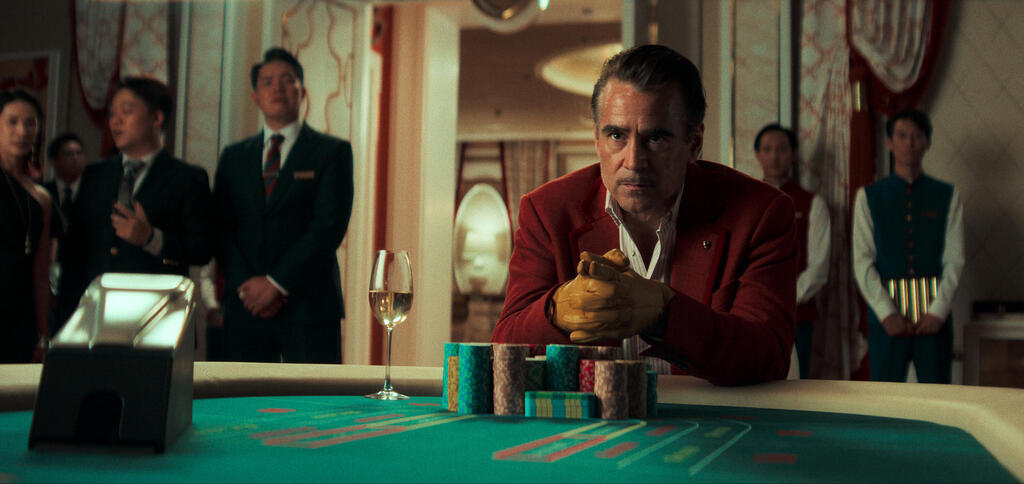
At the casino, he plays against a stoic older Chinese woman (Deanie Ip), the wife of a wealthy gangster, who keeps winning with the exact total of nine — the best hand in baccarat. Also at the table is Dao-Ming (Fala Chen), a gambling loan officer with a haunted conscience. She’s made decisions that ruined lives, and now, through her connection with Doyle, the film enters a surreal mode that defies narrative logic. Their interactions skip awkwardly between scenes, their relationship evolving in leaps that make little emotional sense.

From Ballad of a Small Player
(Photo: Courtesy of Netflix)
Dao-Ming speaks of the “hungry ghosts” of Buddhist hell (Naraka) — those who suffer greatly due to their greed but are slowly purified. She tells Doyle a parable: the casino that gives gamblers everything they want in paradise is, in fact, hell. Is Doyle already dead? Is this the “real” Macau? Though one of the most densely populated places on earth, Berger’s Macau feels nearly empty — an artistic choice, not a budgetary one.
The third key figure is a private investigator named Cynthia Blithe (Tilda Swinton), trying to capture a photo of Doyle. He faked his death in England to escape a fraud charge, and she needs proof he’s alive. Blithe, as played by Swinton, is an odd mix of neurosis and empathy — a bit like her role in Michael Clayton (2007), dressed in the outlandish disguises she’s known for in Bong Joon-ho’s films. Though she wants to complete her mission, she’s also moved by Doyle’s desperate urge to win back his losses.

From Ballad of a Small Player
(Photo: Courtesy of Netflix)
There’s a significant gap between the film’s ambition and execution. Viewers who approach Ballad of a Small Player as a spiritual allegory may be more forgiving of its stylistic excess. But being a Netflix release, many viewers may simply tune out before deciding if the film is for them, only to move on to the next stream of data.